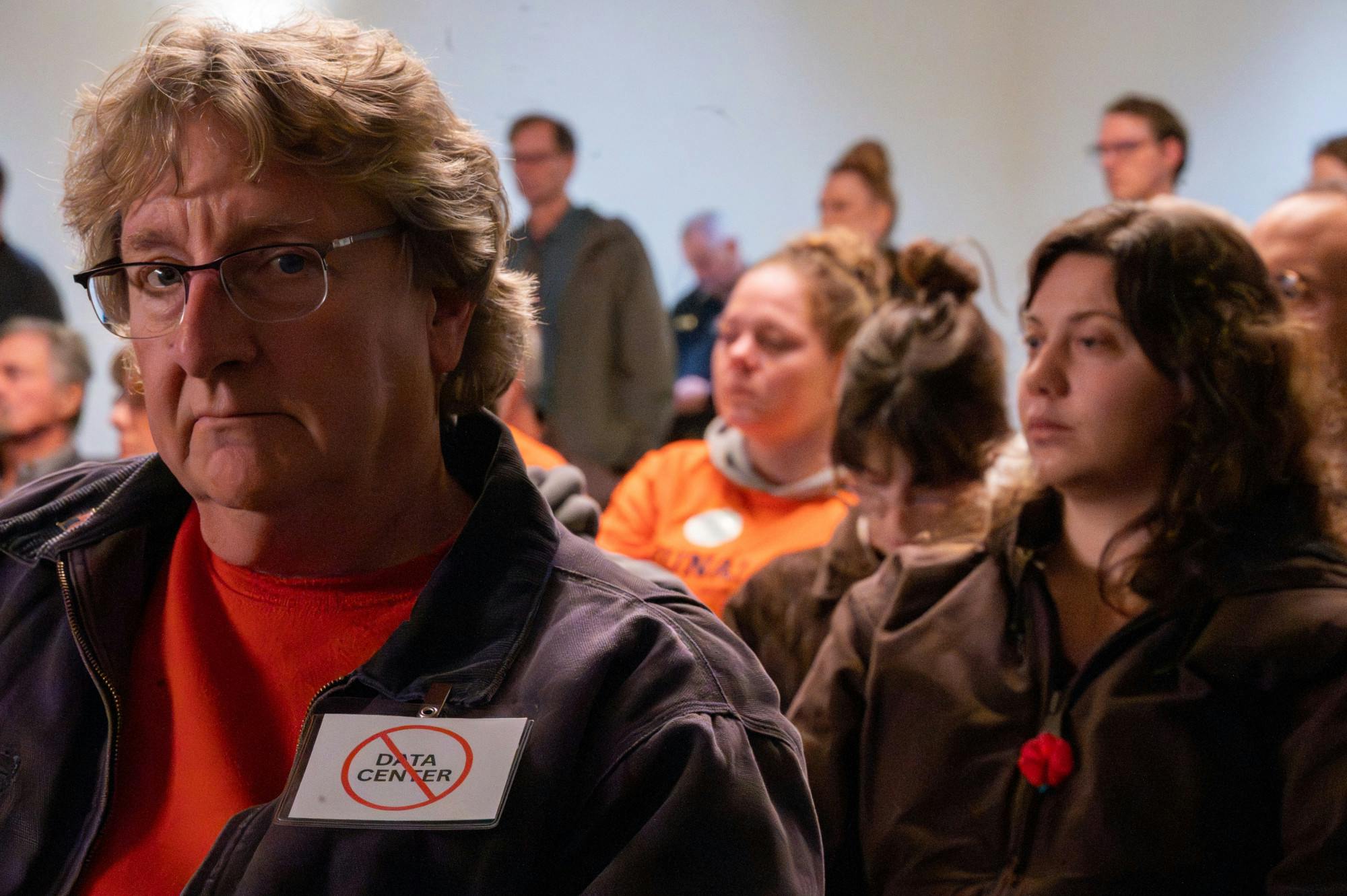
Republican lawmakers see potential state regulations for data centers differently. While a bill regulating energy use fast-tracked the Assembly and now faces the Senate, a new GOP-led Senate bill would ban local governments from signing nondisclosure agreements approving data centers in their municipalities.
As of December 2024, at least three data centers have been proposed and three more are under construction, including a Microsoft plant in Mount Pleasant, a Meta plant in Beaver Dam and a Stargate plant in Port Washington. A $12 billion center in Deforest, Wisconsin, was rejected by the local government following community backlash.
The bill which bans nondisclosure agreements was originally brought forward following reporting from Wisconsin Watch that showed in at least four Wisconsin communities details involving a data center were hidden from the public with nondisclosure agreements prior to public announcement.
Under these NDAs, local residents and officials were unable to learn about or weigh in on data center development until plans were already underway.
“Let's be honest, if you need an NDA so the town board can't talk about something you say is a great opportunity, that's not a development strategy, it's a gag order to hide the warts,” Sen. André Jacque, R-New Franken, said at a public hearing on Feb. 17.
Bill author Rep. Clint Moses, R-Menomonie, said preventing local governments from shielding information on potential data centers was “a 90-10 issue.”
The second bill which imposes new requirements on Wisconsin data centers already passed the Assembly and now awaits Senate approval.
The legislation would prohibit the Public Service Commission from approving rate changes to utility bills to fund infrastructure that primarily serves data centers. Instead, the costs would be recovered solely from the data center developers.
Data centers require massive amounts of energy to operate. Projections show data centers could account for 12% of U.S. electricity use by 2028. When utility companies build new infrastructure to support data centers, it can increase utility rates for local residents.
“It has to be a pay-your-own-way setup,” said bill author Sen. Romaine Quinn, R-Birchwood, in public testimony.
The Public Service Commission, however, questioned their ability to ensure that no costs would be passed on to ratepayers.
“The Commission could not definitively ensure, under every scenario and into the future, that ‘no costs associated with construction or extension of electric infrastructure' to a data center are not allocated to or recovered for other customers,” Public Service Commission Director of Policy and Legislative Affairs Tanner Blair said in testimony.
Quinn said the bill restricts data centers by requiring they build any renewable energy primarily serving them on-site, adding that the goal is to avoid costs incurred from transmitting power from elsewhere.
“My constituents don’t want to look out at their backyard at a 3,000-acre solar farm that they know is powering a data center 200 miles from them in southeast Wisconsin,” Quinn said.
Critics say these restrictions will push data centers toward non-renewable energy sources since the land available on a single data center campus is insufficient to generate the gigawatts of power these centers require.
The bill would also require data centers to use a closed-loop cooling system, which recycles water through a cooling-and-reheating process designed to minimize water use. Additionally, the centers would annually report their water usage to the Department of Natural Resources.
Assembly Democrats proposed several amendments to the bill; however, none were adopted. The bill passed the Assembly mostly along party lines.
“It doesn’t cure all things, and I would agree that we need to have ongoing discussion,” bill author Rep. Shannon Zimmerman, R-River Falls, testified.
Should the bills pass the full Legislature, it would need the Governor's approval before becoming law.