As Asian American and Pacific Islander Heritage (AAPI) Month begins May 1, the University of Wisconsin-Madison’s Asian American studies certificate offers students an accessible way to engage with ethnic studies while building skills in cultural awareness and critical thinking.
The certificate, one of four ethnic studies programs at UW-Madison, is designed to complement any major, allowing students to explore race, history and identity without committing to a full degree program.
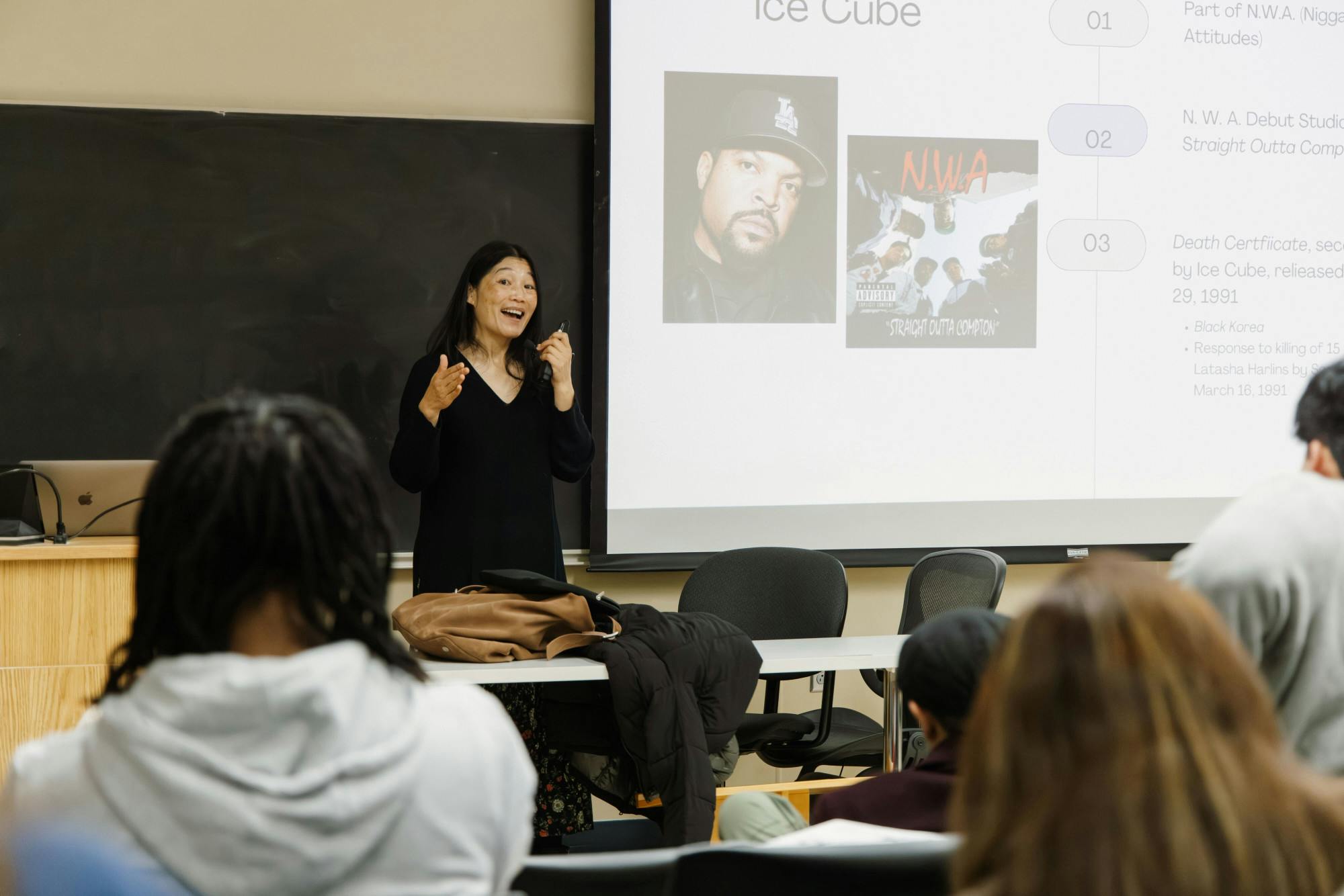
Cindy I-Feng Cheng, a professor of Asian American studies said faculty intentionally designed the program so its gateway courses appealed to students across disciplines. From history to more contemporary topics, ASIANAM courses serve as introductions for students to develop a more worldly perspective on life.
“It gives the general sense to students on how to relate to the world at large,” Cheng told The Daily Cardinal.
Cheng said that Asian American studies courses promote sensitivity to diverse backgrounds and help students cultivate a sense of belonging.
She said that the marketable skill of having a certificate in ethnic studies is the ability to navigate cultural differences with depth and nuance.
“Anybody can write an essay about sensitivity and how to create a nurturing environment, but you [student] can have a semi-degree in it,” Cheng said.
The program’s presence on campus dates back to the early 1970s, when students pushed for greater representation in both curriculum and campus life. In 1973, Asian American students organized protests demanding change, calling on organizations like the Japanese American Citizens League for support amid what they described as an uninterested university.
In 1974, Asian American students at UW-Madison published “Rice Paper,” the first Asian American student publication in the Midwest, marking a growing presence of Asian American activism in campus media.
Campus tensions in the 1980s further accelerated institutional change. In 1987, UW-Madison implemented the ethnic studies requirement due to an incident in Greek life, where Fraternity Phi Gamma Delta — known as the “Fijis” — held a Fiji Island-themed day party and greeted guests with a 15-foot cutout effigy of a Black man with a bone through his nose to depict a rogue POC island individual.
In response, Asian American, Black and Chicano/Chicana students formed the Minority Coalition and a report was issued by underclassman and chairman of UW-Madison’s Steering Committee, Charles Holley.
The report, widely known as The Holley Report, suggested increasing the amount of courses taught from minority individuals’ perspectives and required UW-Madison to implement a six-credit requirement for Ethnic studies.
As a result, a year after the report was issued, UW-Madison created the Asian American studies program as well as the Multicultural Learning Center.
Professor Cindy I-Fen Cheng, a historian with an emphasis in feminist studies and critical theory, told The Daily Cardinal it’s important to remember the role of AAPI month.
“We’re all stewards of this legacy, it gives us a month to remember that we cannot take our education for granted, and that there are certain histories we know cause people fought for it to be known,” Cheng said.