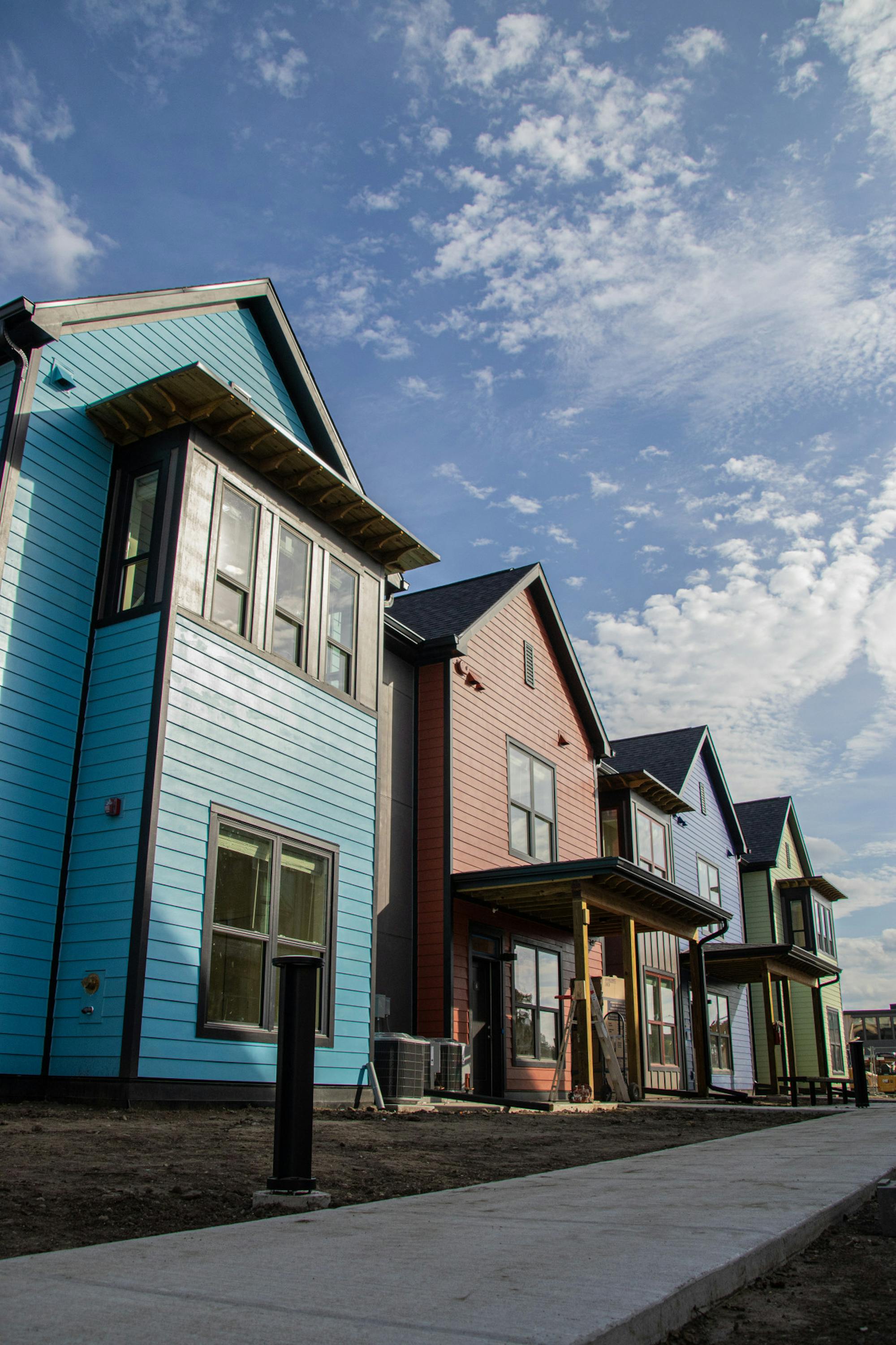
Madison’s housing supply is growing rapidly, rent is increasing and homelessness rates remain similar, according to the city’s biannual housing report released on Feb. 16.
The report showed Madison has seen 20,000 new residents since 2020 with Madison being the fastest growing city in Wisconsin. This has been driven by an increase in enrolled University of Wisconsin-Madison students, expanding job sectors and continued emphasis on natural and cultural amenities — all trends that continue to add pressure on the housing supply and lingering affordability and accessibility concerns.
The Housing Snapshot report, published by the Department of Planning, Community and Economic Development, uses 2015 as a benchmark to measure long-term shifts.
How much has changed since 2015?
Madison has built 22,400 new homes — a 20% increase — to supplement the continued growth in population. The report says low-income households may be forced to move out of the city due to increased demand and rent.
Land prices across the Midwest rose more than 50% between 2015 and 2023, contributing to a 41% increase in renter housing costs and a 34% increase for homeowners, according to the report. Median monthly rent in Madison climbed from $939 in 2015 to $1,364 in 2025.
Homelessness levels have remained relatively steady, but persistent. A 2025 point-in-time survey counted 790 individuals experiencing homelessness in Madison, compared to 800 in 2015. The report links homelessness in Madison to rising home costs, less single occupancy units and the economic impact of the COVID-19 pandemic.
How students fit in the picture
Of Madison’s 126,000 households in 2023, approximately half were renter households. Around 40,000 fell into an “other” category that excludes families and elderly residents. UW-Madison’s enrollment of 49,724 undergraduate and graduate students also shape Madison’s rental market. The report estimates that around 11,875 renter households are student households.
The report also estimates most student renters earn less than 30% of the area median income.
Gaps in access to housing
The U.S. Department of Housing and Urban Development (HUD) defines a household to be cost-burdened when it spends more than 30% of its income on housing and utilities, and severely cost-burdened when it’s spending more than 50%.
Black and Hispanic residents in Madison are more cost-burdened by rent than white and Asian residents. About 30% of white residents are cost-burdened or severely cost-burdened, compared to 47% of Black, 40% of Hispanic or Latino and 35% of Asian residents.
Median income differences among races also shape what rent counts as “affordable.” The report estimates that affordable monthly rent at $2,081 for a median white household, $1,685 for a median Asian household, $1,570 for a median Hispanic household and $1,080 for a median Black household.
Proposed initiatives to solve housing issues in Madison
City leaders continue to rely on subsidy programs and development incentives to expand long-term affordable housing. Madison aims to ensure at least 25% of new housing meets long-term affordability standards by 2030.
Since 2015, the city has invested $46.8 million in subsidies through the Affordable Housing Fund and Tax Increment Financing. Those investments supported the construction of 2,285 multi-family homes — about 10% of all homes completed in the past decade.
Developers who receive city subsidies must maintain affordability for 40 years and provide “supportive services” to tenants whose income is less than 30% of the AMI. By 2024, Madison had completed 2,395 income-restricted homes, with 72% receiving financial assistance from the city.
Despite these efforts, the report suggests Madison faces a long-term challenge: balancing growth with equitable access to housing. While new construction and public investment have expanded the housing supply, the data shows affordability gaps remain — particularly for renters, students and communities of color.
Staff writer