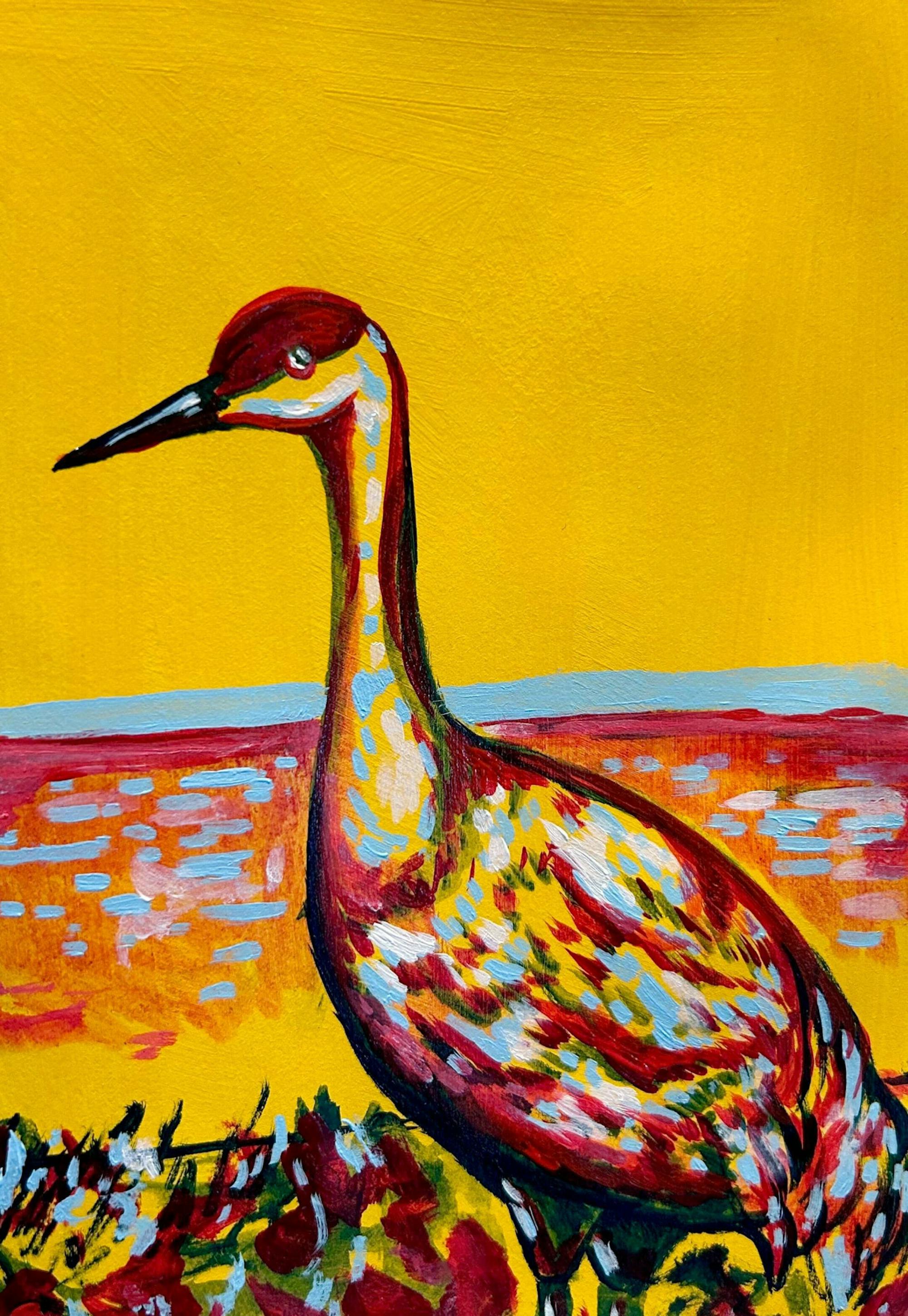
Wisconsin hunting supporters and conservationists sparred over a proposed controversial sandhill crane hunting bill at a Senate committee hearing on Nov. 19.
The bill would create the state’s first hunting season for sandhill cranes, with permits costing $10 for Wisconsin residents and $50 for non-residents. The Wisconsin Senate Committee on Financial Institutions and Sporting Heritage heard testimony from hunting advocates, crane rights advocates and politicians on the bill.
This follows similar proposals in 2011 and 2021, but omits a year of study committee hearing recommendations to include financial compensation for farmers whose crops are damaged by sandhill cranes. Wisconsin corn and potato farmers estimate the birds cause about $2 million in annual losses. Farmer Rick Gehrke said allowing hunting would give farmers a "meaningful way to reduce damage.”
Rep. Paul Tittl (R-Manitowoc), one of the bill’s authors, said hunting is “part of the process of Wisconsin” and compared crane hunting to existing deer and turkey seasons. Tim Andryk of Wisconsin Ducks Unlimited, a grassroots organization dedicated to conserving waterfowl and wetlands that also promotes hunting, testified in favor of crane hunting. Andryk said sandhill cranes are “such good eating that people that are opposed to hunting them, once they’ve eaten one, I don’t think they would be opposed to hunting.”
Hunters killed 1,311 cranes last year in Alabama, Kentucky and Tennessee, which comprise the bird’s eastern population.
Though sandhill cranes are not endangered, conservation groups say hunting would be more ruinous to the population than more common “game species” that reproduce more frequently and have more offspring. Anne Lacy, the director of Eastern Flyway Programs for the International Crane Foundation, said hunting would threaten sandhill crane populations already destabilized by unprecedented outbreaks of avian influenza.
Additionally, hunters might mistake Wisconsin’s critically endangered whooping crane population for sandhill cranes during hunting season. Lacy warned the proposal would threaten federally endangered whooping cranes in Wisconsin if mistaken for sandhills. She pointed to men in Oklahoma guilty of killing whooping cranes, an event cited to oppose a 2022 hunting bill.
“No fiscally responsible legislator or conservationist, which includes hunters, should be supporting this bill,” said Wisconsin resident and bird watcher Jennifer Lazewski.
The Wisconsin Department of Natural Resources (DNR) estimated the similar 2021 bill would have cost about $1.6 million annually in sandhill damage claims. Lazewski also cited a 2022 U.S. Fish and Wildlife survey which found the U.S. has 96.3 million bird watchers — seven times the number of hunters — and said wildlife watchers contribute $250 million to the economy and are a “force to be reckoned with.”
Ryan Michalesko, Communication and Advocacy Specialist at the International Crane Foundation, told The Daily Cardinal the DNR and the U.S. Fish and Wildlife Service found a fall hunting season would not lessen spring crop damage. An ICF and University of Wisconsin-Madison study found nearly half of Wisconsinites oppose a crane hunt.
Retired state Rep. Dave Considine said it was a “travesty” that aid for farmers was excluded in the current version of the bill. While the proposal would increase hunter fees for wildlife damage claims, committee Chair Sen. Rob Stafsholt (R-Madison) proposed an amendment scaling back fees and removing funding for Avipel, a seed treatment that deters cranes.
“The one thing we agree on is that farmers need support,” Michalesko told the Cardinal. “Rather than pushing for a disingenuous hunting season that will be extremely costly, risk population stability, further endanger Whooping Cranes, and do nothing to resolve crop damage, let's work together to get funding to farmers.”