

Science
SCIENCE
Study links inherited anxiety with brain metabolism
By Nicholas Winder | Aug. 10, 2015In a study done by the UW-Madison department of psychiatry, certain regions in the brain were discovered to be responsible for determining the likelihood of a person developing anxiety. These regions were found to likely contain genes that are the cause of genetically inherited anxiety.
SCIENCE
Radio-tagged bees offer new look at landscape
By Michael Falk | Aug. 10, 2015Jeremy Hemberger sits at the desk of his new office and breathes a sigh of relief. “I’m so much more productive over here,” says the UW-Madison entomology graduate student, “it’s so quiet."
SCIENCE
Inactive Fragile X proteins prevent neuron maturation
By Jacob Blitstein | Aug. 10, 2015Recent technological advancements such as high-throughput genome sequencing and functional magnetic resonance imaging (fMRI) have allowed researchers to discover more about the human body and its inner biological secrets than ever before. Scientists are now able to uncover the sequences of entire genomes for almost any organism on the planet.
SCIENCE
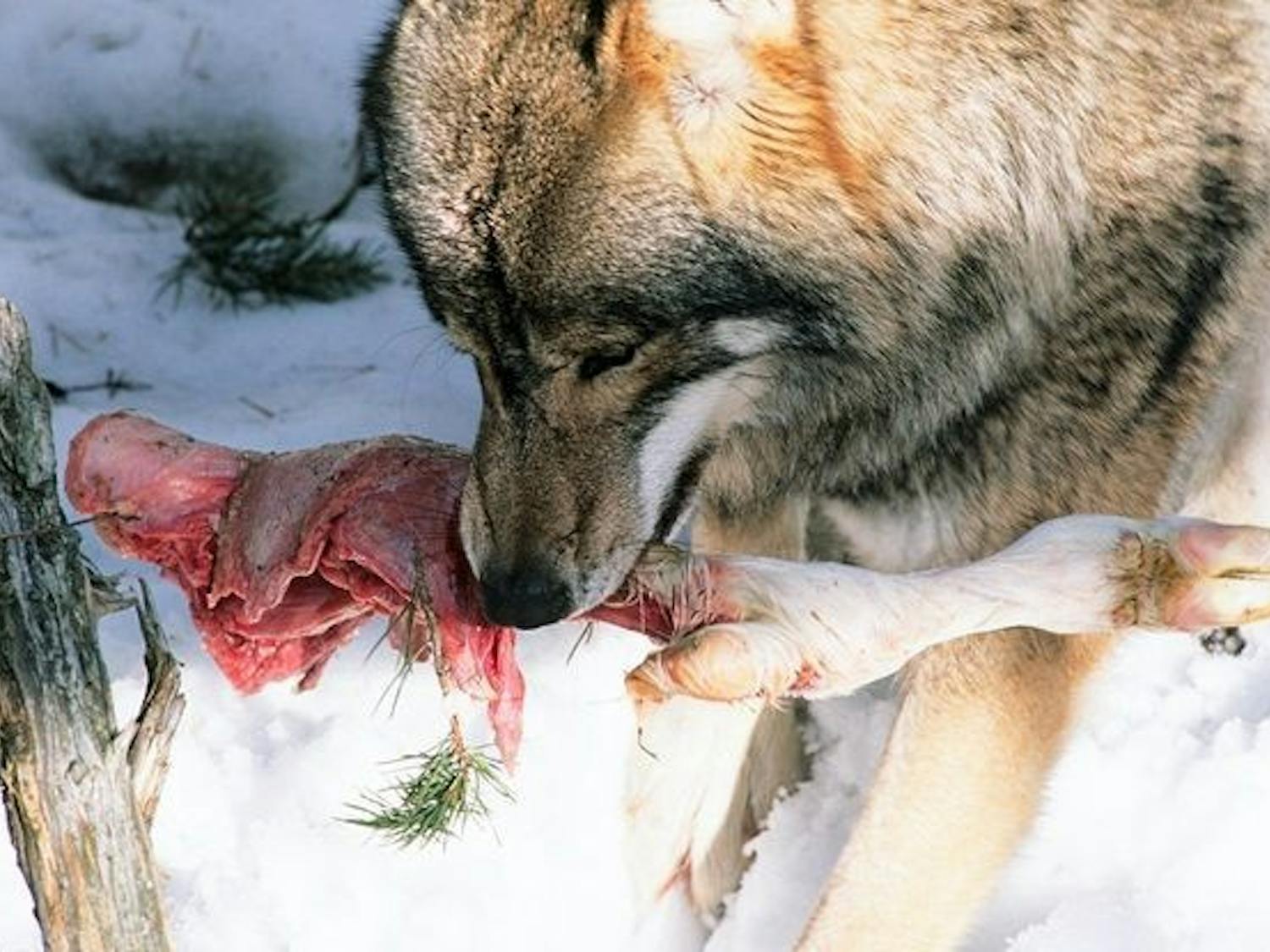
Locals intolerant of wolves
By Michael Frett | Jun. 12, 2015Four decades ago, wolves were added to the Endangered Species Act, and the once expulsed gray wolf trickled back into the Wisconsin wilderness. Protected by federal law, wolves were allowed to grow and spread out among the wooded north, resulting in a resurgence of a species once considered extirpated from the state.
SCIENCE
Eat less, live longer
By Johanna Lee | May. 19, 2015Herodotus, a Greek historian of the 5th century BC, wrote of a magic fountain in the land of the Macrobians, which allowed them to live up to 120 years old. Centuries later in 1513, the Spanish explorer Juan Ponce de León led an expedition looking for the “Fountain of Youth.” Of course, he did not succeed.
SCIENCE
MyEarth- track your carbon savings app encourages students to embrace a green lifestyle
By Peter Cameron and Lily Hansen | May. 4, 2015Do you ever wonder how much energy you could save if you took the stairs instead of the elevator? Or how about if you unplugged your chargers and reduced your TV-watching time? Unfortunately, it’s unlikely that these questions have even crossed your mind. In an effort to increase consumers’ awareness of their environmental impact, Professor Nancy Wong from UW-Madison’s School of Human Ecology has created an app that allows people to track their daily energy use.
SCIENCE
UW-Madison's High Speed Photometer plays important role for the famous Hubble Space Telescope
By Michael Frett | May. 3, 2015For 25 years now, the Hubble Space Telescope has hung in orbit above Earth’s atmosphere, absorbing the twinkling light of distant stars and translating an unprecedented view of the universe. Its data placed black holes at the center of galaxies and refined the predicted age of the universe, all while its cameras painted lush starscapes that colored the universe like never before.
SCIENCE
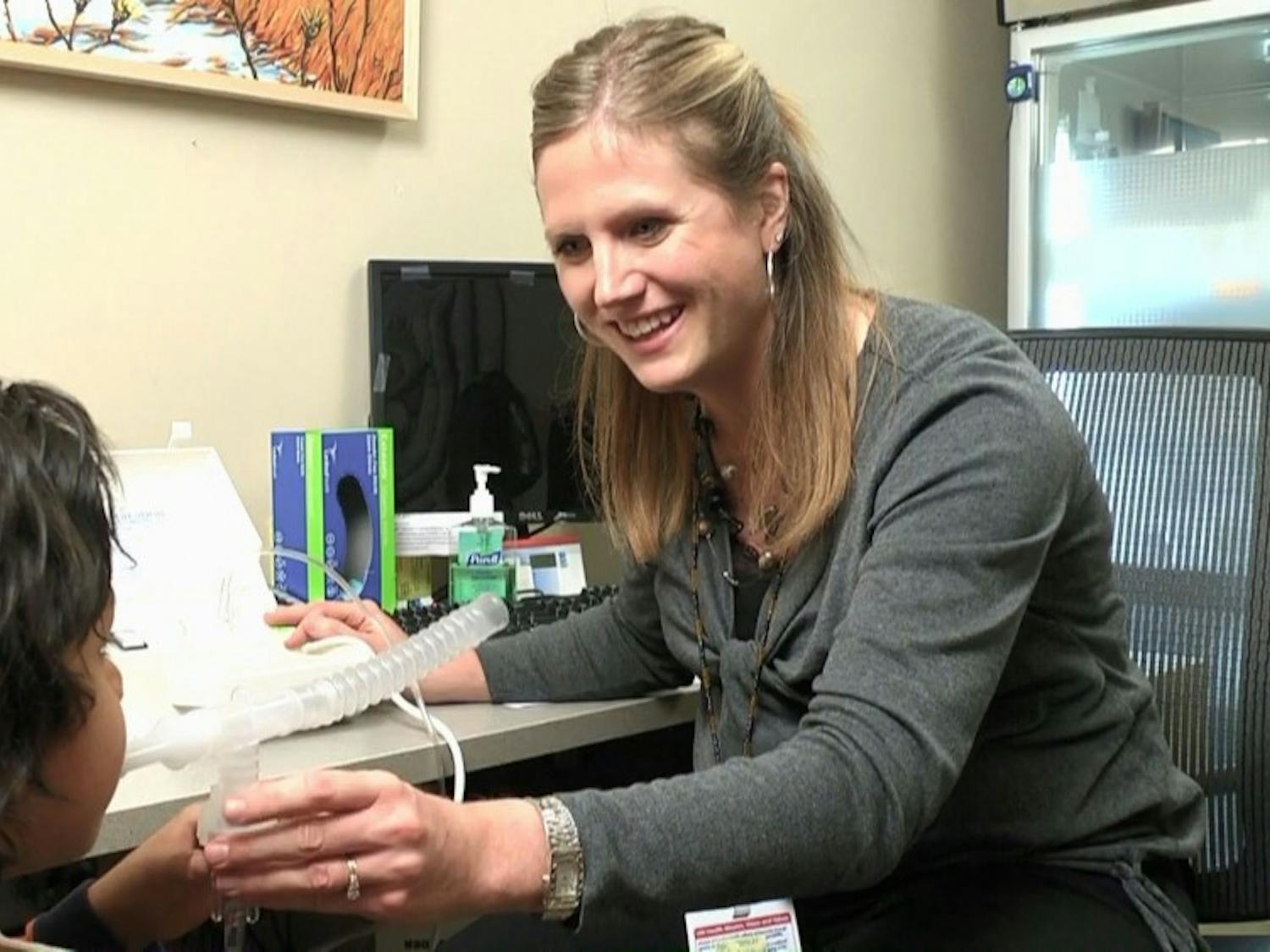
eSchoolCare empowers school nurses
By Suma Samudrala and By James Lanser | May. 3, 2015With the lead of Lori Anderson, a faculty member at the UW-Madison School of Nursing and the American Family Children’s Hospital, a health-care system to support school nurses called eSchoolCare was created.
SCIENCE
SnowShoe Stamp fuses the physical and digital world
By Brita Larson | May. 3, 2015Claus Moberg, a founder and CEO of SnowShoe Stamp, has a message for students: You can start a technology company without a STEM major. How does he know? Because he did it. He began with absolutely zero knowledge of computer coding or 3D printing; instead, he had a big idea and some serendipitous pocket change. Now, he runs SnowShoe Stamp, a rapidly growing tech company that could very well change the consumer world.
SCIENCE
Ask Ms. Scientist: UW-Madison badgers vs American badgers
By Corinne Thornton | May. 3, 2015What’s life like for real American badgers? I’m graduating after four years with a collection of pictures with Bucky, have visited the badger at Henry Vilas Zoo and yet have never wondered about the qualities that make them such a great mascot.
SCIENCE
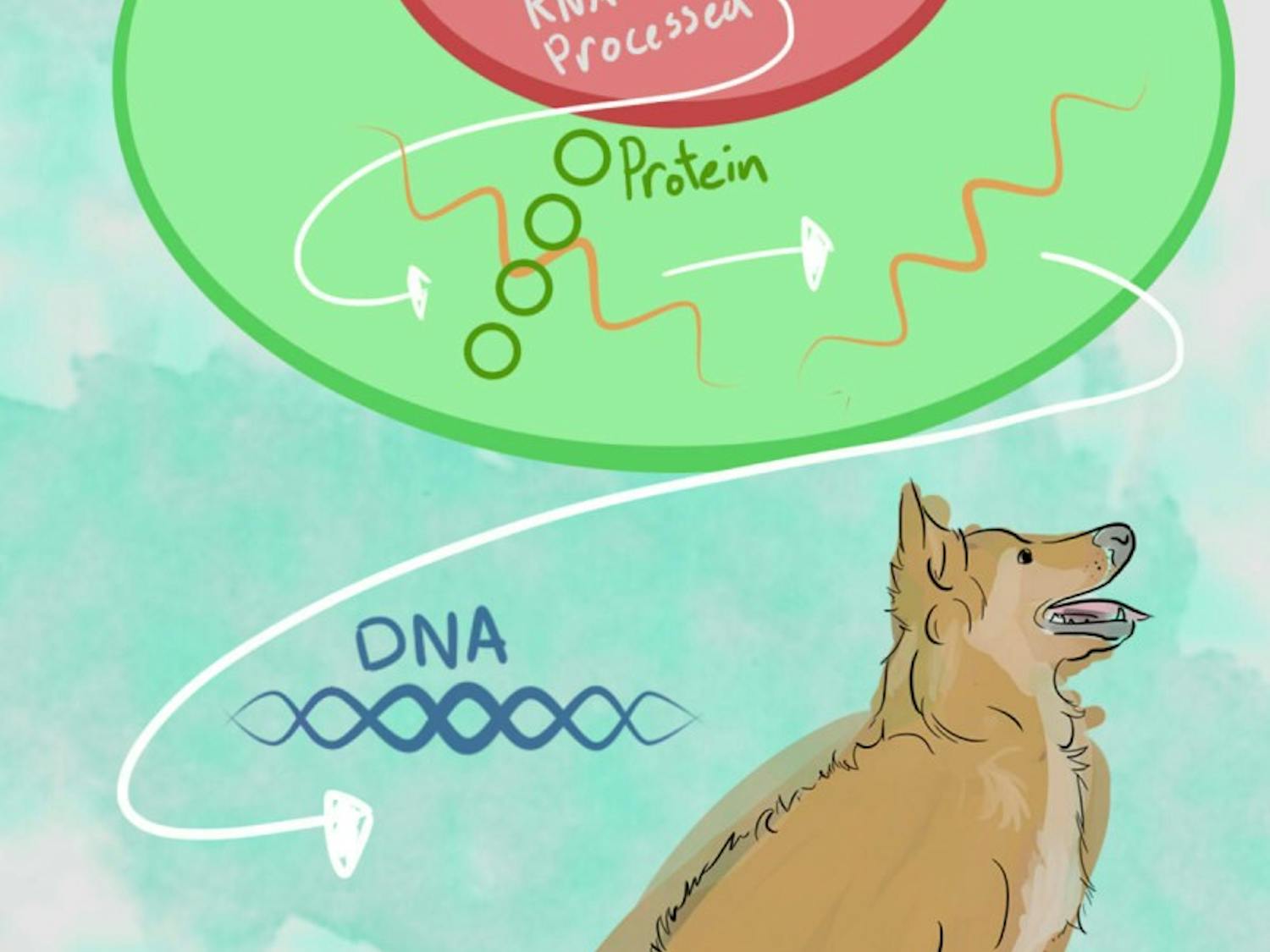
Increased Frizzled-6 expression is associated with increased bone tumor formation
By Suma Samudrala | Apr. 14, 2015Cancer in the simplest terms can be described as the abnormal and uncontrollable growth of cells. While the symptoms, diagnosis and prognosis are different and unique for every individual affected by this disease, research from the past few years has determined that most cancers are characterized by a series of genetic malfunctions that eventually lead to disruption in the molecular activity in cells. While cancer has been most commonly associated with humans, it can affect most multicellular organisms, including dogs. Research collaboration by Timothy Stein, an assistant professor of oncology, and Michael Newton, a professor of statistics and biostatics and medical informatics, has revealed a potential protein over-expressed in tumor cells called frizzled-6.
SCIENCE
Ask Ms. Scientist: storms and twitches
By Corinne Thornton | Apr. 14, 2015Dear Ms. Scientist,
SCIENCE
Greek yogurt byproduct proves useful
By Michael Frett | Apr. 14, 2015A trip through the dairy aisle reveals America’s latest culinary love story. In an aisle once dominated by palates oforYoplait and Dannon, Greek yogurt has become the norm. Names like Chobani have become yogurt celebrities, while old favorites have had to develop their own Greek yogurts to keep up in a revolution that occurred almost overnight.
SPONSORED
The Daily Cardinal's Fall 2015 Course Guide
By Ryan Reszel and The Daily Cardinal Staff | Mar. 26, 2015Searching for the perfect elective to complete your fall 2015 class schedule? Enroll in one of these courses, recommended by Daily Cardinal staff members, and show Student Center who's boss.
SCIENCE
Murfie reactivates a love of music
By Lily Hansen | Mar. 24, 2015Meet Murfie — the business that stores your CDs and vinyl records in a warehouse and digitizes their content so that you can stream your music collection wherever you are. Founded in 2011 by Preston Austin and Matt Younkle, the company warehouse now holds over 700,000 CDs.
SCIENCE
Kindness curriculum utilizes the increased brain plasticity of kids
By Alex Moe and Liz Puibello | Mar. 24, 2015For almost any conceivable skill or field of study, it’s generally accepted that the earlier one starts learning it, the better. Whether the skill be playing hockey, speaking French or composing symphonies, it always seems that the ones who have been doing it since childhood have a higher level of ability and a more natural way of doing whatever it may be. This trend is the result of higher brain plasticity in children, which allows for better assimilation of learning the earlier on it starts.
SCIENCE
Ask Ms. Scientist: Why that spring break dolphin tattoo isn’t going away in the near future
By Corinne Thornton | Mar. 24, 2015Dear Ms. Scientist,
SCIENCE
Insects now helping cause climate change
By Julie Spitzer | Mar. 24, 2015Humans, key contributors to climate change, unknowingly depend on forests to combat the increasing carbon dioxide levels they are introducing into the atmosphere as levels are increasing more rapidly in the last 40 years than ever before.
Popular
By Alaina Walsh
|
07/23/2026
By Sonia Bendre
|
07/28/2026
By Jake Kilander
|
07/27/2026
By Ethan Morse
|
07/30/2026
By Lauren Eno
|
07/30/2026
Tweets by DailyCardinal
Print
 Read on Issuu
