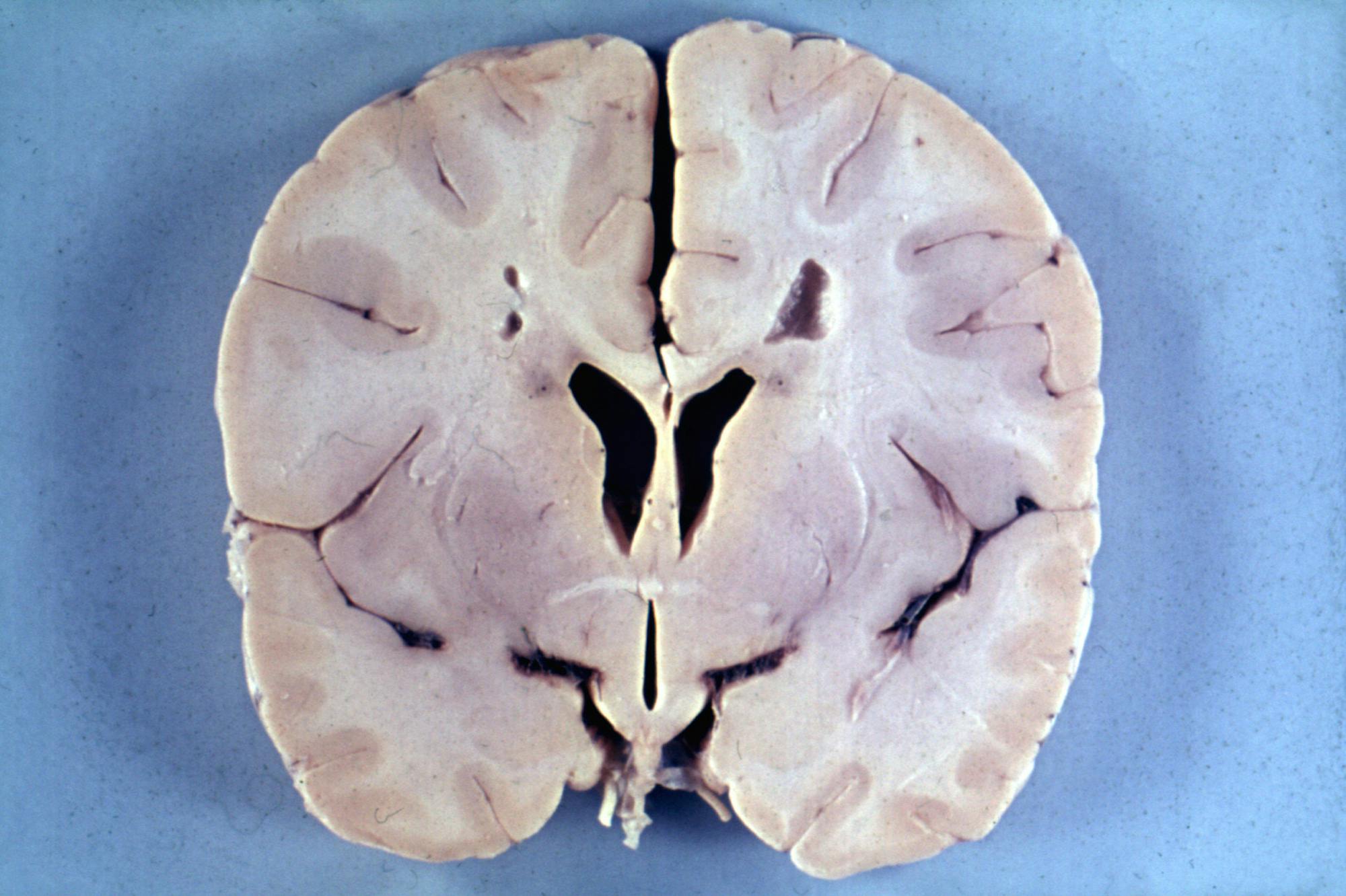
The Food and Drug Administration (FDA) approved Zanvastro, the first injectable treatment for Alexander Disease, on Sept. 3.
Alexander Disease is a genetic condition where a mutation in glial fibrillary acidic protein (GFAP) causes excess protein production that deteriorates the myelin sheath surrounding nerves within the brain and causes a buildup of abnormal protein clumps called Rosenthal Fibers, according to Cleveland Clinic. The disease can lead to seizures, delayed intellectual and physical development, speech issues, among other symptoms, depending on age of onset.
Much of our understanding of Alexander Disease comes from Albee Messing and his colleagues at the Waisman Center.
According to Messing, his research was an international collaboration between him and colleagues at the University of Alabama-Birmingham, Columbia University and the University of Durham, England.
The research was the first of its kind on Alexander disease, as previous studies only described autopsies of deceased patients, according to Messing.
“What I decided pretty quickly was that this was so significant that I should just drop everything else we were doing in the lab and spend the rest of my career trying to understand Alexander Disease. That would be my contribution to science,” Messing told The Daily Cardinal.
His lab developed two test mice for research: a control with no GFAP gene and one with a duplicate GFAP gene.
The knockout mouse was originally designed to test whether GFAP is essential for development and injury response. The GFAP overproducing mice tested whether GFAP alone pushed astrocytes into an overactive state. The surprise was that excess GFAP produced Rosenthal Fibers, and killed the mice, according to Messing.
Researchers originally hypothesized gene duplication caused the genetic mutation, since mice genetically designed to overproduce GFAP developed Rosenthal fibers, Messing said. Messing and his lab found that a single-nucleotide mutation in the GFAP gene caused Alexander Disease.
“It wasn't too long after that that we thought, you know, if we're putting this much effort into trying to understand it, maybe we should also try to do something about it,” Messing said.
Results from mice that produced no GFAP provided insight into eliminating the protein as a possible treatment for Alexander Disease.
“If we could just figure out a way to get rid of GFAP, that would take care of Alexander disease,” Messing said. “If there were side effects, they wouldn't be as bad as having Alexander disease.”
The team received a National Institute of Child Health and Development grant for drug repurposing in 2005-2007, and began searching for existing FDA-approved drugs that could treat Alexander Disease. They screened these drugs for eight to nine years, but were only able to find drugs that reduced symptoms by minimal amounts.
In 2008, the Ramon family in Spain undertook a massive fundraising effort after their son Juanma was diagnosed with Alexander Disease. The fund raised money for a disease too rare for pharmaceutical companies to pursue. According to Messing, the fund raised about 2 million euros and allowed the team to look for new treatments for Alexander Disease.
Ionis Pharmaceuticals developed new antisense technology in the early 2010s. This new technology allowed researchers to manipulate gene expression using short stretches of DNA. In 2013, Messing and his team decided to use antisense to suppress the GFAP gene, according to Messing.
“What antisense offered us was the possibility of very specifically suppressing GFAP, and in a much more targeted way,” Messing said.
In mouse models, antisense not only stopped the production of Rosenthal fibers, but it also eliminated fibers that had already formed. Researchers inject it into the cerebrospinal fluid, where it binds to messenger RNA and prevents the GFAP gene from being translated into a protein. Then a nuclease degrades the protein, Messing said.
The researchers partnered with Ionis, which specializes in RNA- and DNA-targeted medicines, to create a human version of the GFAP-eliminating antisense. This human version was approved this September as the drug Zanvastro.
“The initial challenge just from the first genetics was getting enough DNA samples to test because it is so rare,” Messing said.
In clinical trials over a one-year period, Zanvastro was shown to preserve motor function. No long-term studies have been done yet.
“My hope is that they find a way to do this so that the people are getting better, not just stabilized,” Messing said.
Tracy Hagemann, Associate Research Professor at the Waisman Center, continues to research GFAP and look for ways to advance therapeutic strategies for Alexander Disease.
Researchers are focusing on ways Zanvastro can improve patients with existing Alexander disease and on developing ways to administer it intravenously or orally, rather than via lumbar puncture, according to Messing.
“But that's now far off in the future,” Messing said.