August 2026 tied as the hottest month on record this year, on par with July 2023, as a strong El Niño weather event pushed already warming oceans and air temperatures even higher.
El Niño occurs every two to seven years as part of El Niño-Southern Oscillation (ENSO), when ocean temperatures in the eastern and central Pacific near the equator rise above historical averages for an extended period. This temporarily shifts global weather systems that impact drought, rainfall and floods and adds extra heat.
The 2026–27 El Niño is forecast to become one of the strongest on record. Forecasters currently estimate over a 90% chance the event will reach the “very strong” category, although the forecast could change as conditions develop. This El Niño is occurring in a system about 1.5 degrees Celsius warmer than pre-industrial levels.
“August 2026 was a remarkable month in the global climate record. It was both the warmest August and the warmest month ever recorded, with global temperatures reaching 1.65°C above pre-industrial levels, marking the return of global temperatures above 1.5°C,” Samantha Burgess, Strategic Lead for Climate at the European Centre for Medium-Range Weather Forecasts, said.
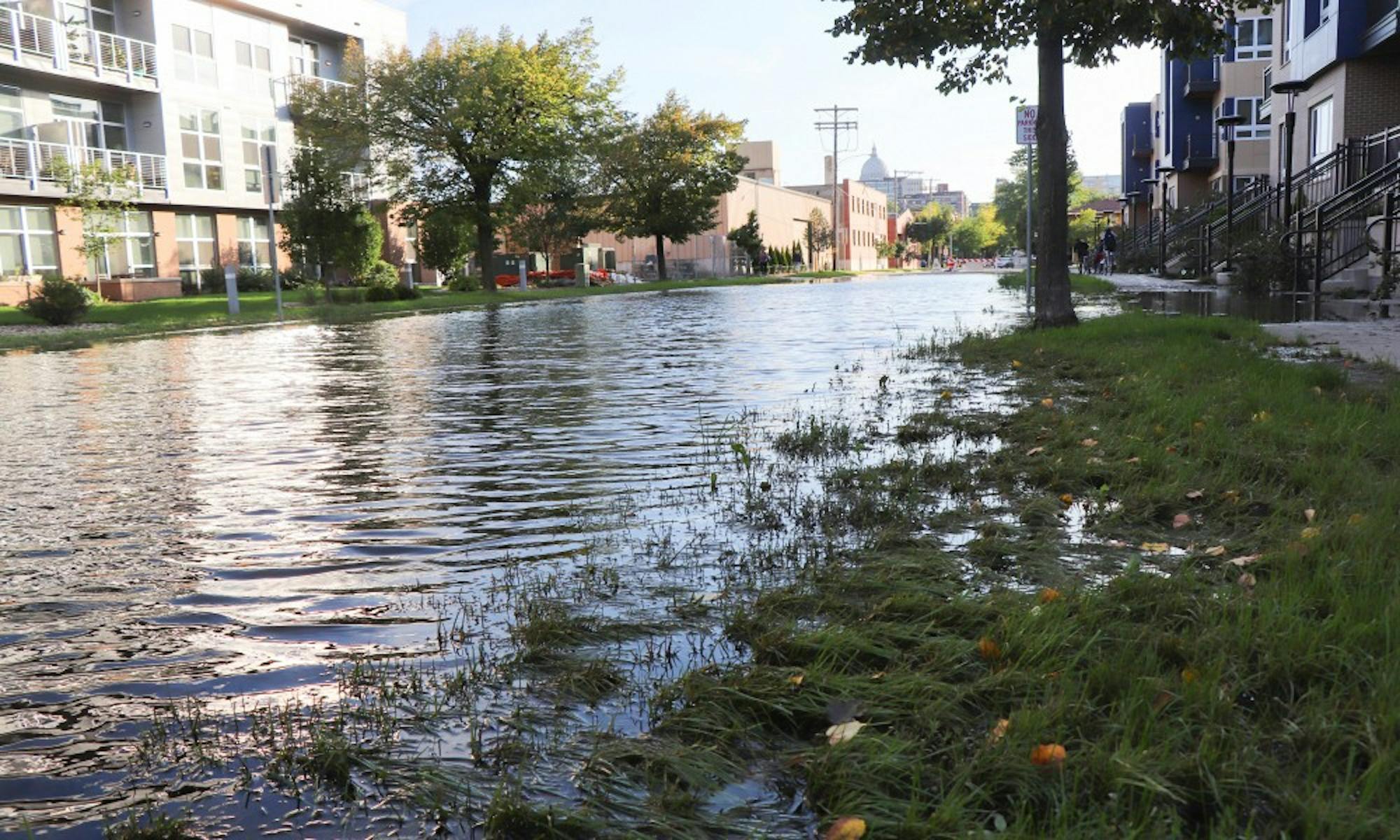
For Wisconsin, the implications are more about how a changing weather baseline could amplify existing risks.
Wisconsin is expected to experience increased risks from precipitation, heat and drought over the next 30 years, according to ClimateCheck's assessment of projected climate risks through 2050. The severity of those risks may partially depend on reductions in greenhouse gas emissions in the coming years.
Milwaukee was ranked as having the highest overall climate risk among several major Wisconsin cities included in its assessment. Milwaukee holds the state's highest projected risks for precipitation and drought, while Janesville has the highest heat risk, Madison has the highest fire risk, and Eau Claire has the highest flood risk.
Climate change does not create a statewide experience in preparing for floods, extreme heat, drought or wildfire. The ability to prepare and respond can vary between communities depending on infrastructure, resources and local conditions.
The city of Madison has set goals of reaching 100% renewable energy and net-zero carbon emissions for city operations by 2030 and community-wide by 2050, while working to adapt to increasing heat and precipitation.
Wisconsin could experience about three times as many days above 90 degrees Fahrenheit by 2050, while hot nights above 70 degrees could become four times more common, according to updated climate projections from the Wisconsin Initiative on Climate Change Impacts. Madison is responding with measures such as extreme heat and urban heat-island mapping, stormwater planning and watershed research.
Milwaukee's climate planning combines emissions reductions with adaptation, with an emphasis on racial and economic equity. Its Climate and Equity Plan calls for reducing community-wide greenhouse gas emissions 45% by 2030 and reaching net-zero emissions by 2050.
Milwaukee’s approach echoes findings from the Fifth National Climate Assessment, released by the Biden-Harris Administration and the U.S. Global Change Research Program, that factors such as income, housing, access to green spaces and infrastructure can shape how a person or neighborhood experiences extreme heat, flooding or other hazards.
“Low-income and communities of color face higher risks of illness and death from extreme heat, climate-driven floods and air pollution compared with White people, and often lack access to adequate flood infrastructure, green spaces, safe housing and often lack protective resources,” according to the report.
The Wisconsin Climate Table, a network of nearly 40 organizations working on issues including environmental justice, public health, conservation and climate policy, has similarly emphasized incorporating equity into local climate planning in its equity and justice toolkit for local governments.
While El Niño will eventually cycle back to its ENSO counterpart, La Niña, underlying trends will continue until mitigation efforts slow greenhouse gas emissions. Across Wisconsin and the United States, communities and governments must use urban resilience and climate planning to increasingly account for the changing weather hazards.