As one of the nation’s leading research universities, the University of Wisconsin-Madison offers students access to thousands of research opportunities. In 2024, the university ranked fifth nationally in research volume and expenditures, spending $1.93 billion on research.
Despite UW-Madison’s reputation as a research powerhouse, positions can be hard to find.
“It's just kind of a double-edged sword,” biology major Quinn Kiesow told The Daily Cardinal. “There's so much research, but there's so much competition.”
Kiesow said more students are pursuing research because of the emphasis placed on undergraduate research, particularly in biology courses.
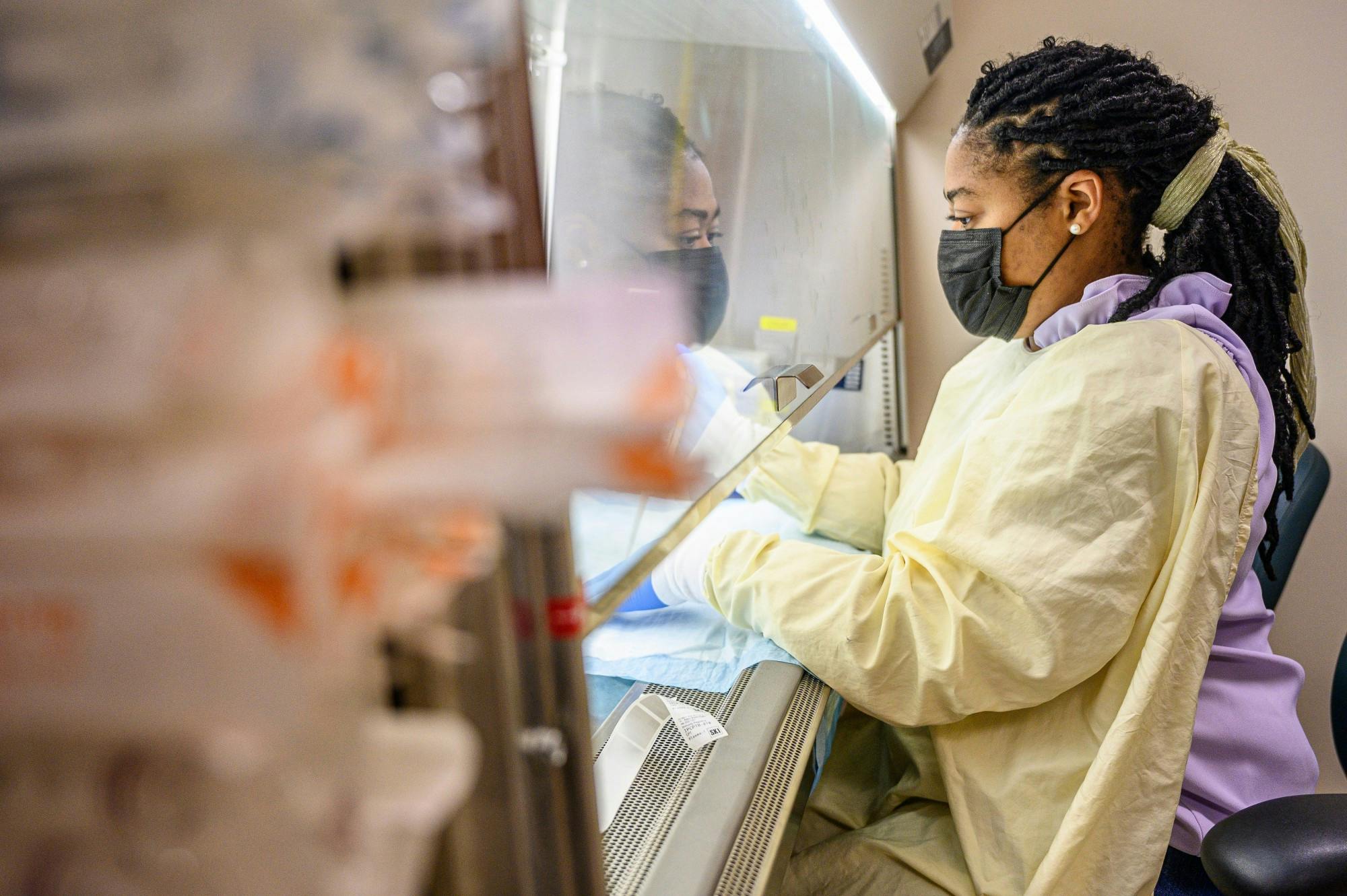
Last fall, Kiesow started working as a field technician for the Ané Lab, collecting data in cornfields and investigating beneficial associations between microbes and plants. This summer she transitioned from the field to lab work, prepping plant samples and preparing bacteria to be used in the field.
Outside the lab, Kiesow also works in the Dairy Cattle Center — milking and treating cows and in the Marlowe Lab, where she just completed vasectomy training to prepare mice for an upcoming research project.
Throughout her time at Madison, she has found her positions in a variety of ways: directly emailing labs, word of mouth and the university’s job board. Others required more initiative.
She discovered her current position in the Dairy Center during a facility tour. Her role in the Marlowe Lab came after walking the animal science and microbiology buildings.
“I was like, Oh, Marlowe Lab, and they had a link on their website that was looking for undergrads,” Kiesow said.
Still, she said many research labs make openings difficult to find.
“There's just so many labs that are really bad with their websites, and that are just archaic,” she said.
For Kiesow, summer research offers more than just lab experience.
“You can do things like long days in the lab and really bond with your lab workers,” she said.
Kiesow used her research experiences to explore different areas of science on her way to Veterinary School. She found that she loved the surgical training in the Marlowe Lab and said that “I was like, this is super cool. I could definitely see myself doing this.”
Psychology major Madison Featherstone is also using the summer to explore her potential career paths.
She is working on the “Biogames Games” project for the Cognitive Development and Communication Lab, which examines the gamification of biological concepts and its impact on third- through fifth-grade students.
In addition to her research, Featherstone is also balancing a separate internship. Even so, she said the work barely feels like a job.
“The research is so interesting, it doesn't feel like work,” Featherstone told the Cardinal.
She said summer research differs from the academic year because students have more independence over projects such as updating the lab’s website.
During the school year, Featherstone earns course credit for her research. During the summer, however, she is being paid. Paid undergraduate research opportunities during the academic year are rare, but many structured summer research programs offer stipends for undergraduate research.
Of the 13 programs under the Summer Research Opportunity Program – a collection of summer research programs for undergraduates – 11 have confirmed student stipends.
Featherstone said her research experience ultimately helped her realize what she does – and does not – want from her future career.
“I decided I don't want to get my doctorate. I just think that I don't have that specific passion for it,” she said. “I've decided I'm gonna do my master's in social work because I can do a very similar thing.”
Beyond building research skills, Featherstone said undergraduate research can help students better understand their interests while expanding their professional network.
“You just build a great network of people who have had experience in something you're interested in,” she said.
More information on undergraduate research at: https://wiscience.wisc.edu/resources/undergrad-resources/guide-to-undergraduate-research/