As the air turns cooler and the sun sets earlier, birds begin to travel through Wisconsin for their migration south. In early fall, millions of birds can cross through Wisconsin skies in a single night. Anna Pidgeon, a Forest and Wildlife Ecology professor at the University of Wisconsin-Madison, told The Daily Cardinal cities pose a risk for migratory birds during this important time.
Pidgeon works as part of the Bird Collision Corps, a group that includes the UW-Madison Division of Facilities Planning and Management, Southern Wisconsin Bird Alliance and the Dane County Humane Society Wildlife Center. The program monitors bird collisions across Dane County, including Henry Vilas Zoo, UW-Madison campus and Madison College campus.
According to Pidgeon, over 300 species of birds pass through Wisconsin during migration. The first species to migrate are aerial insectivores — birds that eat insects in the air.
Next are birds that depend on eating insects from leaves, such as warblers. Towards the end of October, large-bodied birds such as cranes and geese migrate, she said.
Birds can not detect glass, meaning it poses a risk to migrating birds. During migration, birds change their behavior from foraging during the day and sleeping at night to flying at night, starting just after sunset and ending just before sunrise. When planning to land, birds can confuse window reflections for shelter such as trees and shrubs, Pidgeon said.
“As they’re planning to land, for whatever reason, they’re attracted to light, so cities are an unnatural attraction to them,” Pidgeon said. “So they come down to rest and start to forage. They’re in an unfamiliar area and see trees and shrubs, and can’t tell which are reflected and which are not.”
Quinn Kiesow, a UW-Madison junior, has been conducting bird collision surveys for five seasons, three of which have been with the Southern Wisconsin Bird Alliance. She currently surveys Henry Vilas Zoo, but has also done the UW South Campus Route, which includes Union South, the Discovery Center and Morgridge Hall.
During surveys, she looks in areas near large windows for birds that may have hit them. According to Kiesow, the birds don’t always die on impact; they may be severely injured or concussed, so surveyors are trained to look around bushes near the windows in case a bird moved.
“There were a lot of birds that hit the Discovery Center on the side with all the plants in it, so I think they’d just see it [the plants] and just go straight into it. Even this year, when I haven’t been on survey routes, I found two different birds that have hit by Biochem and the Discovery Center yesterday,” Kiesow told the Cardinal.
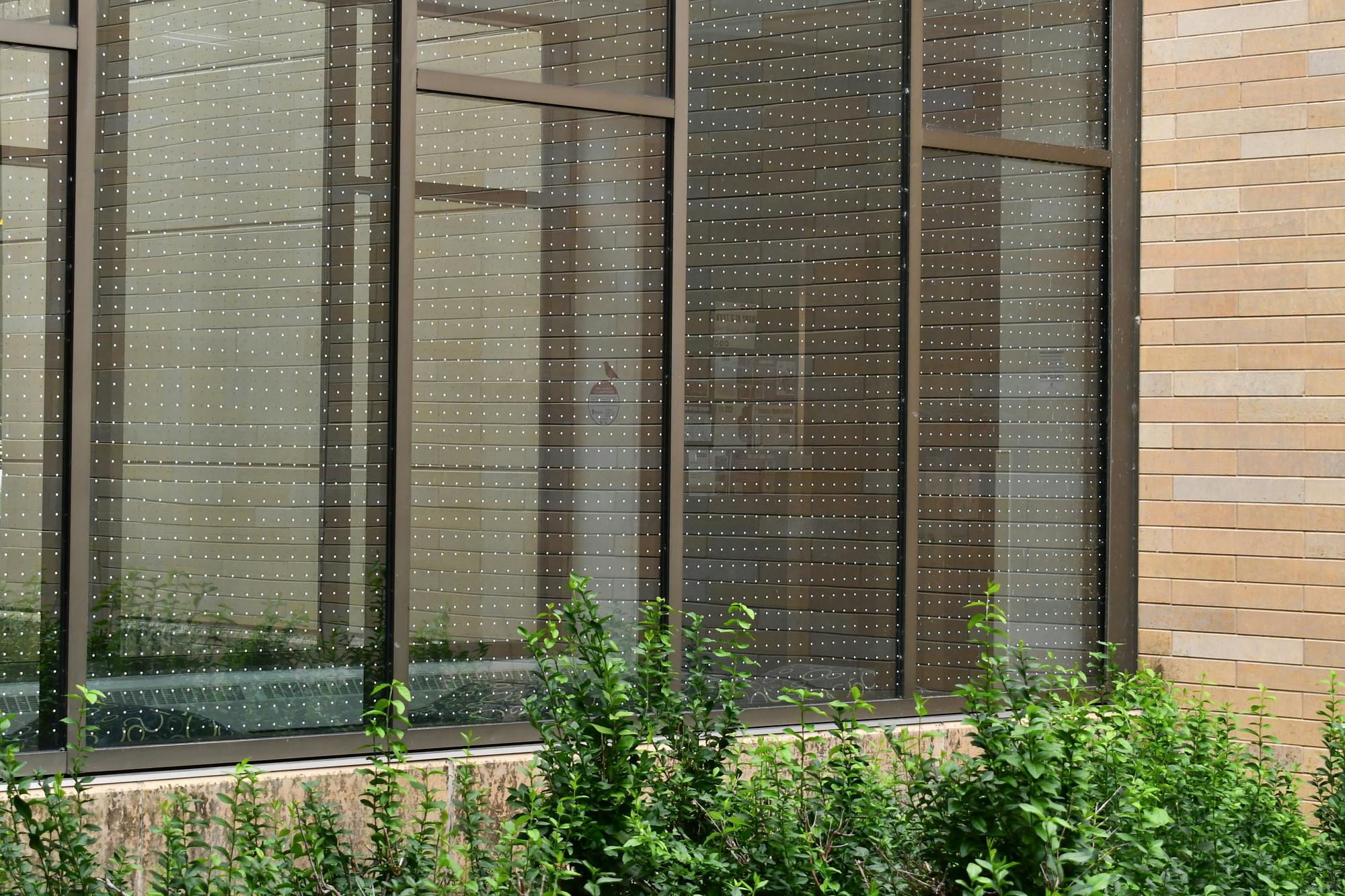
Based on the work from the Bird Collision Corps, Madison enacted an ordinance that all new buildings or substantial remodels need to use bird-safe glass. Since this was enacted in 2020, buildings at UW-Madison such as Ogg Residence Hall, Dejope Residence Hall, Bakke Recreation and Wellbeing Center and the School of Veterinary Medicine have added bird-safe glass and seen a decrease in bird deaths.
“Ogg Hall has this glass pass-through between two parts of the building. That was a site of really high mortality, and it isn’t anymore because bird-safe glass has been applied there. Similarly, on Dejope's side that faces the lake, we were having a lot of bird deaths on that side, and we’re not now,” Pidgeon said.
Since joining the Bird Collision Corps in 2024, Henry Vilas Zoo has also seen improvements after adding bird-safe glass to their most impacted buildings. Jess Thompson, the Conservation and Education Curator at Henry Vilas Zoo, told the Cardinal the Bird Collision Corps surveys have helped them prioritize which buildings to focus on as adding bird-safe glass can be expensive.
“Our carousel building is mostly windows, and so that was one of our biggest areas. So we have treated the two sides that had the most strikes. Since then, we haven’t had any bird strikes on this building. Because we weren’t finding strikes on the other sides of the building, it meant we could focus on these two sides and then move on to our next affected area,” Thompson said.
According to Thompson, the zoo uses clear dots that are UV reflective, which allows visitors to still see the animals but deters birds from flying into the glass. Most recently, Henry Vilas added these dots to the glass in the bear exhibit. With the extra material, Thompson said she plans to implement bird-safe glass to the capybara pool glass.
Additionally, Thompson said signs have been posted around the zoo, educating visitors about what the dots are for.
“Because we have so many people coming through, it’s a great way to show people that they can do this at a smaller scale in their homes,” she said.
Besides implementing bird-safe glass, citizens can help migratory birds by shutting lights off at night, planting native plants to provide food for migratory birds and keeping cats indoors. Birds are attracted to nighttime lights, even as small as a streetlight, according to Pidgeon.
“Imagine the compounding effect that city lights have. Turning off lights from dark until dawn that are non-essential and non-safety is something that everybody can do,” she said.
Lindsay Pfeiffer is the science editor for The Daily Cardinal.