Nuclear fusion startup Realta Fusion will begin construction on their research and development facility and corporate headquarters in OM Station, a former Oscar Mayer plant on Madison’s north side, by the end of this year. The project will receive up to $55 million in financial incentives from the city and state.
Realta plans to create over 600 new jobs and will look to UW-Madison as a major “talent pipeline,” Kieran Furlong, CEO and co-founder of Realta Fusion, told The Daily Cardinal.
The location allows Realta to continue primarily operating out of Madison near their existing Wisconsin HTS Axisymmetric Mirror (WHAM) lab, which Realta uses alongside the University of Wisconsin-Madison. Realta spun out of UW-Madison research, and Furlong cited the university as a benefit to the Madison location over other locations the company considered in Illinois, New Jersey, New Mexico and Tennessee.
Furlong said Realta hopes to continue their working relationship with UW-Madison and hire across majors, creating jobs in sales, management, laboratory work, manufacturing and research.
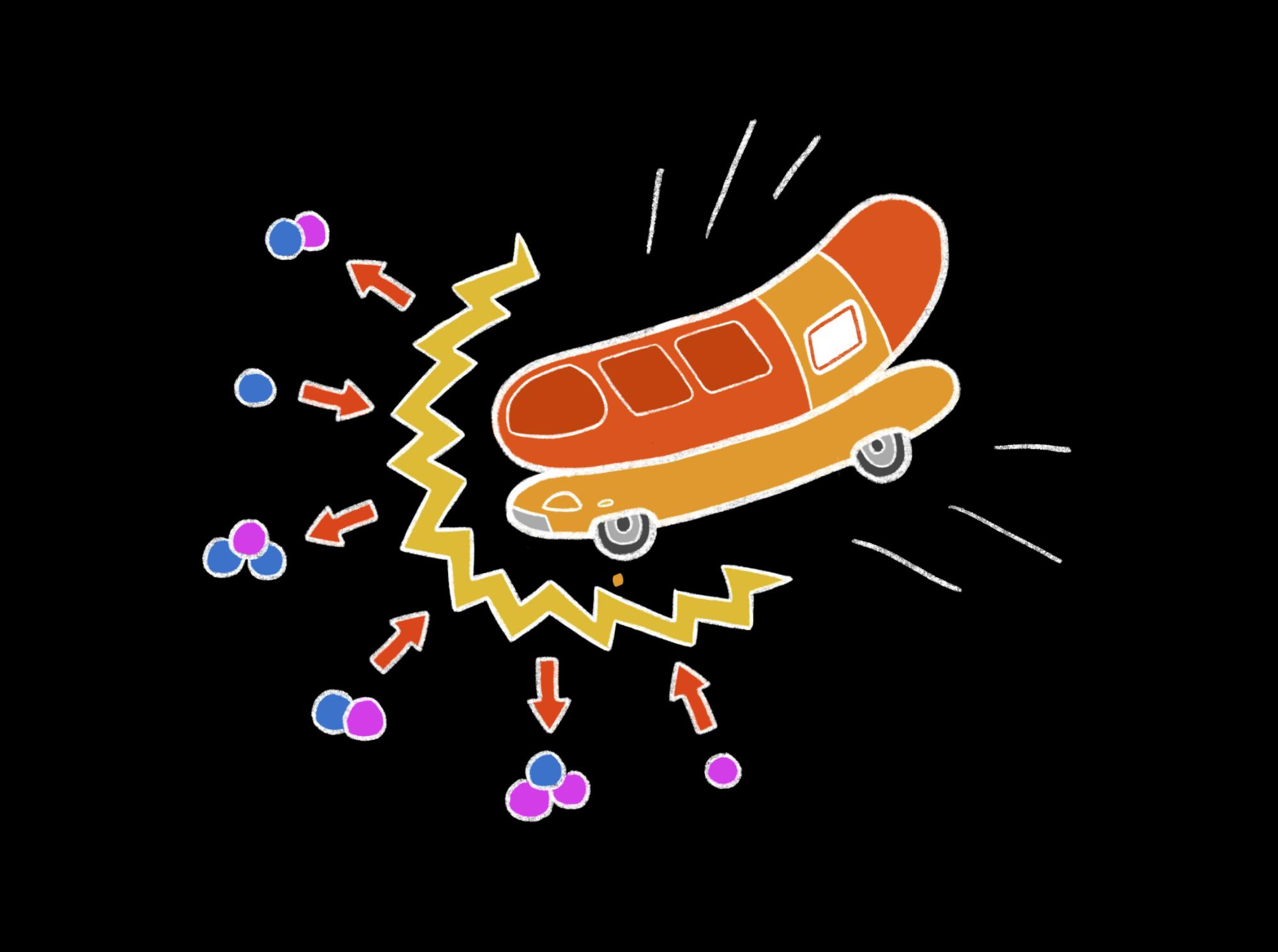
Nuclear fusion is a reaction created by smashing two hydrogen atoms together at high temperatures, forcing them to fuse and release a neutron and massive amounts of energy. The technology has never been deployed on an electrical grid, though Furlong hopes to build grid-connected fusion by the 2030s.
The research facility will house Realta’s deuterium-only fusion device prototype, Hammir. Allaying city council concerns, Hammir will not reach fusion-level temperatures because it will not utilize tritium, a radioactive hydrogen isotope. Realta expects to break ground on the facility by the end of the year, according to the press release.
In addition to the financial incentives and convenience, Furlong cited manufacturing expertise as a reason Realta chose Wisconsin.
“When we need to get things manufactured for our experiments, there's plenty of people here in-state that we can look to to get things made,” he said. “I think the state of Wisconsin is definitely leaning in and making a strong case for Wisconsin to be a hub of the future fusion industry, and that will include manufacturing.”
What’s in the financial package?
The largest component of Wisconsin’s $55 million financial package is a state sales and use tax exemption for fusion projects passed April 3, estimated to save Realta $37.5 million in construction and development costs.
Additionally, Furlong said the Wisconsin Economic Development Corporation (WEDC) submitted a letter of commitment granting “up to” $15 million in Enterprise Zone tax credits to Realta, which are performance-based tax credits earned through meeting goals for job creation and capital investment. WEDC declined to comment on specific incentive agreements until a contract has been approved.
The City of Madison also contributed $2.8 million in tax increment financing, a tool used to provide funds to construct public infrastructure, set to scale with the company’s size. The city’s last tax increment financing agreement was with Exact Sciences in 2018, WKOW reported.
Realta plans to create 45,000 square feet of manufacturing space in addition to research, development and office space. They also pledged to create a minimum of 157 new full time jobs and make $67 million worth of physical improvements to the building, excluding equipment costs.
Currently, Realta has around 50 employees, up from 35 at the end of 2025, Furlong said. By the end of this year, they aim to have 70 employees. To claim the full financial package, they’re planning to scale to 600 employees and invest hundreds of millions of dollars in capital expenditures for their new research and development facility.
The former Oscar Mayer facility has been vacant since 2017 — Furlong said some parts of it still smelled of dill pickle when he first toured the space. Renovating it could cost Realta Fusion upwards of $500 million. But Furlong believes the cost will pay itself off, viewing fusion as the same type of seismic shift that oil, gas and coal energy was in the 19th century.
“We think fusion is the future of energy for humankind,” Furlong said. “There's not enough energy in the world today right now for 10 billion people. We need to fill that gap and then continue to supply energy for economic growth. I think [Realta] really is almost unbounded, in terms of the potential.”
Realta plans to hire technical and non-technical roles and prioritize diversity in terms of degree background, prior experience and skill set “as well as what people conventionally think of in diversity,” Furlong said.
“We are coming from a field that is underrepresented with women, and so we really want to make sure that we are providing an attractive workplace for female engineers and scientists,” he added.
Pushing Wisconsin fusion forward
State officials, including Gov. Tony Evers, celebrated Realta’s decision to continue their primary operations in Madison. The past few years have seen increased state effort to gain visibility as a fusion energy hub through legislation, summits and collaboration with UW-Madison’s well-renowned nuclear engineering program, which has spun out four fusion startups.
“Realta Fusion is a modern-day example of the Wisconsin Idea at work — the principle that research undertaken at the UW-Madison should extend beyond the classroom to benefit the people of our state,” Sam Rikkers, Deputy Secretary and COO of the WEDC, said in an email statement to The Daily Cardinal.
Realta Fusion’s nuclear energy work directly aligns with UW-Madison’s engineering moonshots announced in 2026 and the White House’s Genesis Mission, a funding initiative centering around applying artificial intelligence to technologies including fusion, quantum computing and manufacturing.
Realta Fusion submitted one of seven accepted Phase I Genesis Mission proposals originating in Wisconsin, out of 278 projects selected nationwide July 22: an artificial-intelligence-driven simulation of a neutral beam injector, which is used to heat plasma inside fusion devices. The U.S. government also accepted two fusion-related proposals from UW-Madison, as well as a proposal from university fusion spinoff SHINE Technologies.
With five total accepted proposals, UW-Madison leads all other public universities.
“Wisconsin has emerged as a regional and national hub for fusion research and collaboration, driven by decades of leadership at the University of Wisconsin-Madison and a growing ecosystem of industry partnerships and startup companies,” Rikkers said.
Sonia Bendre is the campus news editor for The Daily Cardinal. You can reach her at sonia.bendre@dailycardinal.com.