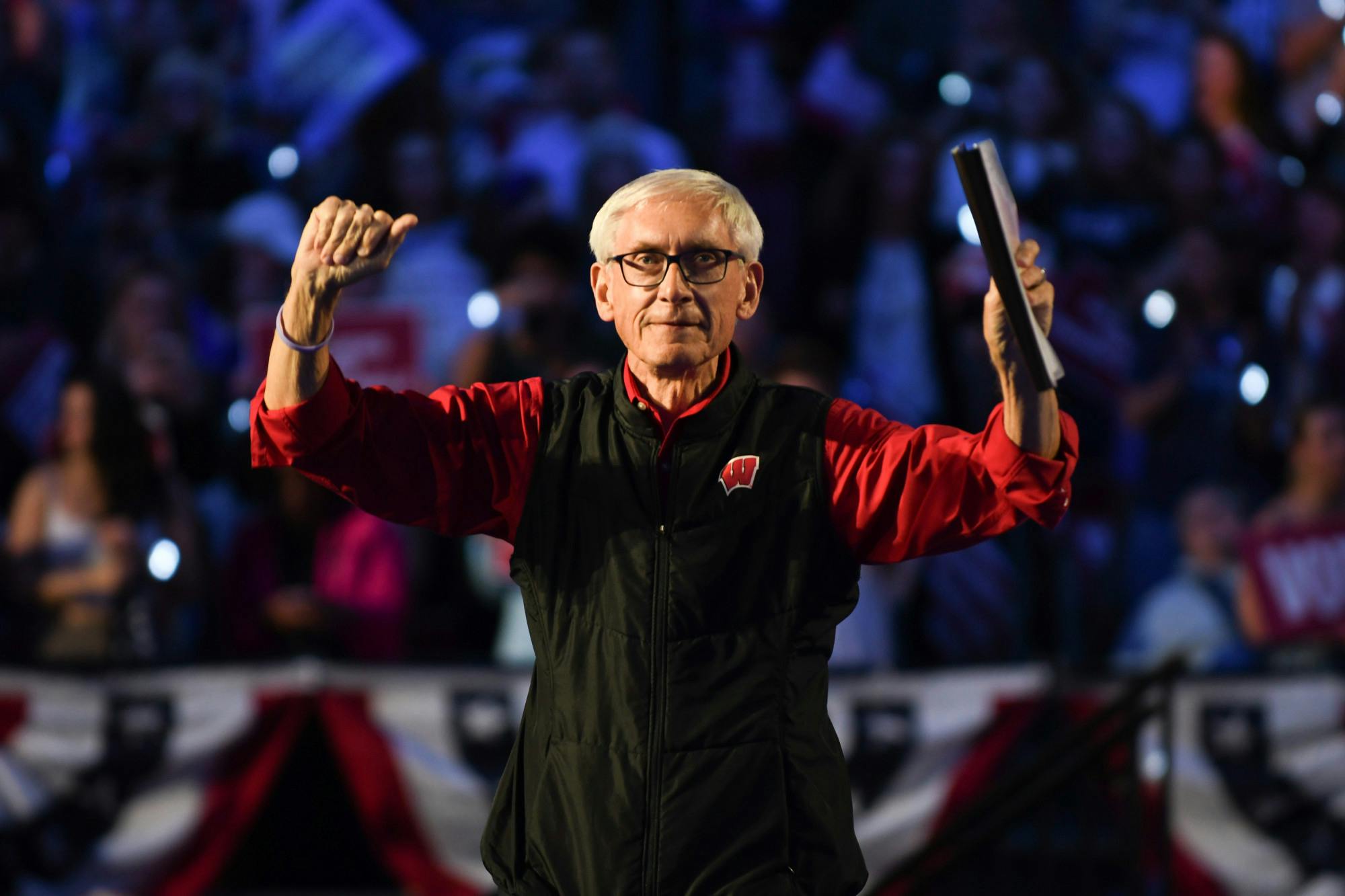
Tony Evers has spent over three decades committed to public service. Before becoming governor in 2018, Evers climbed virtually every rung of public education in the state, from high school biology teacher to principal, district superintendent and state superintendent.
As Evers leaves the governor seat this November, current and former colleagues applaud his dedication and say his background in education shaped his governorship.
“Governor Evers is an educator first and foremost,” Regent Edmund Manydeeds told The Daily Cardinal. “His values and the way he thinks about the Universities of Wisconsin mirror what he brings to the governorship.”
Former UW System President Kevin Reilly told the Cardinal that state superintendents often focus more on K12 education when they serve on the Board of Regents. But Evers was not only dedicated to the job, he was interested in the “wider world of education.”
“I think his record as governor is very supportive of higher ed,” Reilly said. “He did not always get everything he asked for… but he kept pressing for higher levels of funding, for more support for the system, for appreciation of what it brings to the life of the state. I'd give him high marks as an education governor, and higher education governor.”
Manydeeds mirrored that sentiment, saying Evers’ passion for education followed him all the way into the governor’s seat.
Evers began his education career in 1976 as a teacher in the Baraboo School District. He later served as principal in the Oakfield and Tomah school districts and district superintendent for Oakfield and Verona.
Evers received his PhD at the University of Wisconsin-Madison in 1986 for educational leadership and policy analysis before becoming state superintendent from 2009 to 2019.
In his 2025 State of the State address, Evers announced the “Year of the Kid,” which aimed to invest in education at all levels.
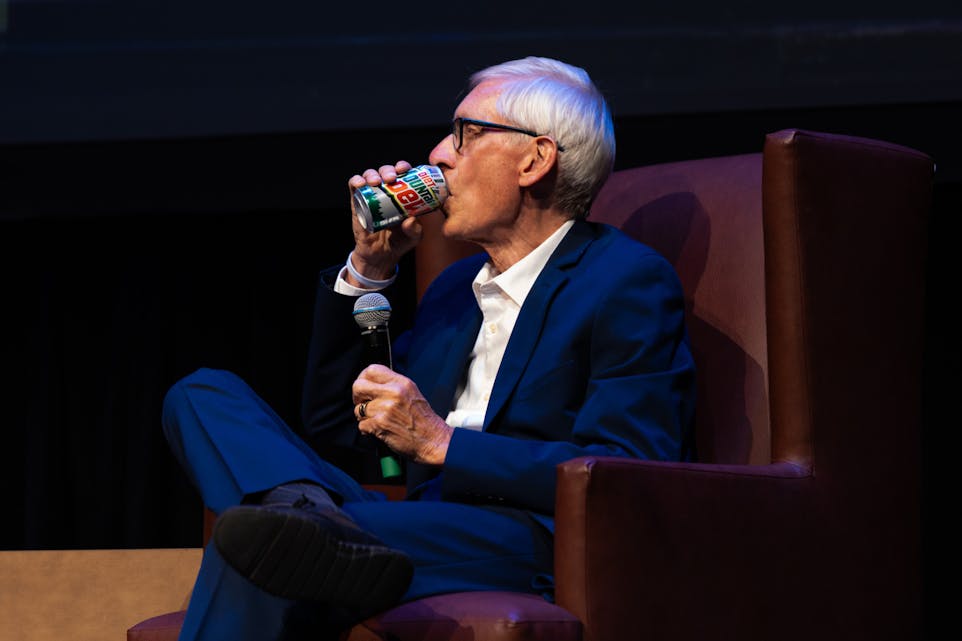
State Superintendent Jill Underly told the Cardinal she is “deeply grateful for his unwavering advocacy for public education at every level.”
“What I’ve admired most is that he consistently starts from a simple, but powerful place: what is best for kids,” Underly said. “He has approached this work with a genuine desire to leave Wisconsin stronger for the next generation.”
Manydeeds and Reilly said Evers balanced trusting the regents to make decisions with advocating for the UW System.
“He told me that he was not going to interfere with what the regents would do, that he trusted us to do our jobs,” Manydeeds said. “He never overstepped.”
Given increasingly polarizing approaches to higher education nationally, Reilly said Evers’ respect of the regent’s autonomy was especially valuable.
“The idea here is, how do we get together a group of smart citizens who are interested in higher education to be the governors of it?” Reilly said. “We don't have a Ministry of Higher Education. The government does not directly run our campuses, and that's a really healthy thing in a democracy in terms of freedom of thought and freedom of speech.”
He added that Evers knows he has a lot of authority as governor but understood that “[the regents] are the governors of this system, and they should be. I'm not the governor of the university. I'm the governor of the state,” which Reilly believes is a “healthy attitude” to have.
In the past, Evers told the Cardinal he would turn to the regents when it came to bills pertaining to higher education, like when Republican lawmakers brought forward legislation earlier this year to cap UW System tuition to the rate of inflation.
Reilly said part of that willingness to cooperate might stem from Evers’ time as a regent.
Manydeeds added that Evers fulfilled most of the regents’ budget requests because he understood what the UW System requires to run.
In his 2025-27 budget address, Evers proposed $856 million for the UW System, which would have been the largest higher education budget increase in state history. After months of negotiation and potential cuts to the budget, the Republican-controlled legislature and Evers agreed to grant the UW System its largest funding increase in 20 years at $256 million.
In previous budget cycles, the UW System struggled heavily from funding cuts leading to tuition raises and multiple branch campus closures.
“I think you take the wins that you can get,” Reilly said. “The atmosphere has been tough, not only here, but around the country for funding of higher education.”
In prior budget cycles, Evers struggled to secure funding due to resistance from the legislature’s Republican majority, and former Republican Gov. Scott Walker gutted large portions of the UW System budget in his two terms.
Walker cut $250 million from the system in 2015, which was one of the largest cuts to higher education in U.S. history, and put the UW System under a decade-long tuition freeze in 2013.
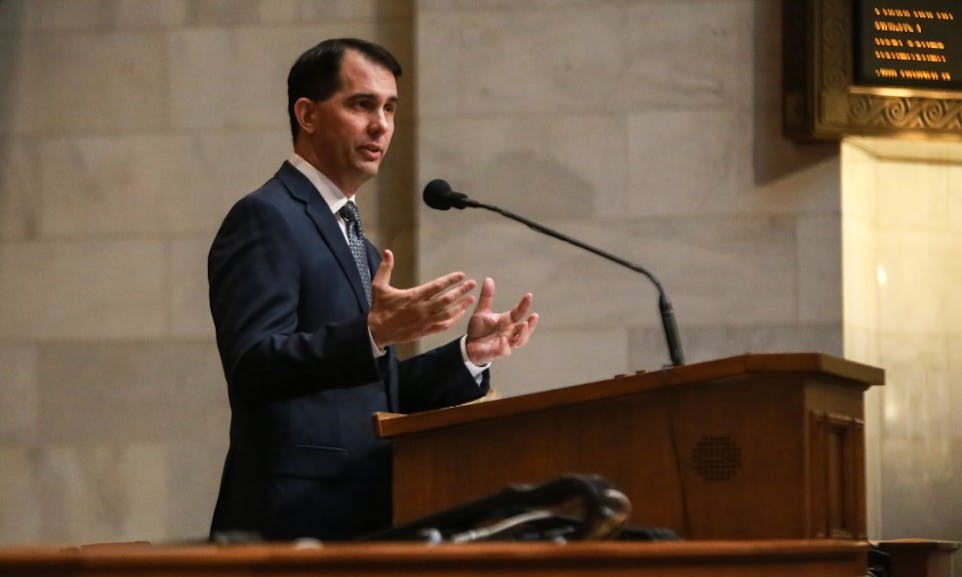
Wisconsin families will soon be eligible to receive a $100 tax credit for every dependent child in the household under a major bill signed into law by Gov. Scott Walker Tuesday.
Wisconsin ranked 44 out of 50 in public funding for four-year universities in 2024, according to the State Higher Education Finance report.
Evers wanted to extend the tuition freeze in his first budget in 2023, but only if it was paired with an increase to the UW System budget. The Republican-controlled legislature rejected his proposal, which tightened UW System funding across the board.
“This present state of the Universities of Wisconsin is a result of many years of not being allowed to raise tuition,” Manydeeds said. “If the state would increase its portion of the budget that we need to operate on, in my mind, it would be perfect to keep tuition low forever. But that's just not the case.”
Reilly said he believes we need to continue highlighting the “value” of higher education and do a better job convincing the public to elect officials who support it.
“Tony's always, as I've heard him, taking a chance whenever he can to speak up about the value of University of Wisconsin to Wisconsinites of all kinds around the state,” Reilly said.
Managing partisan divide
Higher education has become more politicized over time, with debates over free speech heightening on campuses across the country.
Chancellor Jennifer Mnookin rolled out the Wisconsin Exchange: Pluralism in Practice this spring, aiming to promote open dialogue and conversations among individuals with differing viewpoints.
“What's reflected in higher education now is where we are as a country where there's so much more partisan division,” Reilly said.
UW System President Jay Rothman was fired by the Board of Regents in April, and Republican lawmakers have raised questions over the decision, calling it “secretive maneuvering” and politically charged.
Reilly pointed to a time in his own tenure when the board — which was composed of appointees from both former Republican Gov. Tommy Thompson and former Democratic Gov. Jim Doyle — would “leave politics at the board room door.”
Although Reilly said leaving politics outside was never entirely practiced, he said it was an “ideal they aspired to.” But now it’s a trend he sees in many boards across the country who feel their role is to represent the party in power.
Reilly said one of Evers’ greatest strengths was his ability to reach Wisconsinites on important issues like education.
“He was able to convince people in big cities and medium sized towns and out in rural areas that he was going to do the right thing for the education of their kids and their young people, and I think that's quite an accomplishment for a governor,” Reilly said.
While Evers may leave the governor’s seat as one of the most education-focused leaders in the state’s history, Manydeeds said he is not afraid for the future.
“All of the governors that I have seen come and go in the state, even if they have cut budgets, even if they have had ideas which lessen the amount of money we're allocated to education, all loved the state of Wisconsin,” Manydeeds said. “They all thought or believed that what they were doing [was] in the best interest of the entire state.”
Manydeeds said if a governor whose ideas he disagrees with is elected, he believes it is the job of the regents to be open to discussion and debate.
Audrey Lopez-Stane is the state news editor for The Daily Cardinal. She has written in-depth on free speech on campus, higher education and elections including the Wisconsin Supreme Court race and upcoming governor primary. Audrey previously interned at WisPolitics and now works for Wisconsin Watch. Follow her on X @ALopezStane.
Clara Strecker is the state news editor emeritus for The Daily Cardinal. She previously served as copy chief. Clara has written in-depth on the 2025 Wisconsin Supreme Court race, the 2024 presidential election and abortion rights. She currently works with WisPolitics and will spend the summer interning with The Milwaukee Journal Sentinel. Follow her on X at @clara_strecker.