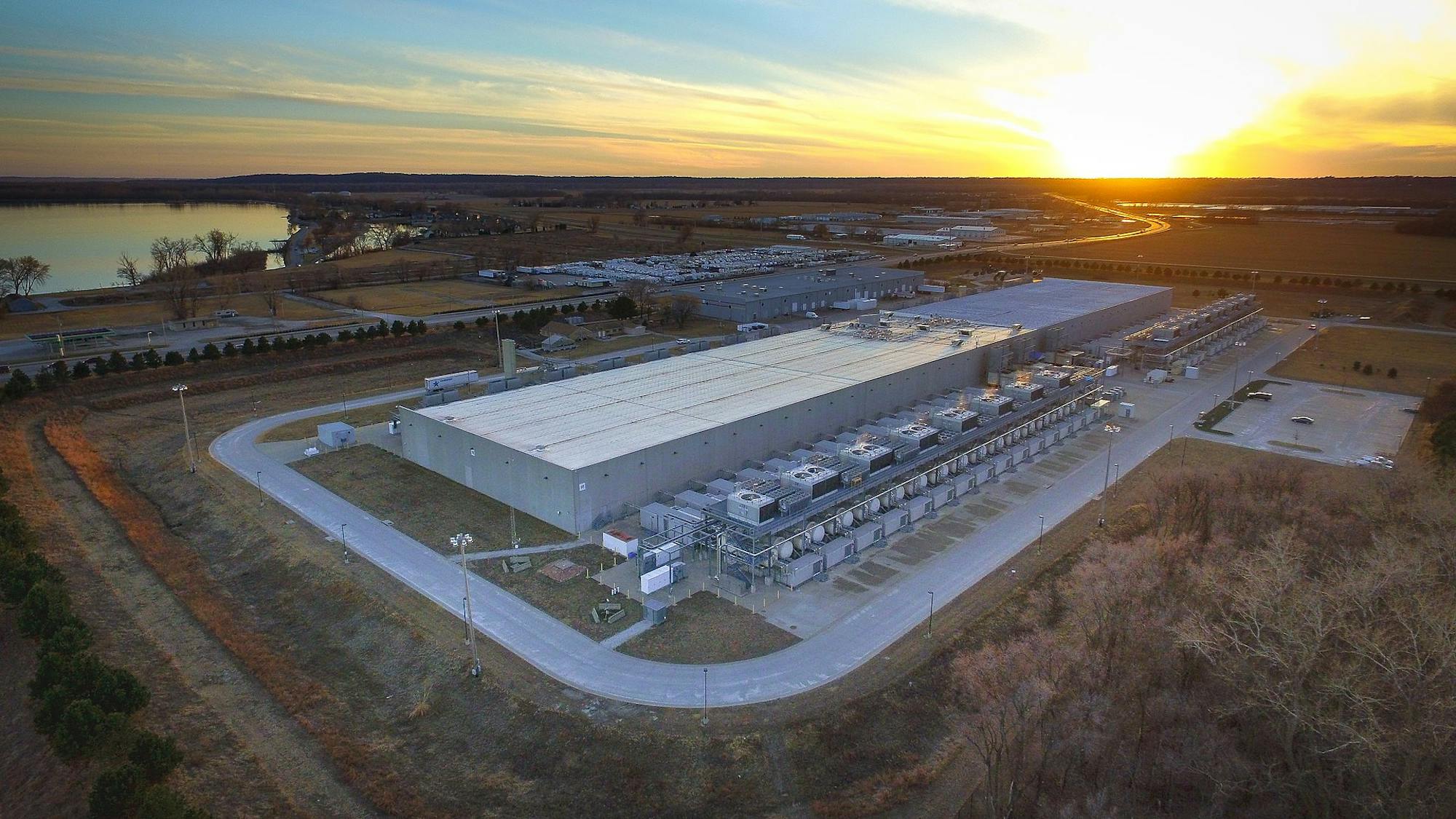
Data center proposals have spread across the country, but with one Dane County town winning its battle against a project, eyes are now on DeForest for inspiration.
When Virginia-based QTS, a Blackstone-backed data center company, announced a project in DeForest, residents began voicing their concerns about environmental impacts and a lack of transparency.
Emails show DeForest staff were strategizing with QTS representatives and Alliant Energy as early as March 2025, months before announcing the proposal last October. Dan Jansen, a member of No Data Centers in DeForest, questioned if DeForest Village President Jane Wolfgram Cahill had remained neutral in the process.
On Jan. 27, the Village of DeForest released a statement saying “QTS’s data center proposal is not feasible.”
Tricia Boehlke, a No Data Centers in DeForest’s leader, said that night was her first full night of sleep in months.
“I just felt this complete sense of calm,” Boehlke told The Daily Cardinal.
Boehlke helped start No Data Center in DeForest because of her concerns surrounding the project. “I had been reading about how our electrical bills were going to go up and how there were not a lot of regulations,” Boehlke said.
A lot of things went right in DeForest’s organizing, Boehlke said. The group kept a small leadership team to prevent “too many cooks in the kitchen” and ensure they were approaching the issue from every possible angle.
The group started a petition to change a village ordinance, organized protests and attended board meetings to speak during the public comment period. “We built the plane while we were flying it,” Boehlke said.
One day after Deforest’s announcement, Wisconsin Watch reported that at least four Wisconsin communities have signed non-disclosure agreements with data center companies.
In Menomonie, city officials signed an agreement a year before the public was made aware of a proposal. Now, activists there are turning to their DeForest peers strategy.
Dunn County residents follow DeForest’s lead
Before Balloonist, a Delaware-registered company, proposed a Menomonie hyperscale data center in July 2025, Blaine Halverson joked data centers were reminiscent of Mission Impossible scenes. “Nobody knew about it until all of a sudden,” Halverson said. “It was a secret thing, and it [was] already moving fast.”
Halverson began working on an ordinance to prevent a development with the group “Stop the Menomonie Data Center.” Halverson said Balloonist and other large tech companies are preying on smaller communities, which do not have strong zoning regulations. “They're targeting communities that have weak zoning ordinances so they can steamroll [them],” he said.
In January, the city council passed an ordinance restricting where and how any potential future data centers can be built. It would require land be rezoned for a data center development, including land already purchased by Balloonist. The company would have to reapply for a permit with the city.
Halverson said the ordinance gave organizers breathing room and the opportunity to educate other communities before they are faced with a data center proposal. The group hosted a town hall with people who have fought data center projects to discuss the ordinance and discuss ways communities can “uncover a data center project that might already be in the works.”
Rep. Clint Moses, R-Menomonie, proposed legislation prohibiting data center companies from entering non-disclosure agreements that conceal information from local governments or property owners.
Moses said residents and lawmakers alike knew very little about Balloonist’s proposed data center.
“We knew nothing more than the average person walking down the street in Menominee, my hometown,” Moses said. “I think that people should be [able to] get information so they can make a decision… this [bill] should be a no-brainer.”
If a developer violates the transparency requirement, the bill would bar local governments from approving that project.
Port Washington’s data center is already under construction despite widespread opposition. Residents said the project cited imminent domain concerns and opposed the project due to the potential for increased electric bills. The city has approved 24-hour construction on weekdays, and residents are frustrated with the constant lights, noise and traffic.
That inspired comedian Charlie Berens to make a video about the Port Washington site.
“I was surprised by how so many people spoke out against their data center . . . and then the common council unanimously approved the data center anyway,” Berens told the Cardinal. “This isn’t how democracy should work.”
Berens is known for the “Manitowoc Minute,” a satirical news channel that pokes fun at Midwest stereotypes. With nearly three million subscribers on YouTube and one million Instagram followers, Berens is now using his platform to highlight concerns about data centers, including limited transparency.
“I think the community should be able to vote on if they want these or not,” he said. “I don’t think it’s fair that just a handful of elected officials who have been wined and dined by the tech industry should decide the fate.”
Environmental groups are also advocating for community input in these decisions. Wisconsin’s Green Fire Executive Director Meleesa Johnson says local organizing efforts in Greenleaf and communities across the state brought the issue to her organization’s attention.
“We were really appreciative of those folks at the local level for raising the alarm and asking really difficult questions that no one seemed to have the answer to,” Johnson said. “So we started looking for the answers.”
Wisconsin’s Green Fire promotes science-based solutions and policy to address the state’s conservation challenges. The organization published a toolkit for community action against data centers in 2025 in collaboration with the Sierra Club Wisconsin Chapter, Midwest Environmental Advocates and Healthy Climate Wisconsin. Johnson said the guide provides information about the impact of data centers and a template for communities who want to take action.
Wisconsin’s Green Fire is not against the development of data centers if there are community protections in place, Johnson said. Examples of community protections in other places include regulations that ensure residents do not foot the bill for increased energy use and sound barriers to protect from noise pollution.
“Until we have something that can provide that level of scrutiny and protection for communities, we’re going to continue to look at this and promote helping communities,” Johnson said.
Halverson is concerned how fast these projects receive approval, like in Port Washington, despite significant pushback. However, he is inspired by DeForest’s organizing efforts to keep speaking out. “They didn't quit and they had tireless leadership,” Halverson said. “You need that.”
Boehlke said she appreciates how this issue has brought people together. “People from both sides of the aisle were working together for a common goal and actually got to know each other on a different level to start a conversation that maybe could go somewhere else.”
Berens also emphasized the importance of continued organizing. “The more organized you are, the more you can make your voice heard [and] the less likely something like a Port Washington will be forced on your community,” he said.