Madison’s Public Market earned a LEED Gold certification ahead of its grand opening this fall, making it one of Madison’s most sustainable advanced public projects.
The Public Market is a community hub available year-round to help connect Madison to diverse foods, culturally-rooted meals, Wisconsin farm produce, handcrafted arts and much more.
The LEED Gold certification is a globally recognized green building standard evaluation based on location and transportation, sustainable sites, water efficiency, energy and atmosphere, materials and resources, and indoor environmental quality. In order to achieve LEED Gold status, a project must earn at least 60 out of 110 points across those sustainability metrics.
Bryan Cooper, City of Madison Engineering Division Deputy, told The Daily Cardinal sustainability was embedded in the Public Market from the earliest planning stages.
“Balancing these broad categories against all the project constraints including budget requires attention throughout the entire design process,” he said. “Reducing water use through efficient plumbing fixtures combined with a rainwater collection cistern needed to be considered throughout the design process so it was implemented correctly during construction.”
The LEED Gold features at the Madison Public Market will be largely invisible to day‑to‑day visitors, but the environmental benefits will be felt throughout the community. Cooper described this approach as aligning with the city’s broader sustainability priorities and significantly reducing the project’s embodied carbon footprint.
“The Madison Public Market is an adaptive reuse of an existing building, which saves a lot of resources due to reuse of existing materials,” Cooper said.
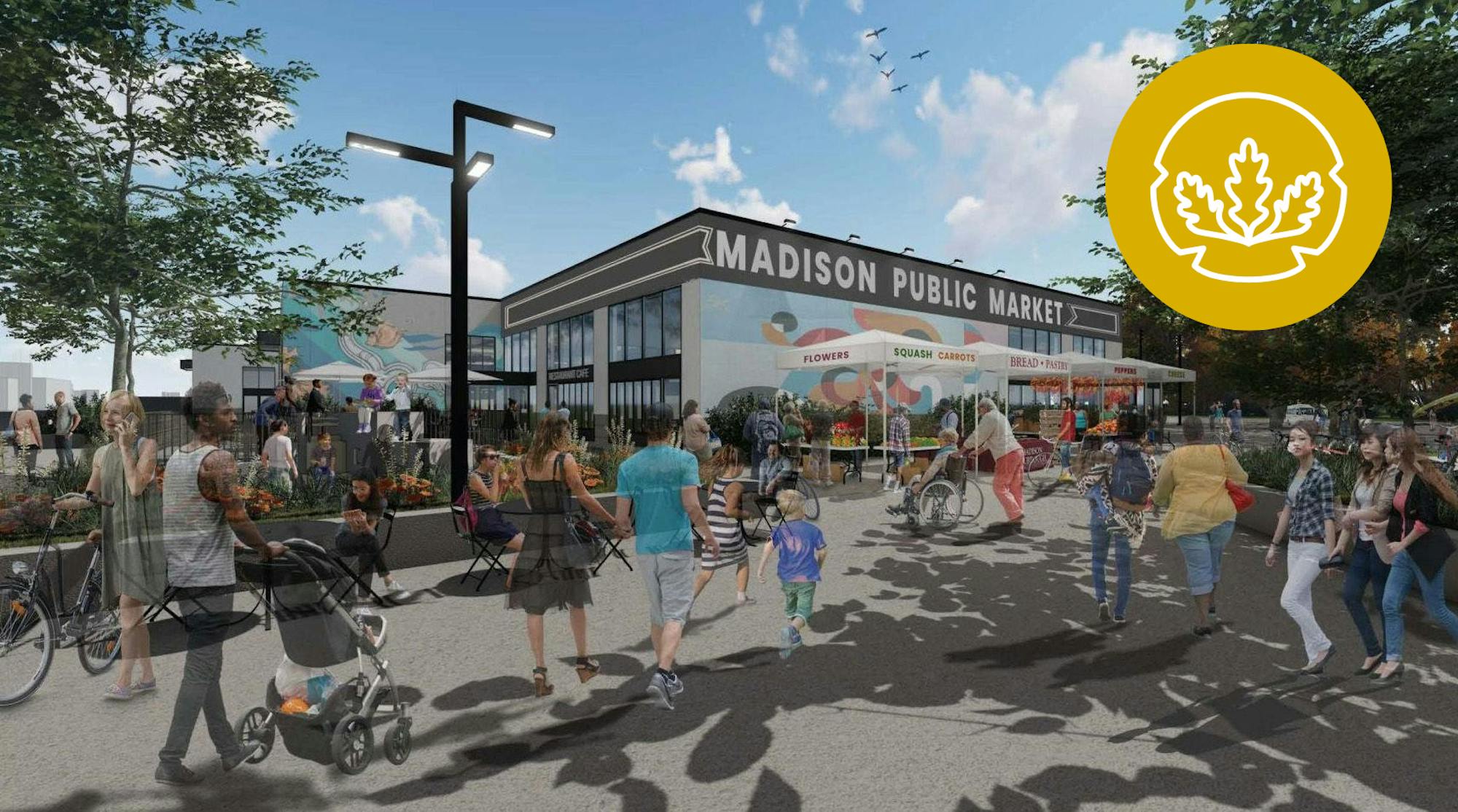
The architecture of the space is meant to reflect on the history and natural beauty of the Isthmus. The industrial past of the building will be on display with its reuse, expressing its diverse and community centered culture through murals and highlighting its natural beauty through materials and views of the lakes.
The Public Market is meant to be accessible for all of Madison through its multiple modes of transportation to get to the market, such as bus lines, bike paths and cars, aligning with city mobility goals.
Energy efficiency is another major component of the market’s design. The building includes a large solar photovoltaic system to offset electricity use and lower emissions over time.
Cooper said that while some sustainable choices require higher upfront investment, those costs can be “balanced against lower operating costs.”
The market will also support new and established small businesses with a variety of spots for rent.
Madison Public Market is expected to make a large impact on the community, by supporting over 130 local businesses, creating about 100 jobs and generating around $10 million in local sales. It is meant to be a low-commitment vendor option, with seasonal booths and temporary stalls to help business grow.
The team at the market also created the MarketReady Program, where 30 entrepreneurs and future vendors, chosen by the Madison Public Market, are trained through coaching, development and grants.
The Madison Public Market will soft launch in March and will offer the community its first look at a space built to serve both the people who use it and the environment it depends on.