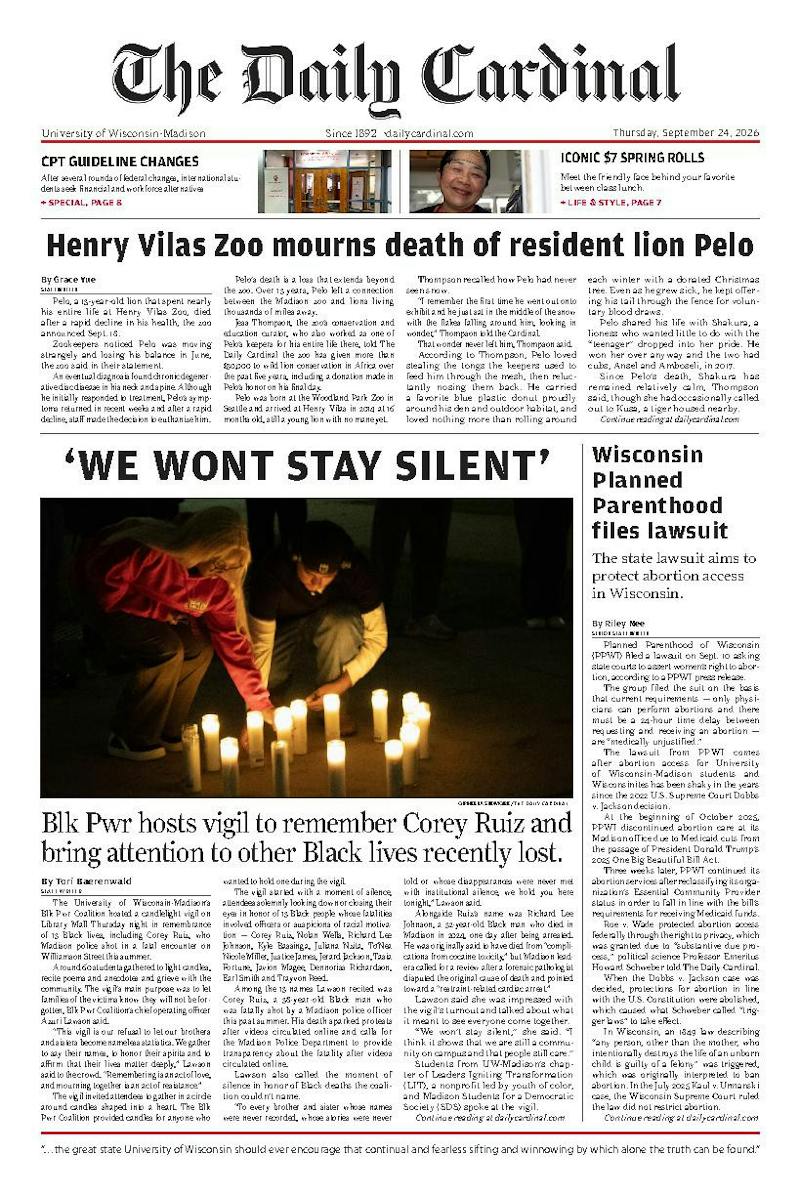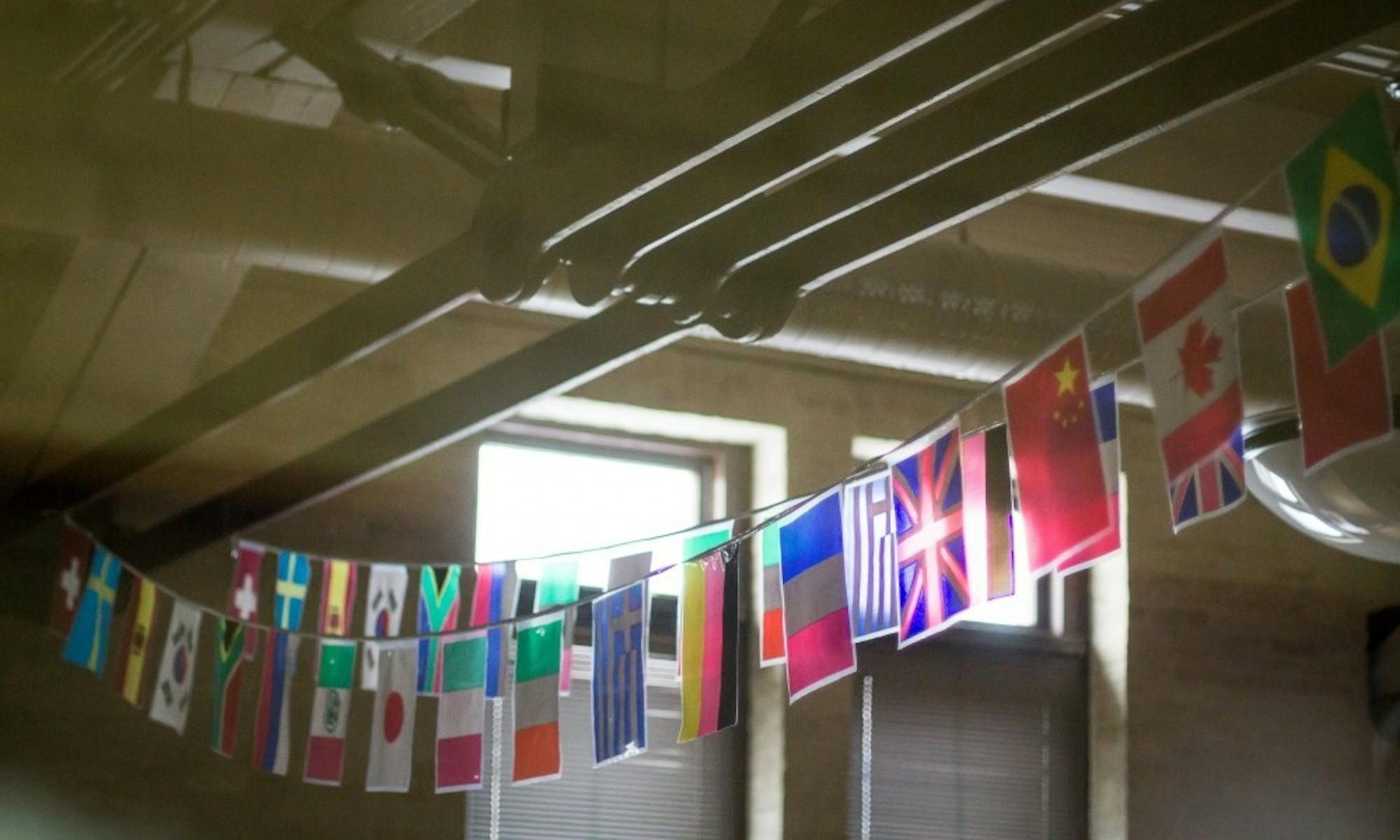
For thousands of international students, coming to the United States for college is more than just a degree — it is an opportunity to pursue an education at a globally recognized university.
But as recent changes to immigration policy under the Trump administration lead to a decline in foreign student enrollment across the country, some current and prospective international students feel uncertain about their future in the U.S.
The U.S. saw its largest decline in foreign enrollment in a decade, excluding the COVID-19 pandemic, as international enrollment for the 2025-26 academic year fell by 17%.
At the University of Wisconsin-Madison, freshman international enrollment declined by 30%, with only 325 students joining this academic year compared to 506 students the year before.
Beyond federal enrollment restrictions, students said they have noticed how the current political climate subtly shapes their day-to-day experiences.
“When you read up about Wisconsin and the Midwest, there's this general tone that, ‘Oh, everybody's super friendly, super welcoming etc.’ I don't know if that's particularly true of an international student,” Malaysian transfer student Krish Chandnani said.
For international students already here, UW-Madison’s prestigious reputation and opportunities are key reasons they choose to remain.
Chandnani said he sought out UW-Madison for its nationally-ranked computer science program.
“Part of the reason I could convince myself to come to Wisconsin is that I could say that it had a great computer science program without knowing anything about it, just because of how well it was ranked,” Chandnani said.
Junior Aniruddh Nambudiri said the School of Journalism and Mass Communication and its robust alumni network helped UW-Madison outshine the rest of the country.
For him, applying to schools in the U.S. wasn’t something he originally considered, but looking back, Nambudiri said UW-Madison was “the only place I would have actually wanted to come to.”
While students praised UW-Madison itself, Nambudiri described the extensive visa process and current political environment as “a nightmare.”
A three-week long student visa interview suspension in late May, on top of a new social media screening process, resulted in backlogs and delays. Many students didn’t let the delays deter them, but for some, the uncertainty about what a future in the US would look like didn’t seem worth the risk.
Nambudiri speculates current immigration restrictions will lead to a decline in international student interest. “I think a lot of people are now starting to really question their decision and the advantages,” he said.
UW-Madison spokesperson John Lucas said the university remains “committed to welcoming international students as essential members of the academic community” in a statement.
“While international students have faced uncertainty amid changing rules and regulations, the university has proactively worked to support them,” Lucas said.
“You never have someone like shouting slurs at you, but you feel it. You feel a certain perception,” Nambudiri said.
Despite these moments of unease, Nambudiri describes his experience in Madison as largely positive, saying the sense of community found on campus has outweighed the broader implications of the national immigration policy changes.
“Personally, I am more drawn to Madison than I am to the U.S.,” Nambudiri said.