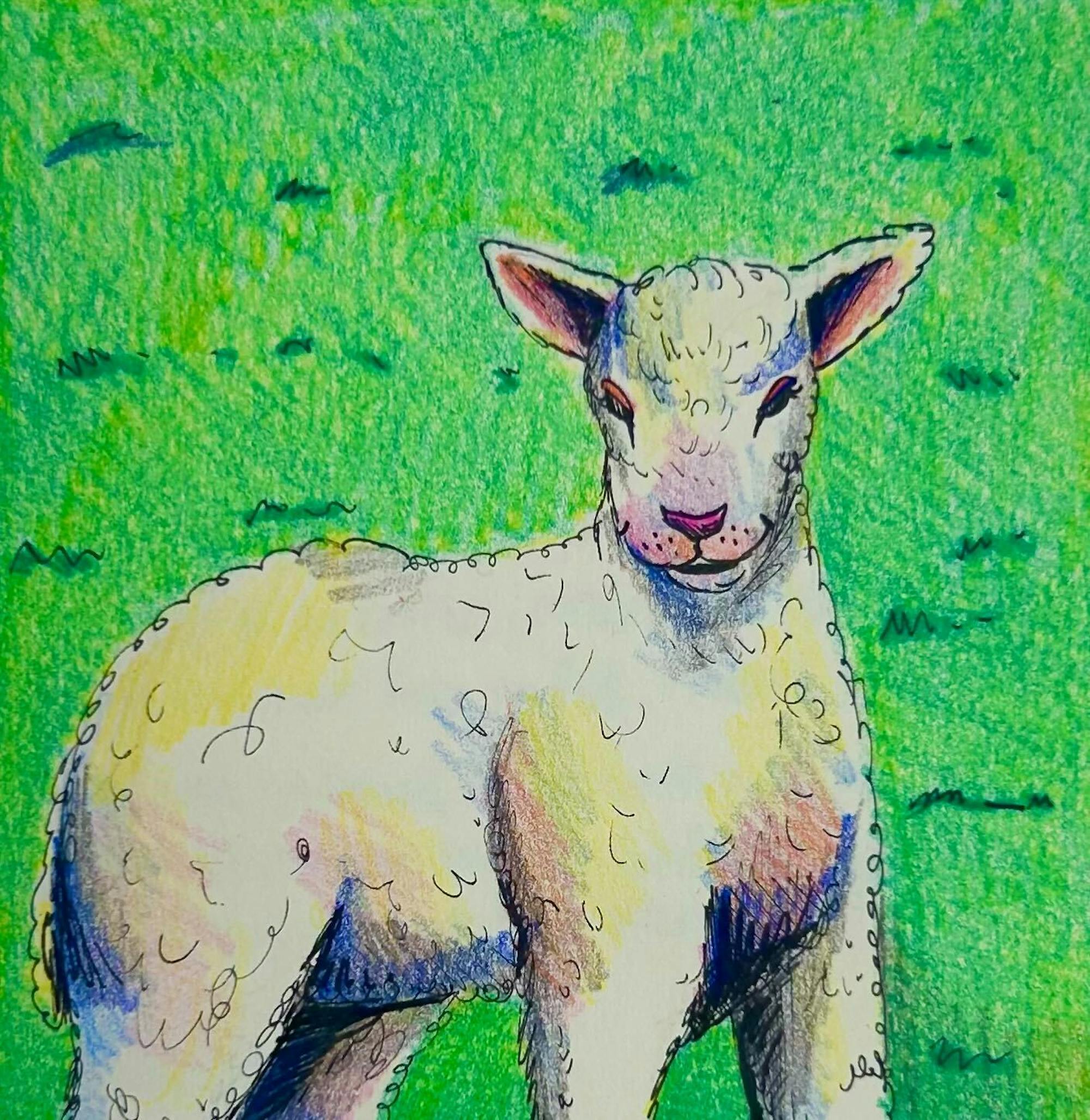
An assistant professor in the University of Wisconsin-Madison’s Department of Animal and Dairy Sciences wants to improve sheep’s quality of life.
Sarah Adcock focuses her research on the welfare of farm animals, including specializing in the docking of lamb tails, a routine procedure on farms that can lead to acute and sometimes even chronic pain for the animal.
Animal welfare science aims to improve an animal’s “subjective experience of their life” by “understanding how management practices affect their welfare,” Adcock said.
Adcock’s lab studied the effects of tail docking on sheep development through a longitudinal study: they docked newborn lambs at 24-36 hours of age, and followed them until reproductive age, around 13 months. They discovered “a tendency for rams to prefer ewes that had tails,” compared to docked ewes.
This is because the tail is a way for sheep to communicate with each other, and leads to behavioral differences between docked and undocked sheep.
“It was really exciting to have that kind of longitudinal study,” said Jocelyn Woods, a postdoctoral researcher in the Adcock lab.
Tail docking, a particularly painful procedure, is a common practice globally in lambs intended to prevent flystrike, a condition where flies lay eggs around the tail of an animal.
Commonly, a farmer tightly binds the tail with a rubber band for a few months until it falls off, Woods said. Alternatively, some tails are chopped off altogether closer to the lamb’s birth. Adcock’s study presents compelling evidence for farmers to take a second look at the practice.
“Doing animal welfare research, we are improving the quality of the animal’s life, or at least we hope to, and we also want to do it in a way that’s sustainable,” said Adcock.
Balancing animal welfare with the wallet of the farmer or consumer can create conflict and difficult decision-making on farms. But through Adcock’s work on subclinical disease, she can improve animal healthcare while helping farmers balance their budgets.
“You want to be able to develop practical solutions; things that could actually be used in the real world to improve animal lives but in a way that the farmers are going to be able to adopt… You need to think in a way that’s considering a lot of different stakeholders,” Adcock said.
Oliver Gerharz is the arts editor and former podcast director for the Daily Cardinal. He is a journalism major and former host of the Cardinal Call. Follow him on Twitter @OliverGerharz.