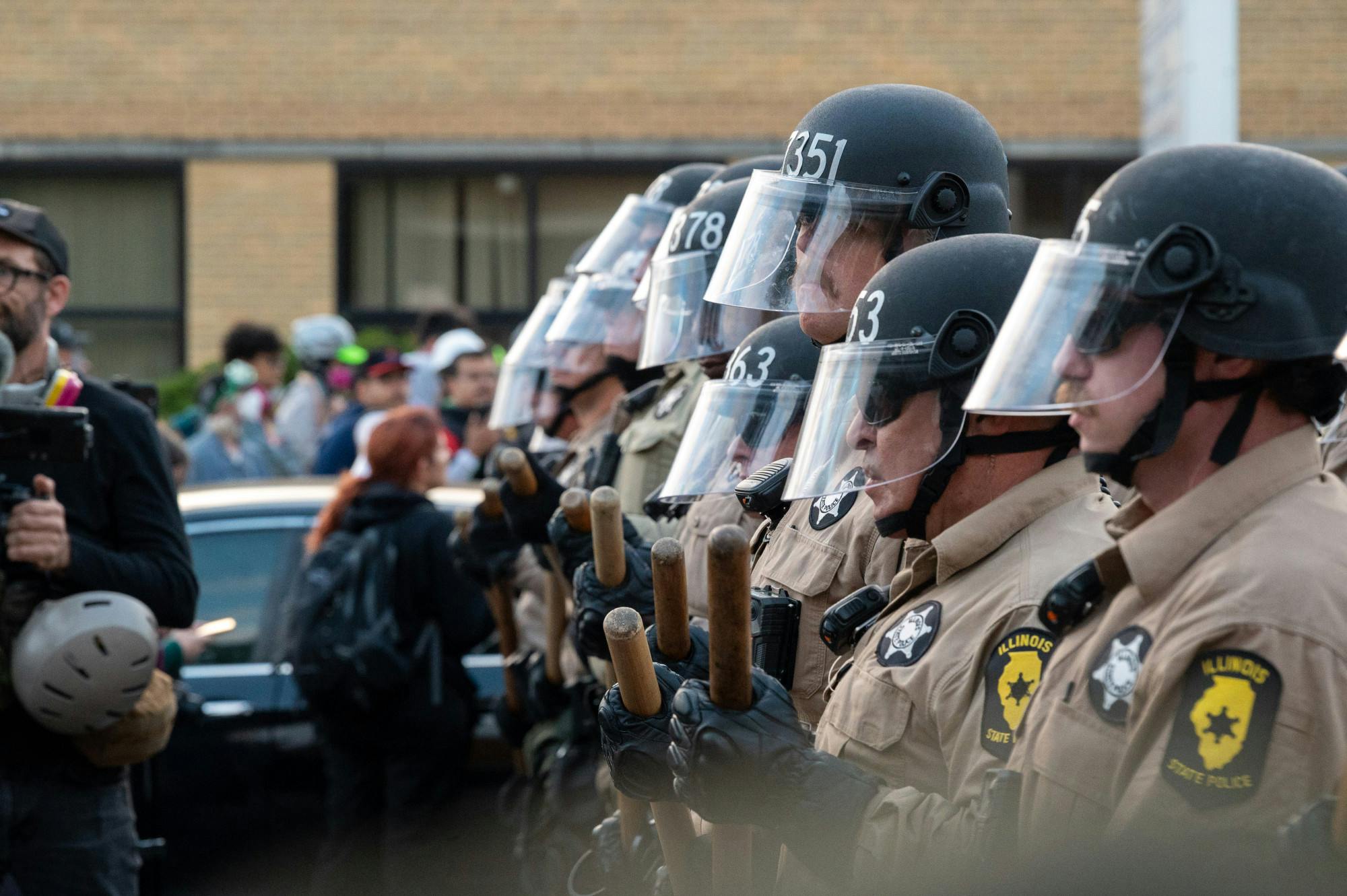
The University of Wisconsin-Madison released a series of guidelines to inform students and residents about the rights they have in the presence of immigration enforcement, following the detention and deportation of more than 70,000 people as of December across the country by U.S. Immigration and Customs Enforcement (ICE) officers.
If contacted by an agent on campus, UW-Madison advises people to immediately call the Office of Legal Affairs at (608) 263-7400 and ask to speak to an available attorney. The phone number is staffed 24/7, though the guidelines request not to leave messages.
ICE agents are allowed to enter public spaces, such as Memorial Union, Union South and other buildings with unrestricted access. “Public spaces” include reception areas, dining spaces and restrooms and are generally defined as places that most people may enter without permission.
If an agent approaches a student worker, the guidelines request the student contact their supervisor immediately.
UW’s guidelines also forbid ICE agents from entering private spaces — defined as classrooms, laboratories, meeting spaces, private residences like student housing and other areas with restricted access that may require a key or Wiscard access — without a warrant signed by a judge or invitation from someone in the space.
“Do not give your consent to allow an agent to enter a non-public area,” the guidelines read.
UWPD and Madison Police Department policies
UWPD’s list of policies regarding immigration enforcement emphasizes they will not participate in immigration enforcement.
“UWPD officers will not detain or arrest an individual solely based on a suspected violation of immigration law and will not routinely inquire about an individual’s immigration status,” UWPD said in a statement.
Any federal agent on campus must follow the “correct legal channels” if they wish to speak to an individual about their immigration status or its enforcement, meaning they are not allowed to enter private spaces to find the student without a warrant.
For areas outside of the designated UW-Madison campus, MPD would cooperate with ICE under four circumstances where the Chief of Police determines an individual poses a threat to public safety such as someone engaged in or a suspect in a terrorism or espionage plot, arrested for a violent felony, or a previously deported felon where an independent assessment by officers determines the individual should be detained.
“Any notification or contact with ICE for the purposes of detaining or apprehending individuals should only be made with the approval of a Commanding Officer and only after contacting the Assistant Chief of Support and Community Outreach,” MPD and the City of Madison released in a statement, adding that “[MPD] Officers shall not ask any individual to produce a passport, Alien Registration Card (Green Card) or any other immigration documentation in the normal course of business.”
Other resources for students
If anyone at UW-Madison from outside the United States is concerned about their visa or any immigration-related issues, UW-Madison recommends they contact International Student Services (ISS) and International Faculty & Staff Services (IFSS) for more information.
The ISS website has shared resources for tracking immigration and international education policy changes as well as individuals with DACA, mixed-status families and those with no lawful status.