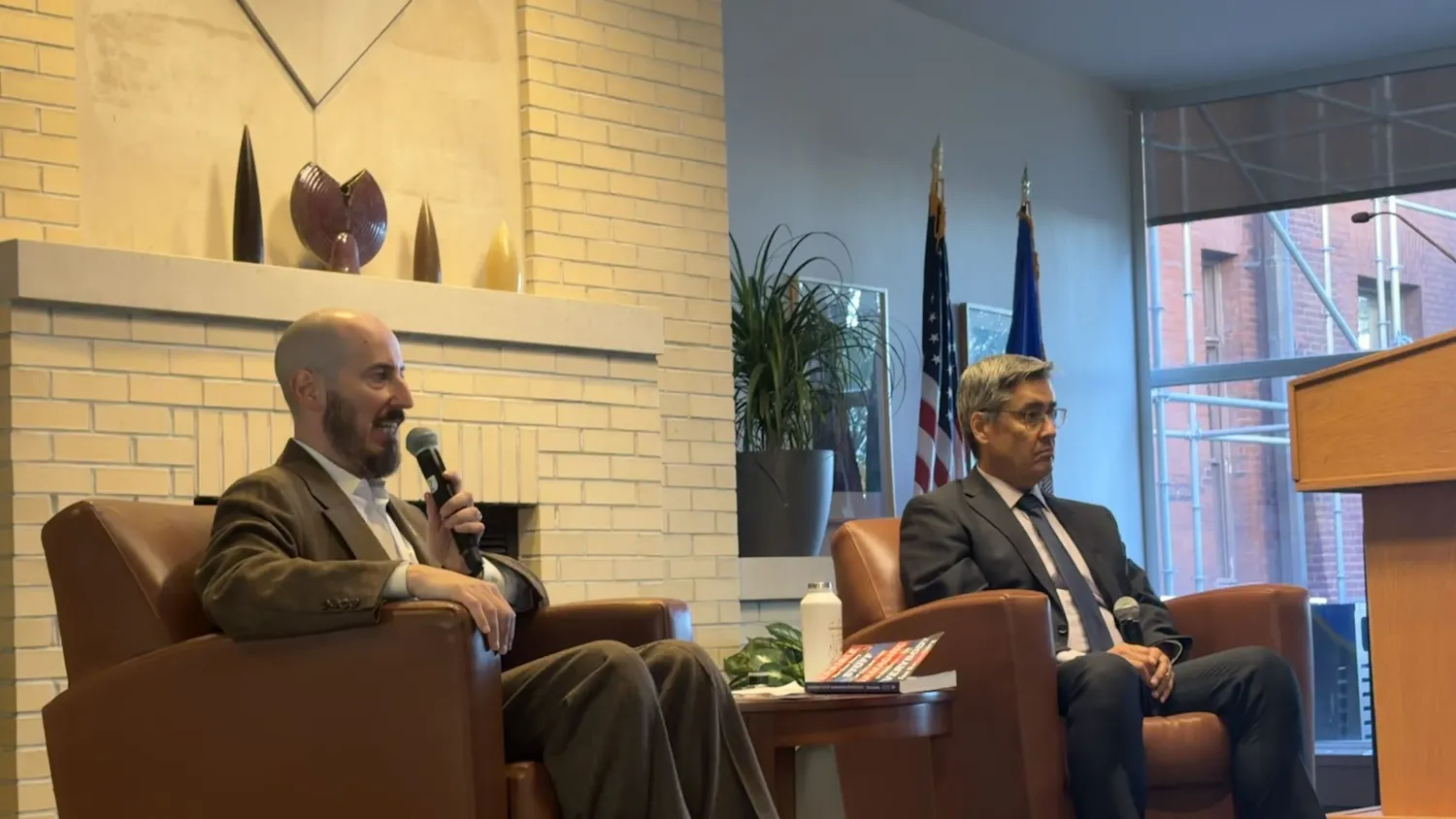
Wisconsin Health News hosted a panel featuring public health professionals from across the state to discuss measles, vaccinations, communicable disease and social determinants of health on Oct. 7.
Milwaukee Health Commissioner Michael Totoraitis, Lafayette County Health Officer Julie Leibfried, Wauwatosa Health Department Director Laura Stephens and Oneida County Health Department Director Linda Conlon were all speakers at the panel.
Tim Stumm, the founding editor of Wisconsin Health News led the panel, and opened the discussion by highlighting relevant health issues in the state.
“Wisconsin is facing its worst measles outbreak in decades,” Stumm said. “The fall respiratory illness season is kicking in amongst changing federal guidance for vaccinations, and the state continues to struggle with significant racial disparities, excessive drinking and obesity.”
There have been 256 confirmed cases of measles in Wisconsin as of Oct. 6, with 100 of them coming from Lafayette County — more than any other Wisconsin county. Leibfried said this could be due to the lack of effectiveness of vaccines, leading to less overall vaccinations as people believed measles was eradicated.
“Vaccines are a victim of their own success,” Leibfried said.
To combat the spread of measles, the panelists said they are doing active case finding, coordinating with healthcare providers, home visits and engaging in contact tracing. Leibfried said there have been no public exposures, and the disease is spreading mainly in homes between relatives or in traceable community spaces like churches.
For the resurgence in Wisconsin, Totoraitis pointed to changes in Wisconsin law during the 1990s and increased misinformation on social media.
“In Wisconsin in the ‘90s, when they changed vaccine requirement laws to make it easier for families to file for an exemption for religious, personal or medical, we saw decreases in vaccination uptake since that moment,” Totoraitis said.
Panelists then highlighted drops in vaccination rates and differences in state and federal vaccination guidelines.
The Trump administration changed federal vaccine recommendations in accordance with the U.S. Department of Health and Human Services and the Centers for Disease Control and Prevention , while the Wisconsin Department of Health Services continues to follow the American Academy of Pediatrics recommendations.
The most emphasized point during the panel was the need for flexible and sustainable public health funding across the state. Wisconsin currently ranks 49th out of 50 states in public health funding.
As a result, health departments have had to prioritize certain services and adapt to having less resources.
The panelists were also asked about lessons learned from the COVID-19 pandemic, and their preparedness if there were to be another.
Conlon stressed the necessity of building trust within the community and the importance of keeping public health issues nonpartisan in the future, while Leibfried emphasized transparency, plain language and consistent messaging.
Totoraitis and Stephens discussed racial health disparities and social determinants of health.
Race has been one of the largest demographic disparities in public health, with only 57.4% of Black children receiving their child series vaccinations compared to 78% of white children as of data released in March.
“People can’t live their healthiest or their best lives when they’re facing all of these more complex challenges,” said Stephens. Torotaitis outlined Milwaukee’s efforts to create strategic plans and enable people to access the support they need.
Ending the panel, Strumm posed the question, “what gives you the most hope about the future of public health?” The panelists all agreed: the people.