The use of alcohol at the University of Wisconsin-Madison is correlated with a greater sense of belonging on campus. Football tailgates, bar crawls and large campus events like the Mifflin Block Party are all intrinsically linked to drinking culture.
However, as Gen Z chooses to drink alcohol less and less, the way people connect and find each other at UW-Madison is changing as well. In the last year, the Wisconsin Union has been a part of that change.
“Ultimately the Union is about community development and creating spaces for all students to find a place of belonging,” Heidi Lang, the Union’s Principal Student Engagement Officer told The Daily Cardinal.
The Union has put resources into creating alcohol-free programming and initiatives, sponsoring both the Late Night Grant and the newer Find Your People grant. Each grant sponsors any Registered Student Organization’s events that are both alcohol-free and designed to help students make connections.
“There's a growing population of students that come to campus who are not drinkers and they want to find community,” Lang said, “but because it's so linked in our community, where do they go?”
Marianne Jensen, a freshman at UW-Madison, attended one of the University Health Services Thrive workshops focused on how to find your people.
“Being in Madison is really, really nice because it's so much more diverse from what I'm used to. I come from a very rural town, so this is essentially my New York,” she said.
The workshop was held in The Well, another piece of Lang and the Union’s efforts to foster alcohol-free connections.
The Well is a study room and event space on the second floor of Union South. All students can access the room with their Wiscard. The space is alcohol-free and does not advertise or host events where alcohol is present.
“We really want it to be a multi-purpose space that is focused on an alcohol-free experience and a place for well-being for students.” Morgan Michaels, a program advisor and the manager of The Well, told the Cardinal.
Although it was her first time in the space, Jensen took to the Well quickly.
“It’s very welcoming,” she said. “I like the paint color, having pretty paint brings joy. I will probably use this place,”she said.
The Well opened last fall, according to Michaels, launching alongside the Wisconsin Union Directorate Wellness Committee. The student-led committee meets weekly in The Well to design and execute substance-free programs with an emphasis on improving students’ mental health and wellness.
Michaels, the advisor for the committee, was proud of the work the committee accomplished in its first year.
“They [WUD Wellness committee] actually got a really amazing compliment from our folks in Badger Recovery who had said their programming made a lot of folks in recovery feel welcome because it was integrated into the campus programming,” she said.
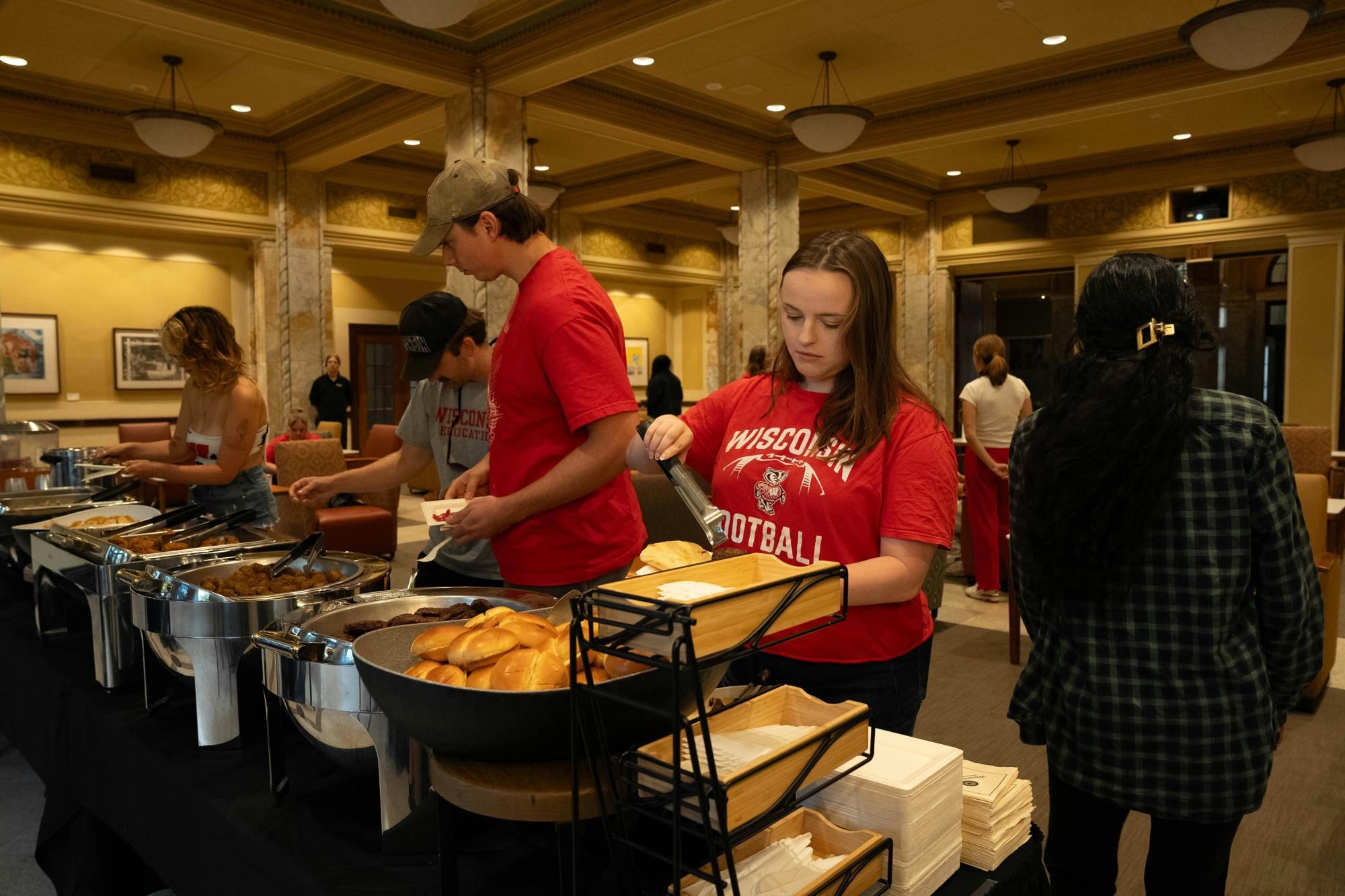
One of the big successes for the committee has been their alcohol-free tailgates at Memorial Union.
“A lot of the game day experiences that include alcohol happen near the Regent Street area of campus near Union South,” Michaels said.
However, alcohol-free messaging and programs come with their own set of challenges in an environment like UW-Madison. At the alcohol-free tailgates, Michaels said the WUD Wellness committee will shut off or cover the taps at Memorial Union, make sure no one is bringing alcohol into the event and consider if people will have to walk by drinks being sold or consumed to get to the event.
“We're still trying to figure it out and figure out the best balance, but I think just being intentional and modeling that intentionality for our students.” Michaels said.
Lang echoed the same obstacles they have to overcome when designing alcohol-free programming in spaces that sell alcohol.
“It is a tricky needle to thread,” Lang said. “We’re trying to be a healthy role model for how alcohol can be consumed on a college campus, and also we want to be clear with what we're doing and what we're saying.”
For many of the Wisconsin Welcome or Wisconsin Late Night events happening at Union facilities — where a majority of attendees are first-year students — Lang said the taps get turned off.
“It is a dance of like, we're in this environment, it's part of our culture, trying to handle that responsibly and role model that responsibly.” Lang said.
According to Lang, the Union has also had to strike a balance to ensure no students are put off by the language the Union is using to describe their programming.
“What students have told us specifically through our survey over the years is ‘we want more alcohol-free events, we want more sober-friendly environments, but we also don’t want you to call it that because of the stigma.” Lang said.
That student feedback led Lang and the Union to use more “well-being and wellness language” when designing and launching the Well and the WUD Wellness Committee last year.
Lang said she hopes reframing the issue will separate the Union’s efforts from the stigma that choosing not to drink can carry at UW-Madison.
“It's been interesting to figure out how to provide what the community says they want without talking about it in a way that makes it seem uncool.” Lang said.