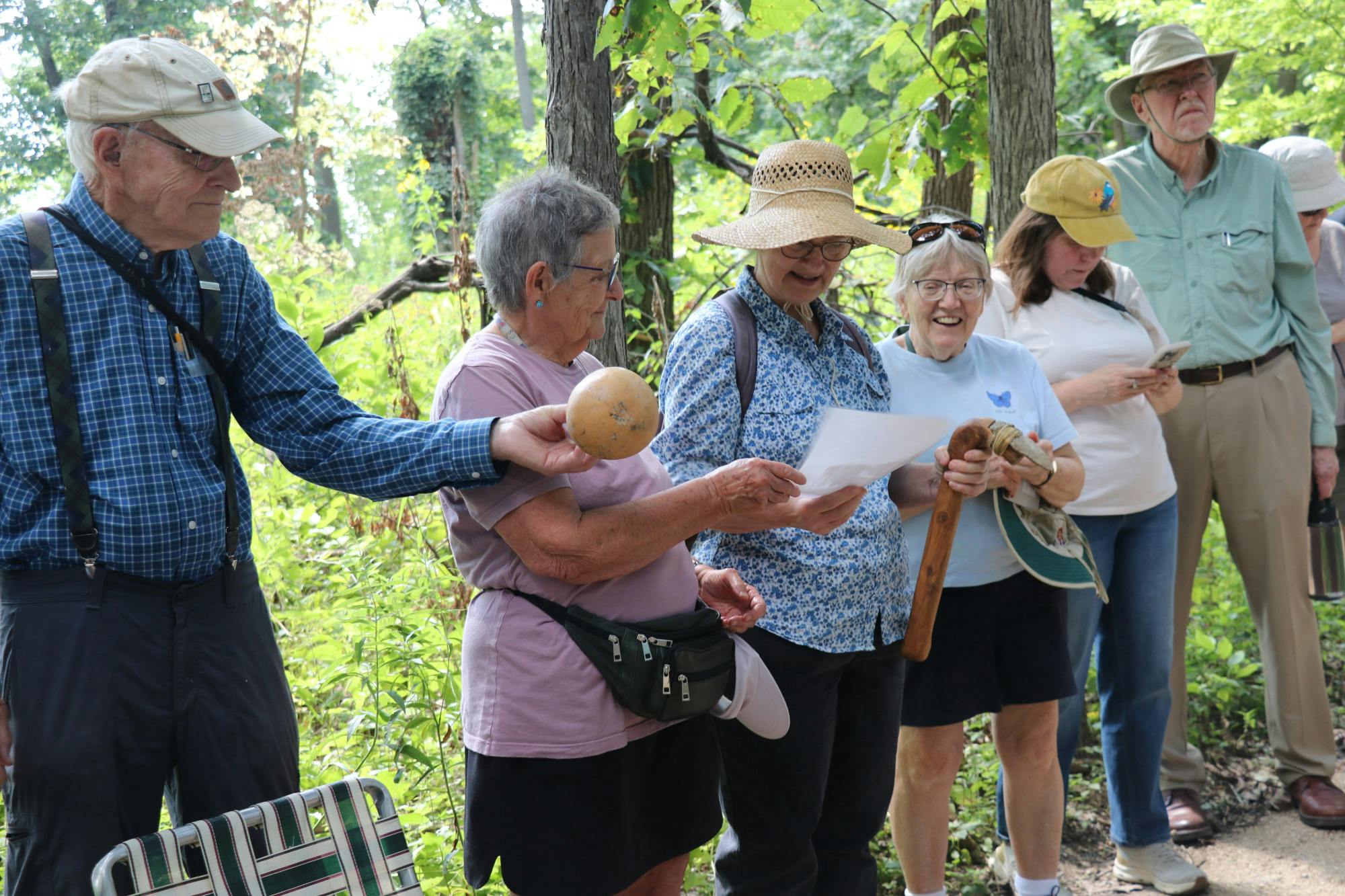
Dr. Amy Rosebough led a group through Picnic Point in late August and pointed towards a rise in the landscape. What others might walk past hides an ancient earthwork shaped by many Indigenous groups who lived in the region centuries ago.
Rosebough, an archaeologist with the Wisconsin Historical Society, led dozens to the burial mounds at Picnic Point and shared the history of effigy mounds across Wisconsin.
Effigy mounds have been part of Wisconsin’s landscape for centuries. The Wisconsin Department of Natural Resources (WDNR) estimates that there were over 15,000 mounds across the state prior to colonization.
The mounds were built by Indigenous communities for burial and ceremonial purposes, but as Madison has grown, many of its mounds have been destroyed or overlooked. Rosebough’s tour brings attention back to the mounds and helps people understand the history they walk through each day.
“They can be easy to miss,” Rosebough said. “The best way to find them is to walk around and see if your toes curl.”
Some of the mounds date back to 2,500 years ago, with different mounds serving different purposes — including ceremonies, territory marking and gathering grounds, according to WDNR
Almost all effigies contain human remains, according to Rosebough.
On Picnic Point, six effigy mounds are visible. They average two to eight feet above the surrounding ground and many were built just a few hundred feet from each other, according to the Lakeshore Nature Preserve.
“If it was a good place to live, there was likely a mound there,” Rosebough said
But the places that were once ideal for Indigenous communities later became desirable locations for a growing city.
During Madison's development, many mounds were destroyed or disturbed to make way for roads, buildings and other development, according to Rosebough. Burial mound remains have been found during the construction of Babcock Hall and under State Street and the Capitol Square,
Rosebough says that out of the 1,500 mounds once in the Madison area, 80% have been destroyed.
“There are more burial mounds on the UW-Madison campus than any other [university] campus,” Rosebough said.
Burial mounds are rare and more common around Wisconsin than any other place in the world, according to Rosebough in an article for UW News.
Effigy mounds usually represent animals and spirits. Rosebough said some mounds around Picnic Point are associated with water spirits in Ho-Chunk tradition that represent femininity, while the Thunderbird mound on the north shore of Lake Mendota represents contrasting masculine qualities.
“These two spirits cannot stand each other, but both are important,” Rosebough said. “They believed that if the spirits got out of balance, our world would suffer.”
The Wisconsin Legislature passed a law in 1985 that provided legal protection to burial sites regardless of their age, and in 1987 it became illegal to intentionally disturb a burial site without authorization from the Wisconsin Historical Society.
Today, burial mounds can be found in public parks and other areas around Wisconsin, including Vilas and Bear Mound Park. The WDNR advises visitors not to walk over or picnic on burial mounds, which are protected from unauthorized disturbance on both public and private land.