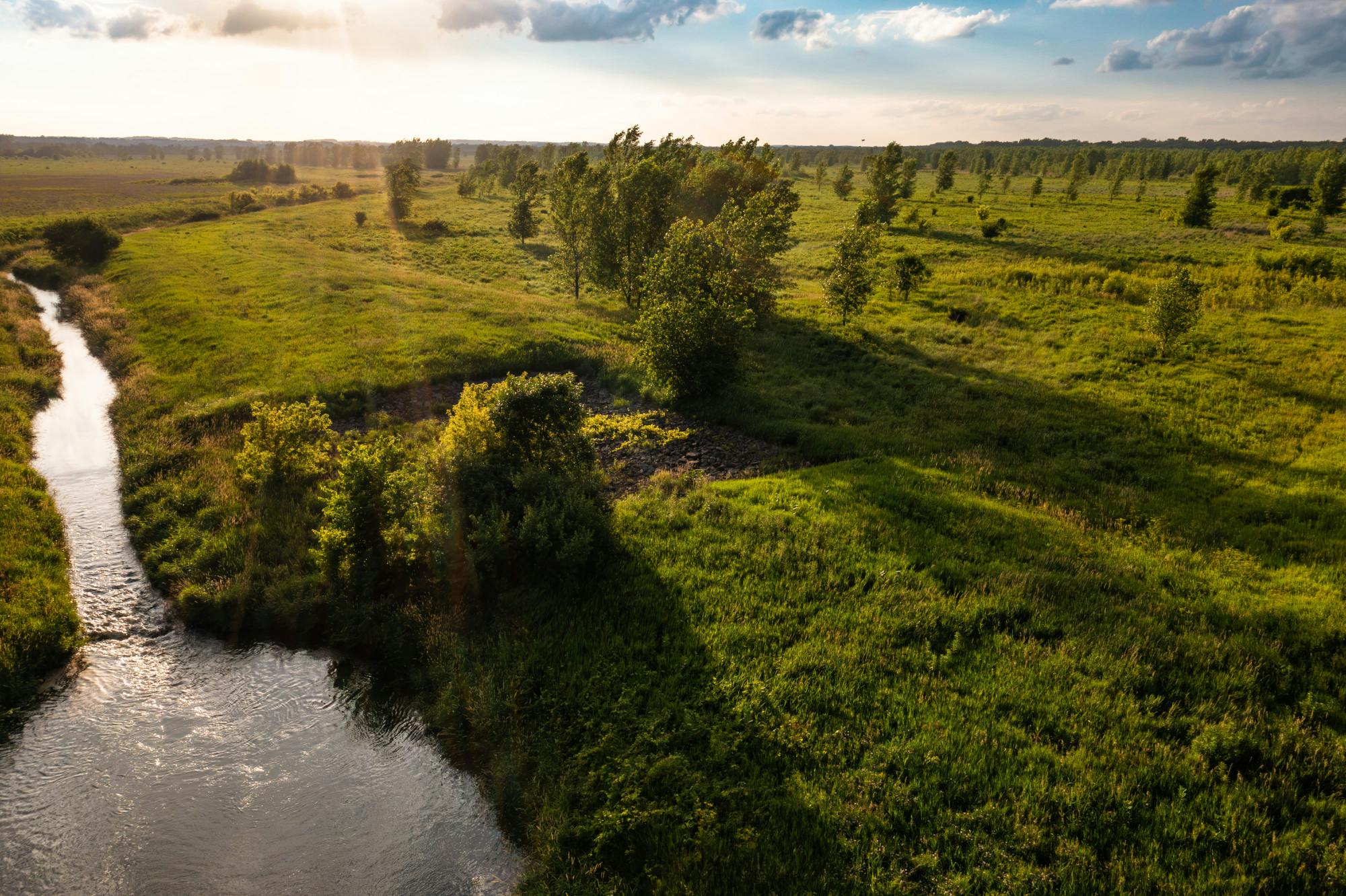
A collaboration between Ducks Unlimited (DU) and Groundswell Conservancy will permanently protect nearly 2,000 acres of land along the Lower Sugar River in Rock County, Wisconsin, marking the largest conservation win in both organizations’ histories.
Amy Mertz, director of development and communications for Groundswell Conservancy, told the Daily Cardinal the project is the largest land protection project in the conservancy’s 43-year history.
“The sheer scale of this project is remarkable. Protecting nearly 2,000 acres at once creates an even larger, connected corridor where wildlife of all kinds can move, feed, nest and thrive. With more than two miles along the Sugar River and a rich mix of wetlands, floodplain forests and prairies, this land will also help protect water quality and reduce flood risk,” Mertz said.
The protected area includes over two miles of river frontage and high-quality wetlands, forests, prairies and floodplain habitats that support numerous wildlife species.
Grants from the Knowles-Nelson Stewardship Program, administered by the Wisconsin Department of Natural Resources (WDNR), and the North American Wetlands Conservation Act, administered through the U.S. Fish and Wildlife Service, made the project possible. Additional support was received from private donors and conservation partners, including the National Wild Turkey Federation and Pheasants Forever.
Jason Cotter, a WDNR conservationist, told the Cardinal land protection is the first step in conserving habitat and the species that depend upon it.
“This addition of land further expands upon a large contiguous complex of unique habitat types including floodplain forest, open marsh, southern sedge meadow and mesic to wet-mesic prairie,” Cotter said.
The property's conservation history also includes a legal battle over tax incentives that helped make wetland protection possible.
Applegate-Bader Farms, a large-scale agricultural operation, sued the Wisconsin Department of Revenue in 2016 after a revised tax rule excluded permanent conservation easements from Wisconsin’s ‘use-value’ tax assessment — including the easement for the farm.
Applegate-Bader argued the change would destroy the wetlands and disincentivise enrollment into land conservation programs.
Simultaneously, farming the near 2,000 acre property became increasingly difficult because of its low lying floodplain. Drainage tiling — a process that involves placing pipes beneath croplands to remove excess water — was unsuccessful, prompting the Applegate-Bader family to look into alternatives for the land. The Wetland Reserve Easement program was the first step, which provides assistance to restore and protect wetlands degraded by agriculture.
The eventual sale to Ducks Unlimited and Groundswell Conservancy provided a way to permanently protect the property.
The land will eventually be transferred to the WDNR to be managed as part of the Avon Bottoms Wildlife Area, which hosts a complex community of rare species.
“Avon Bottoms Wildlife Area is a state Conservation Opportunity Area, Important Bird Area and a Legacy aquatic and floodplain community due to the recognition of the rare native plant communities and the breeding status of rare birds and reptiles,” Cotter said.
Cotter told the Cardinal the area is home to species including endangered Yellow-crowned Night-Heron and Ornate Box Turtles, threatened Cerulean Warblers and Acadian Flycatchers, and protected Yellow-throated Warblers, Prothonotary Warblers and Blanding’s Turtles.
Brian Glenzinski, Director of Conservation Programs in the Upper Midwest for Ducks Unlimited, told the Cardinal active management practices will ensure the land is healthy.
“We hope to maximize wildlife habitat potential on the property through wetland enhancements and upland management. Specifically, knock back the woody growth that has invaded the property through prescribed fire to provide better nesting habitat for waterfowl and other grassland birds,” Glenzinski said.
Glenzinski said the land will soon be open to the public, and will be a prime spot for outdoor recreations like hunting, fishing, and birding, while providing floodwater storage, aquifer recharge and nutrient filtration to help provide clean water in the area.
Cotter said the acquisition will help the WDNR fulfill its mission of protecting and enhancing Wisconsin’s natural resources.
“To protect and enhance our natural resources’ is the very first line of the Wisconsin DNR’s mission. Simply put, without land protection, we lack conservation,” Cotter said.
Mertz said the project was a continuous effort from multiple stakeholders.
“A project of this size and significance simply doesn’t happen without a lot of people and organizations working together…It’s an incredible example of what’s possible when we bring our different strengths and resources together for the benefit of land, water and wildlife.”