The Police Civilian Oversight Board (PCOB) is compiling evidence for the alleged Corey Ruiz homicide, but the Madison Police Department (MPD) is making the job difficult, according to PCOB members.
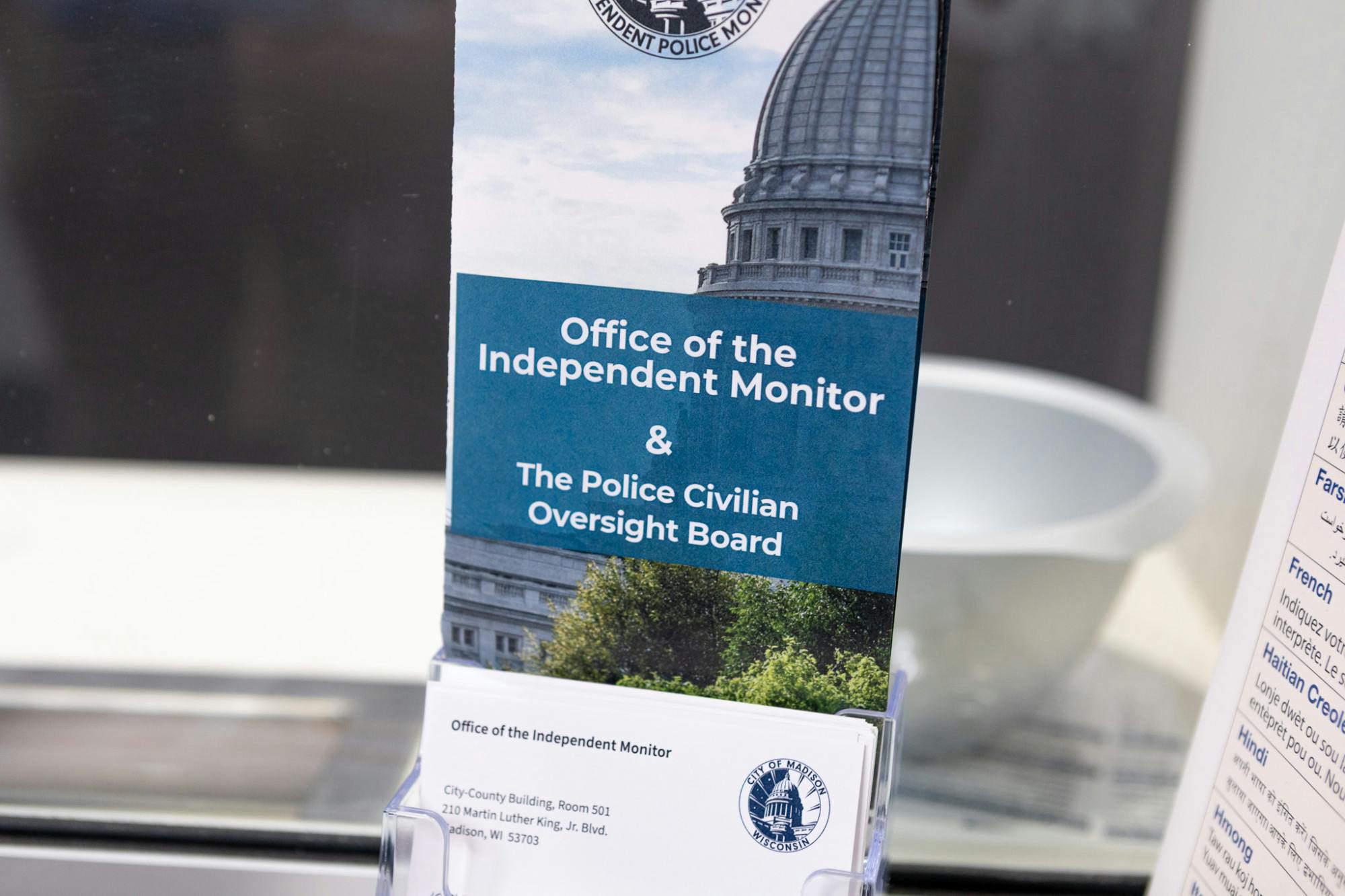
PCOB, working alongside the City of Madison Office of Independent Police Monitor (OIPM), was formed in November 2020 after several police-involved gun fatalities between 2012 and 2019, but citizen outrage after Corey Ruiz was fatally shot by an MPD officer on July 22 revitalized the board.
PCOB and OIPM are the first oversight boards of their kind in Wisconsin, both operating independently from the City and Common Council.
Protests following Ruiz’s death called for police accountability and de-escalation training, relying on PCOB to provide the accountability and policy recommendations.
“What happened to Corey was excessive use of force,” Shadayra Kilfoy-Flores, the former PCOB chair, said in a Sept. 17 community forum. “Had they not killed him, had they just kicked him and hit him with the car, that was excessive. The first bullet, that was excessive use of deadly force. And then the two extra bullets? Those were overkill.”
Many Madison residents asked how the city plans to hold MPD accountable, and PCOB, as well as a new sector of MPD, responded, according to Dr. Inada Murali, the forum facilitator.
Aeiramique Glass, the interim Independent Police Monitor for the City of Madison, said her office operates separately from City influence in the forum. OIPM is authorized to analyze evidence and make policy recommendations, but it cannot enforce them.
OIPM requested evidence for the Ruiz shooting but was denied and issued a subpoena against MPD.
The death of Ruiz on Williamson Street was different from other cases OIPM has reviewed, as several board members were able to get on scene within minutes, collecting their own evidence and gathering information from locals and storefronts, according to Glass.
Glass said OIPM is running into issues regarding the Ruiz investigation, including MPD withholding evidence and MPD Chief Patterson cancelling two scheduled meetings with Glass, which she noted in a Sept. 16 PCOB meeting.
The OIPM website cites MGO §5.19(7)(i), which “entitles this office to unfettered access to MPD records, and this office holds subpoena power under §5.19(7)(j).”
MPD has created the Service Excellence and Outreach Division within the department in response to police involvement in Ruiz’s death, but Glass said citizens should be wary of city-led institutions within the criminal justice system.
“[The district attorney relies] on MPD to give them investigative materials and police reports to prosecute people, so when you do not see the DA prosecuting officers, it is because they work with them every single day, and the police unions are who help these individuals get elected,” Glass said.
Kilfoy-Flores agreed, saying she does not trust City authority to evaluate the evidence impartially.
“Even though it's being investigated as a homicide, we know what District Attorney Ozanne’s decision is going to be because of history,” Kilfoy-Flores said. “From the very beginning I saw the city trying to vilify Corey and anyone that stood with Corey as being villains.”
The Division of Criminal Information (DCI) under the Wisconsin Department of Justice Criminal Investigation is currently investigating the alleged homicide of Ruiz but cannot make recommendations or decisions after their report. DCI is only required to loan their finished report to MPD. Neither the public nor OIPM will see the results of DCI’s report.
Many have called for the MPD officers to wear body cameras, and both Patterson and Mayor Satya Rhodes-Conway agree. The Mayor’s 2027 Madison budget proposal includes a stipend for the cameras.
Numerous aldermen rejected the inclusion of body cameras in Rhodes-Conway’s budget proposal due to high annual costs.
“Purchasing cameras without a plan in place for redacting and releasing footage does nothing to help transparency, trust or accountability,” Will Ochowicz, District 2 Alder, wrote.
OIPM said the 90-day pilot program for body cameras MPD used in 2024 led to “officers muting their cameras following an unlawful arrest, and muting them while charges were being changed, on a sergeant's directive.”
With strong policy, OIPM said cameras can provide accountability and transparency to the public.
At the Sept. 17 forum, Brenda Konkel, co-founder of the Social Justice Center and former city council member, said people also need to understand what goes into violent crime and its prevention, citing homelessness and lack of resources.
“It's just a big waiting game, waiting to get into housing, and we just don't have the housing resources here in the community we really need,” Konkel said. “Homelessness gets so quickly involved in the criminal justice system. It’s a downward spiral, and it leads to a lot of homelessness.”
She also said the question of how to prevent this cannot be answered until institutions are able to collaborate.
“My biggest obstacle at the moment…is [that] the city, county, state and federal government are not coming together to solve problems; they are pointing fingers and blaming each other,” Konkel said. “There’s not real solutions from leadership.”
Chip Cruz, a member of PCOB and the president of the Williamson Marquette Business Alliance, said Ruiz’s death will stay with locals.
“The aftermath is something that, personally…hurt. This hurt, this pain, this situation, is something that’s going to be with us…I know it's going to be with me for the rest of my life,” Cruz said.
In the coming months, Patterson’s review will be conducted, and his office will be sent a survey to gauge and measure culture, according to Helyn Luisi-Mills, a PCOB member, in a meeting. Luisi-Mills hopes to have it done in October to be “the avenue to encourage more collaboration.”
Jane Dardik is the City News Editor. She has covered a wide array of Madison stories, including city elections, budgets and community development.