Angeline Morgado, a political science, international studies and Latin American, Caribbean and Iberian Studies major, has already interned in Washington D.C. and worked at Midwest Mujeres, a local nonprofit assisting female entrepreneurs in the Latino community — all before her junior year at the University of Wisconsin-Madison.
Before this semester, she envisioned applying to the United Nations headquarters in New York. But now Morgado, a Venezuelan international student who planned to use her degree for poverty alleviation, told The Daily Cardinal she no longer sees the point in attending university career fairs.
“I cannot do anything for these companies, so it feels like, ‘why would I?’” she said. “I should focus my time and efforts into getting an internship outside of the country.”
UW-Madison enrolls around 7,000 international students with F-1 status each year — around 3,400 undergraduates, 1,200 master’s students and 2,100 PhD and doctoral students — and 801 J-1 exchange visitors including 260 students and 541 research scholars.
Approximately 4,200 F-1 students at UW-Madison are enrolled in STEM disciplines, and 2,800 are enrolled in other disciplines.
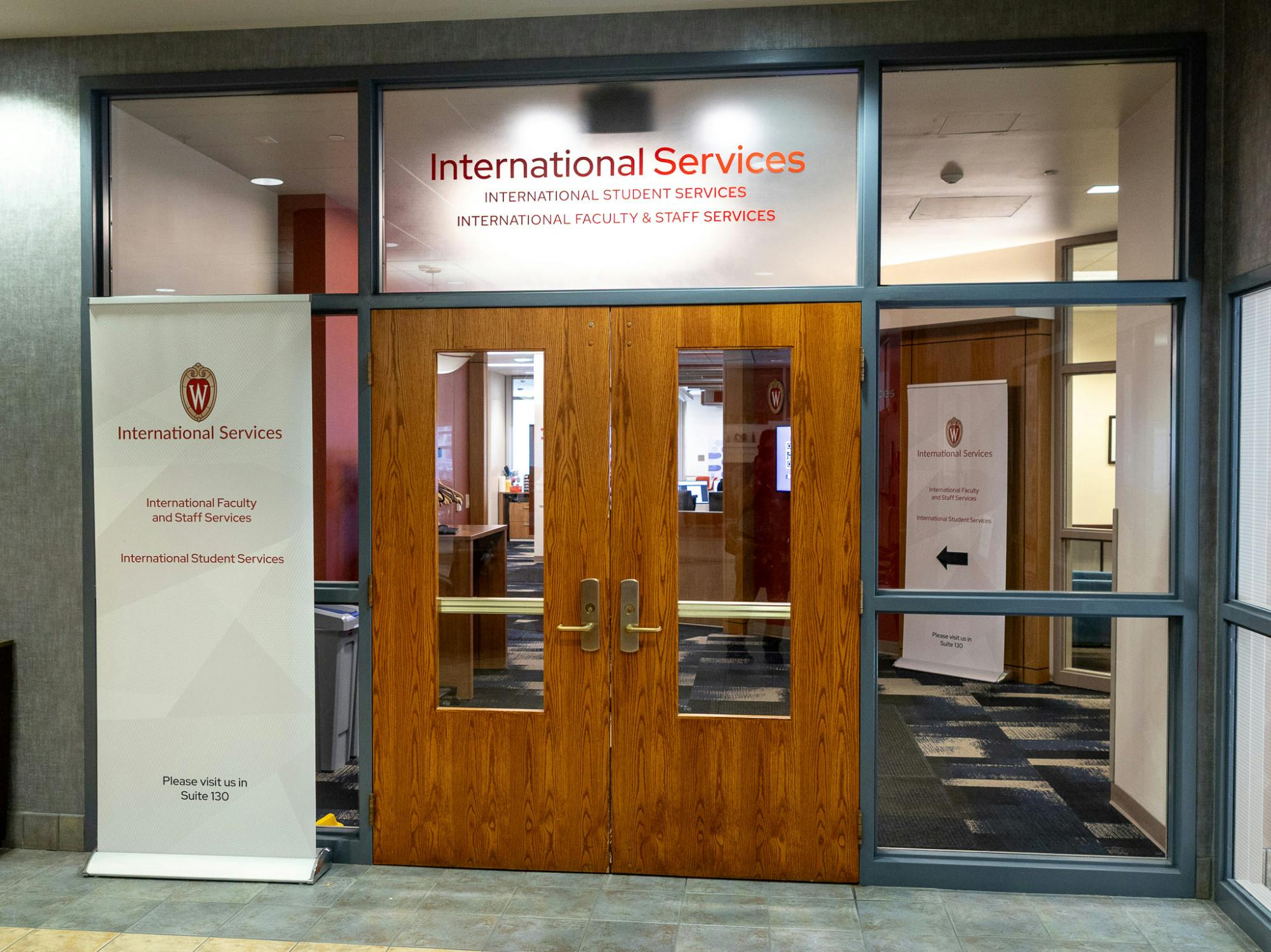
Both of Morgado’s previous internships qualified as Curricular Practical Training (CPT), but new federal guidelines no longer allow students to obtain internships using CPT unless their degree program requires an internship experience for graduation, UW-Madison International Student Services (ISS) advisors said at a Sept. 10 SuccessWorks meeting.
In suspending CPT approvals for students who do not require paid or unpaid internships, clinical experience or other “hands-on” experience in their field to graduate, the federal government eliminates the primary pathway international students use to gain experience in their field before graduation.
The decision prevents UW-Madison students in almost every school and major at the university from accessing CPT, except select majors like social work and interior architecture, the advisors said.
“Now I'm not going to get the opportunity to develop myself as a professional while I'm doing so as a student,” Morgado said.
ISS Advisors recommended Optional Practical Training (OPT) as an alternative, but it comes with drawbacks.
OPT can be used for a total of one year, or two years in the case of STEM students if they request an extension while actively working. Prior to the federal decree, students typically used OPT to spend one year working in the United States after graduation, and before requesting sponsorship through an H-1B visa.
Unlike CPT, which offers near-unlimited part-time work authorization as long as students are enrolled, OPT only lasts for a total of a year, meaning 24 months of part-time work or 12 months of full-time work before graduation.
This exhausts a student’s OPT, preventing them from working in the United States after graduation without immediately finding a company to sponsor them.
Additionally, the processing time for OPT applications can take up to five months, as opposed to three weeks for CPT — unless students pay $1,780 out-of-pocket for “premium” U.S. Citizenship and Immigration Services (USCIS) processing within thirty business days, ISS advisor Hao Yuan said at the SuccessWorks event.
Morgado said she wants to save her year of OPT for after graduation, because any further work in the U.S. would require a company to sponsor her by purchasing an H-1B visa.
Trump floated adding $100,000 fees to company H1-B applications as recently as August. Even after securing a sponsorship, applicants must go through a USCIS computerized lottery with far fewer spots than applications.
“[The CPT change] felt like something added to the already restrictive policy environment,” Morgado said. “It’s already hard for us, because most companies do not want to hire or [give] internships [to] international students because they don't want to sponsor us in the future.”
Morgado added other international students weren’t able to accept offers they received before the rule change, and said she is now less likely to pursue a master’s degree or PhD in the United States.
“It makes us fearful because we don't know what we can do and what we shouldn't do,” she said. “When do we go back home, or are we allowed to travel during our breaks? It's a lot of … tiptoeing to make sure that we're not breaking any policy that could then put our visa in danger.”
A travel ban currently restricts students in several countries, including Venezuela, from applying for student visas.
Morgado said factors like how close students are to graduation, how long they will be visiting and current U.S. restrictions against their country of residence all influence how they could be impacted by other federal rules, creating a network of possible conditions.
“Each student's situation is different and unique and complex,” ISS Advisor Emily Herbert said at the SuccessWorks event.
Bruno Castro Lacerda, a teaching assistant and joint PhD student in science communication and environment and resources, learned English and left his home in Brazil to attend UW-Madison. 46% percent of primary appointment teaching assistants at UW-Madison were international students like Lacerda in Fall 2025. The CPT guidelines were released right before the start of his second year.
“When something is announced and is going to be put into practice within two months and that can change your whole life, I can definitely tell you that's very frustrating,” Lacerda told the Cardinal. “These are changes that haven't been discussed or haven't been properly communicated and will impact thousands of international students.”
When Lacerda found out about the CPT change over the summer, he hadn’t yet applied to pursue his joint degree. He said he had to scramble to submit the application within 20 days, and was told the changes could prevent him from doing so in the future.
Lacerda added it’s very common for people to change programs or majors, and the new federal changes limit international students’ ability to do so.
“Those are the things that you need time to plan,” Lacerda said. “[I] chose UW-Madison because of the possibility of pursuing this joint PhD… [the changes] could have impeded me to pursue my initial plan.”
Lacerda is currently conducting research on how countries in the Amazon rainforest are creating bioeconomy policies for the region. The new guidelines have threatened the international travel he was previously doing as a part of that research. Lacerda said he heard through his work with ISS that people have been turned away at the border.
“There is no research about bioeconomy policies in the Amazon if I'm not able to go to the Amazon,” Lacerda said. “[It] would annihilate any possibility for me to complete my current research and would make me completely change my plans for the PhD.”
When Morgado visited her family last year in Chile, she said she worried the trip would jeopardize her ability to remain a student.
“We have to carry the uncertainty when we make decisions such as going back home, because that's our decision…ISS will never advise us on traveling or not traveling,” she said. “We’re carrying that burden of trying to figure out whether this is going to affect our ability to get our degree. But it's also hard — I want to go back home because I want to be with my family. And the question is, am I willing to risk my degree for that?”
At the SuccessWorks event, ISS advisors recommended international students fill time through other avenues rather than U.S.-based internships, including on-campus student jobs or research, personal projects, community service, volunteer work, job shadowing with very little or no “hands-on experience” or internships and work experiences in students’ home countries for companies that are not headquartered or founded in the United States.
“Experience is experience at the end of the day,” Yuan said at the SuccessWorks event. “[Although] it may not be a formal, professional internship.”
Lacerda estimated prior to the CPT changes, around 30% of the international students and around 60% of the U.S. citizens in his program pursued internships. He added for many students, direct experiences in their areas of expertise are “as important or more important” than academic experience for their CV and competitiveness in job applications.
“Something that was possible Summer 2026 [is] no longer possible [in] Fall 2026 because of the announcement,” ISS advisor Kathleen Finnegan said at the SuccessWorks event. “If an internship was required for everyone in a doctorate program, they could do it off-campus. But just because their dissertation research would be much better if they collaborate with Microsoft does not mean they are eligible for CPT anymore.”
As of Sept. 17, there were 73 jobs available on the student jobs website, though Yuan said the number fluctuates and can be higher at other points throughout the school year.
Students said constantly changing federal guidelines constitute another source of stress.
On Sept. 14, a U.S. District Court judge granted plaintiffs, of which UW-Madison is a part, a preliminary injunction preventing the U.S. Department of Homeland Security from enforcing a Final Rule that would have limited international students’ visa stay to four years.
Nearly half of current international students said if that federal rule were in place when they applied, they would not have attended UW-Madison, according to Provost John Zumbrunnen’s testimony in a court filing UW-Madison submitted as part of the DHS lawsuit.
“In UW-Madison's efforts to compete in a global marketplace for academic talent, it is seriously harmed when its identity as a U.S. institution becomes a hindrance rather than an asset,” Zumbrunnen said in the declaration.
Lacerda advised domestic students to extend grace and offer support to international friends during this time, adding the changes are a lot to add to academic and professional stress.
At a Sept. 14 university committee meeting, professor of educational policy studies Nancy Kendall asked Vice Chancellor for Student Affairs Lori Reesor to prioritize “students who had paid opportunities and now don't have jobs.”
Many international students already lost out on paid opportunities due to federal changes and are "desperate" to find opportunities on campus, Kendall said.
Morgado said students, especially in humanities or social sciences fields, need internships to show potential employers how they will apply what they’ve learned in their coursework.
“I have seen many Brazilian students… facing some difficulty at the end of their programs because they didn't have the chance to get practical experiences, internships or practicums,” Lacerda said. “This also influences me in my career, and I would very much like to use an OPT or CPT throughout my graduate experience so that I could have that networking that for internationals is much more difficult than for national [students].”
Lacerda said friends and family have expressed concern for his safety and stability in the U.S.
“They are afraid of something bad happening to me, because nowadays it doesn't matter if you're legal or if you're not… you just don't know what might happen from one day to the [next],” Lacerda said.
Reesor said Student Affairs is partnering with ISS in a work group, but couldn’t comment on specifics. ISS currently has 10 advisors for over 10,000 international students, Herbert said at the SuccessWorks event. One full-time F-1 ISS advisor is responsible for around 800 F-1 students, UW spokesperson John Lucas told the Cardinal in a statement.
For now, students like Morgado and Lacerda face an uncertain future. While federal guidelines get determined and court cases get resolved, Morgado said ISS can only advise most students to wait and see how new rules may affect them.
Lucas also said the university does not see a greater risk for international student travel solely off the CPT changes, given that their immigration status and documentation remain updated and accurate.
“It's a lot of worry to carry around, not only because I'm worried [and] fearful, but also [because] other people are fearful for me,” Morgado said.
“[Students] will be ambassadors of the experience they had here elsewhere when they go back to their countries,” Lacerda said. “We are all part of one same planet. We are all part of one same humankind. We have shared values. We can share nice experiences together. Why don't we do so?”
Sonia Bendre is the campus news editor for The Daily Cardinal. You can reach her at sonia.bendre@dailycardinal.com.