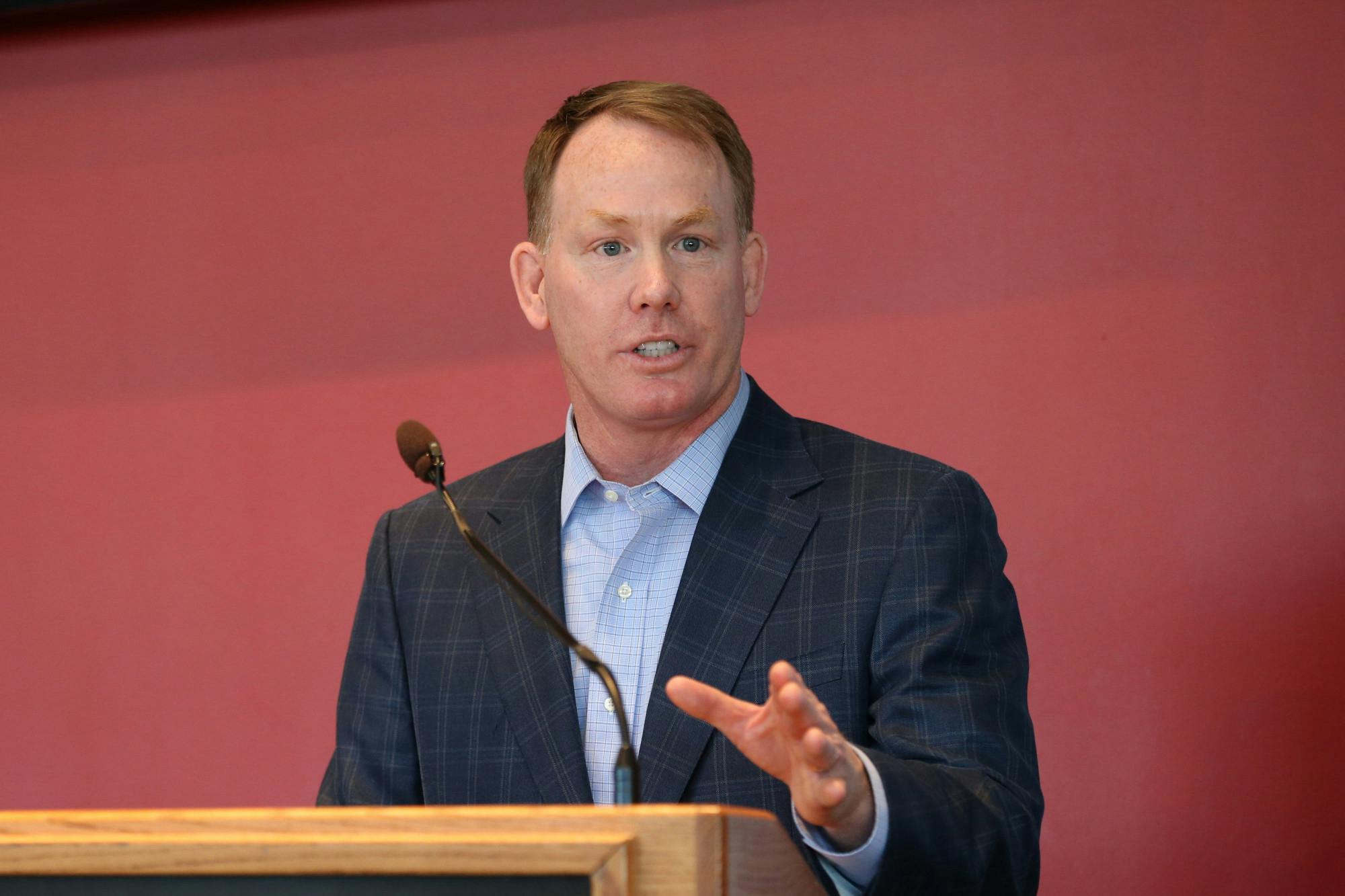
University of Wisconsin-Madison Interim Chancellor Eric Wilcots announced July 1 that he appointed Shawn Eichorst to serve as the next athletic director for the Badgers – the first decision in his time as chancellor.
A former football player at UW-Whitewater, Eichorst brings decades of experience in college athletics. He has held leadership roles at UW-Whitewater, University of South Carolina, UW-Madison, University of Miami, University of Nebraska and most recently, University of Texas.
During his tenure as deputy athletics director and chief operating officer at the University of Texas, Eichorst oversaw many of the Longhorns' massive financial operations. His experience managing one of the nation’s largest athletic budgets and navigating the rapidly evolving name, image and likeness landscape made him a leading candidate for the position at UW.
He also previously worked as an athletic director at the University of Miami, notably signing Jim Larrañaga as the head coach of Miami’s men’s basketball team. Larrañaga later became college men’s basketball’s winningest coach in program history.
Eichorst’s tenure at University of Nebraska was more turbulent. He dismissed football coach Bo Pelini after the 2014 season and hired Mike Riley, whose 19-19 record over three seasons drew criticism before Eichorst was dismissed in 2017.
At Wisconsin, Eichorst will inherit an athletic department navigating the growing financial demands of college sports, particularly in the NIL era. He will oversee one of the Big Ten’s most premiere athletic programs, including men’s and women’s basketball, men’s and women’s hockey, volleyball and a struggling football program.
After bouncing back with Texas, Eichorst looks to rebuild some much needed foundation for Wisconsin athletics, mainly focusing on improving the football team, along with deciding whether or not to move on from head coach Luke Fickel after this year.
Among his most immediate priorities will be positioning Wisconsin to remain competitive in recruiting and fundraising as schools continue investing heavily in NIL opportunities and revenue-sharing models.