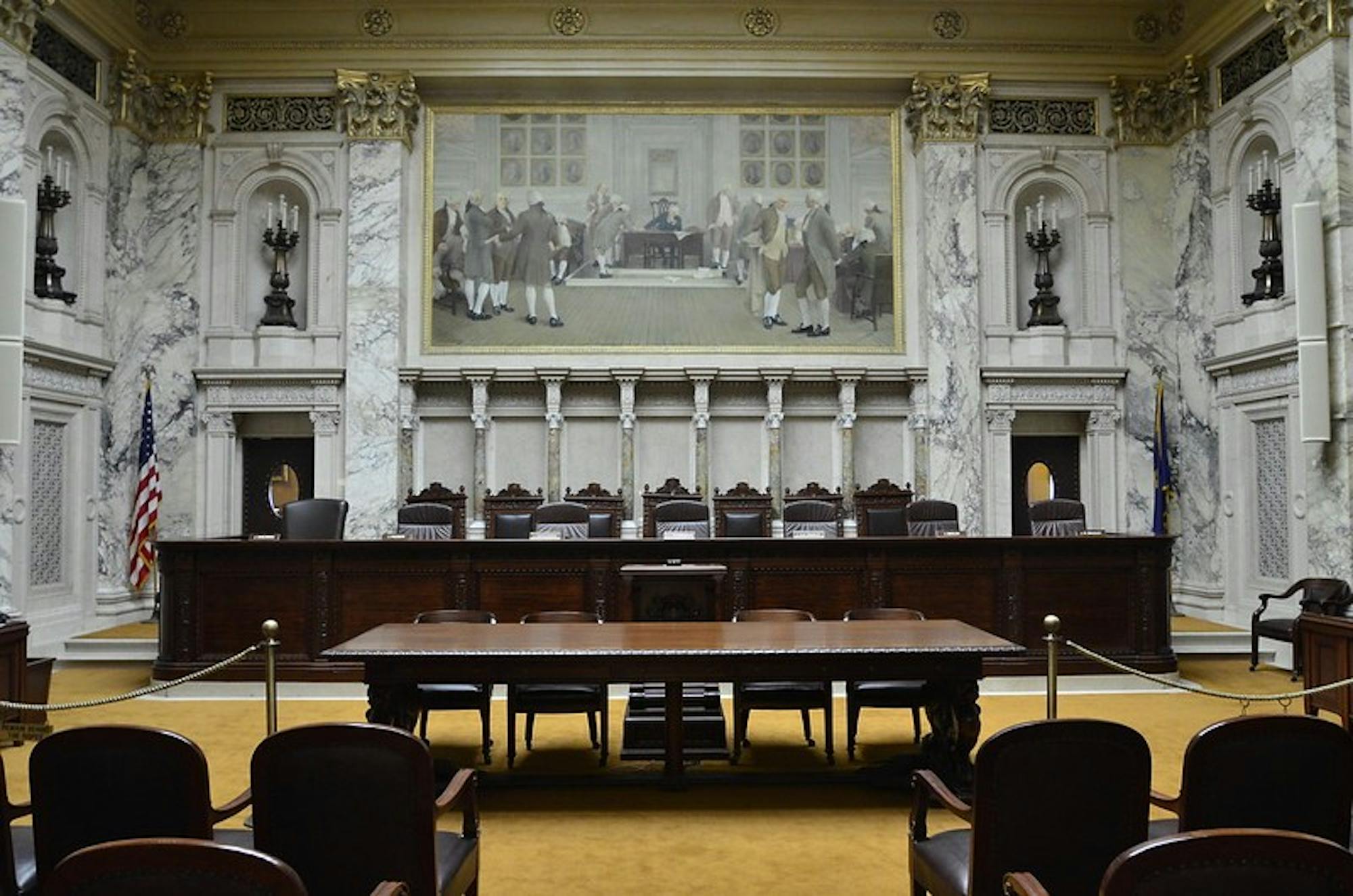
The Wisconsin Supreme Court unanimously struck down a scholarship program Thursday, ruling that their applicant requirements violated the state constitution.
The Supreme Court ruled the Minority Undergraduate Retention Program, administered by the Higher Educational Aids Board (HEAB), violated the equal protection clause of the Wisconsin Constitution that limits eligibility based on race. The scholarship had been available to students who identified as Black, Hispanic, Native American or Southeast Asian and attended eligible colleges and universities around the state.
The ruling was part of a precedent established by the U.S. Supreme Court's 2023 decision that gutted affirmative action.
Conservative Justice Annette Ziegler wrote that the U.S. Supreme Court holds strict scrutiny over race-based issues. Race is scarcely used as a deciding factor for admissions and scholarships and must coincide with many other individual factors, according to Ziegler. She said the HEAB used race as the only factor in deciding scholarship recipients for this program.
The decision has already sparked debate among state lawmakers, with some celebrating the ruling as a victory for equal treatment under the law while others are promising to pursue alternative forms of aid for disadvantaged students.
State Sen. Eric Wimberger, R-Gillett, has been in longstanding opposition to the Minority Undergraduate Retention Program and fought to get a bill passed to eliminate DEI funding in higher education programs in early 2026. Gov. Tony Evers vetoed the bill after it passed in the Republican-controlled legislature.
Wimberger praised the Supreme Court’s ruling in a statement Thursday, arguing government programs that distribute benefits based on race are inherently racist in themselves.
“Giving benefits based solely on race presumes someone has individual personal characteristics simply because they belong to a race category,” Wimberger said. “That is stereotyping and racism at their plainest and simplest.”
State Sen. Dora Drake, D-Milwaukee, criticized the court's decision in a statement Thursday and said the program served a different purpose than the race-conscious admission policies.
“That federal case was based on admissions while this program is about a student retention enacted by the state legislature and funded since 1985,” Drake said. “They are setting a dangerous precedent by applying this federal ruling to distinctly different programs.”
Both senators agree this is not the end of their fight. Wimberger views Thursday’s ruling as a step closer towards total elimination of diversity, equity and inclusion and race-based government programs.
“The Court is right today to call race-based government policies for what they are: odious,” Wimberger said. “Unfortunately, there are still other state programs that give benefits based on race. I will continue to fight against those policies and pursue equality under the law.”
Drake said eliminating programs that address educational disparities ignores the historical barriers marginalized communities face, and the ruling underscores the need for lawmakers to find alternative ways to support these students.
“We can’t continue to make the same mistakes like our nation did post-reconstruction and Jim Crow. If we do we will never achieve true equity in our democracy,” Drake said. “Disadvantaged communities need more resources, not fewer, and next session I’ll reintroduce this program to support students based on income and zip code.”
While Thursday’s ruling ends the Minority Undergraduate Retention Program, the court opened the possibility that all future efforts to address educational disparities could face different outcomes.
In a concurring opinion, liberal Justice Rebecca Dallet wrote that the Higher Educational Aids Board failed to establish a compelling justification for the program, but noted “the result may be different for other laws with greater factual support.”