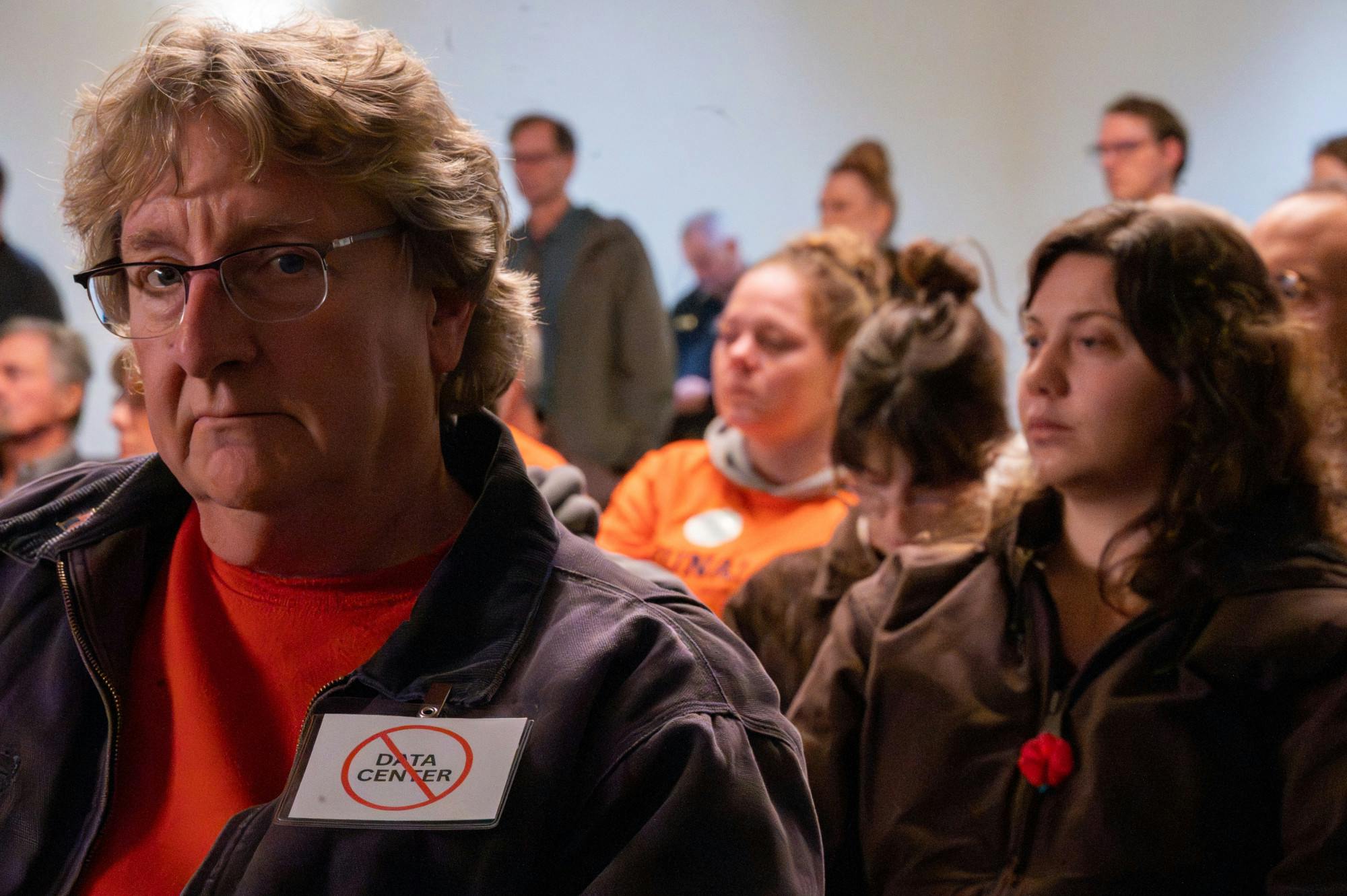
As Wisconsin positions itself as a hub for artificial intelligence infrastructure, environmental advocates from the Sierra Club are asking a court to require a more extensive review of one of the state’s largest proposed data center developments.
Midwest Environmental Advocates filed a lawsuit in July on behalf of the Sierra Club of Wisconsin, challenging a Wisconsin Department of Natural Resources (DNR) decision to not require an Environmental Impact Statement (EIS) for the proposed Vantage Data Centers campus in Port Washington, Wisconsin.
The lawsuit argues the project's scale warrants a comprehensive environmental review before construction proceeds because of potential impacts on Wisconsin’s energy demand, water resources, air quality and surrounding communities.
“The most basic step when a massive, potentially devastating project, like the Port Washington Data Center, is proposed is to study the potential impacts,” Elizabeth Ward, director of Sierra Club Wisconsin Chapter, told the Daily Cardinal.
The case comes as Wisconsin attracts billions of dollars in other AI investments. Microsoft announced a $3.3 billion expansion of its Fairwater data center campus in Mount Pleasant, while Vantage Data Centers, Oracle and OpenAI plan to develop the Port Washington center as part of a broader $15 billion effort to expand computing infrastructure for artificial intelligence.
Unlike traditional data centers that primarily store information or host websites, AI facilities perform mathematical calculations to train and operate machine-learning models. The high-density computing hardware used generates three to five times more heat than standard racks, requiring extensive, continuous cooling systems.
Data centers were also estimated to consume approximately 1.5% of global electricity in 2024, with the consumption predicted to double by 2030. In the United States, data centers accounted for roughly about 4.4% of electricity use in 2023. That figure could reach between 6.7% and 12% of total U.S. electricity demand by 2028.
Because much of that electricity is still often generated from fossil fuels, the Sierra Club argues expanding data center capacity could increase greenhouse emissions while placing strain on electrical grids.
While the developments promise thousands of jobs and to expand Wisconsin’s role in AI development, environmental advocates argue the state must fully evaluate the long-term environmental impacts.
A lawsuit centered on environmental review
The Wisconsin Environmental Policy Act requires state agencies to prepare an EIS for actions that may affect the quality of the human environment. According to the DNR, an EIS is intended to “inform decision-makers and the public about the anticipated environmental and socioeconomic effects of a proposed action or project and alternatives to the proposal.”
The DNR determined an EIS was not required for the Vantage project, while the Sierra Club argues the decision failed to account for the project’s scale and potential impacts.
Ward said Sierra Club hopes the lawsuit will establish a precedent for future large-scale data center developments.
“We hope that in addition to securing an Environmental Impact Statement on the Port Washington project, DNR moves forward with conducting EISs on projects of this significance as a standard practice, one that we believe is required by law,” Ward said.
According to Sierra Club, emails obtained through public records requests show DNR staff initially indicated that an EIS would be required because of the project’s size and scope. The organization alleges the agency reversed course after project representatives expressed concerns that an EIS could delay development.
Concerns about energy demand
A major focus of Sierra Club’s argument is the electricity needed to operate the facility. According to the organization, the Port Washington campus could require up to 3.5 gigawatts of power when completed.
“The data center will rely on gas-fired power plants that use a lot of water, worsen air quality and create more climate pollution,” Ward said. “This investment in fossil fuels in order to fuel data centers has led to Wisconsin’s largest utility, We Energies, dropping their climate goals.”
An Environmental Analysis Summary conducted by the DNR states that Vantage contracted with We Energies to procure electricity from new and existing sources, including gas-fired, solar, nuclear and wind plants, as well as battery storage/power plants. Vantage’s website states that 70% of the campus’ power will originate from zero-emission energy resources.
While data centers powered by renewable energy generally have lower operational carbon emissions than those relying primarily on fossil fuel, experts warn this isn’t a feasible option for data centers with current technologies.
"We’re not able to power data centers solely with renewable energy right now,” Brian Nelson, an electrical engineer who works on grid infrastructure and power systems, said.
The lawsuit highlights potential emissions from backup diesel generators — which are needed for potential power outages — as interruptions can disrupt computing services.
The Vantage project received an initial operation permit for more than 40 diesel generators, according to Ward. Sierra Club estimates that if all 45 generators operated simultaneously for one hour, nitrogen oxide emissions would be equivalent to approximately 5.2 million vehicle miles traveled, based on calculations using Bureau of Transportation Statistics data.
Nitrogen oxides contribute to ground-level ozone formation. Ozaukee County, where the project is located, is currently a non-attainment zone for the federal 2015 ozone standard. That means ozone levels already exceed federal air quality standards.
The future of AI in Wisconsin
For Sierra Club, the case is about how Wisconsin evaluates future projects. Ward said large AI facilities could have long-term effects on Wisconsin’s energy system, natural resources and communities.
“These hyperscale data centers have the potential to completely change Wisconsin’s landscape, energy infrastructure and waters,” Ward said. “Wisconsin needs to create a framework and put protections in place that will ensure we are protected from these impacts.”