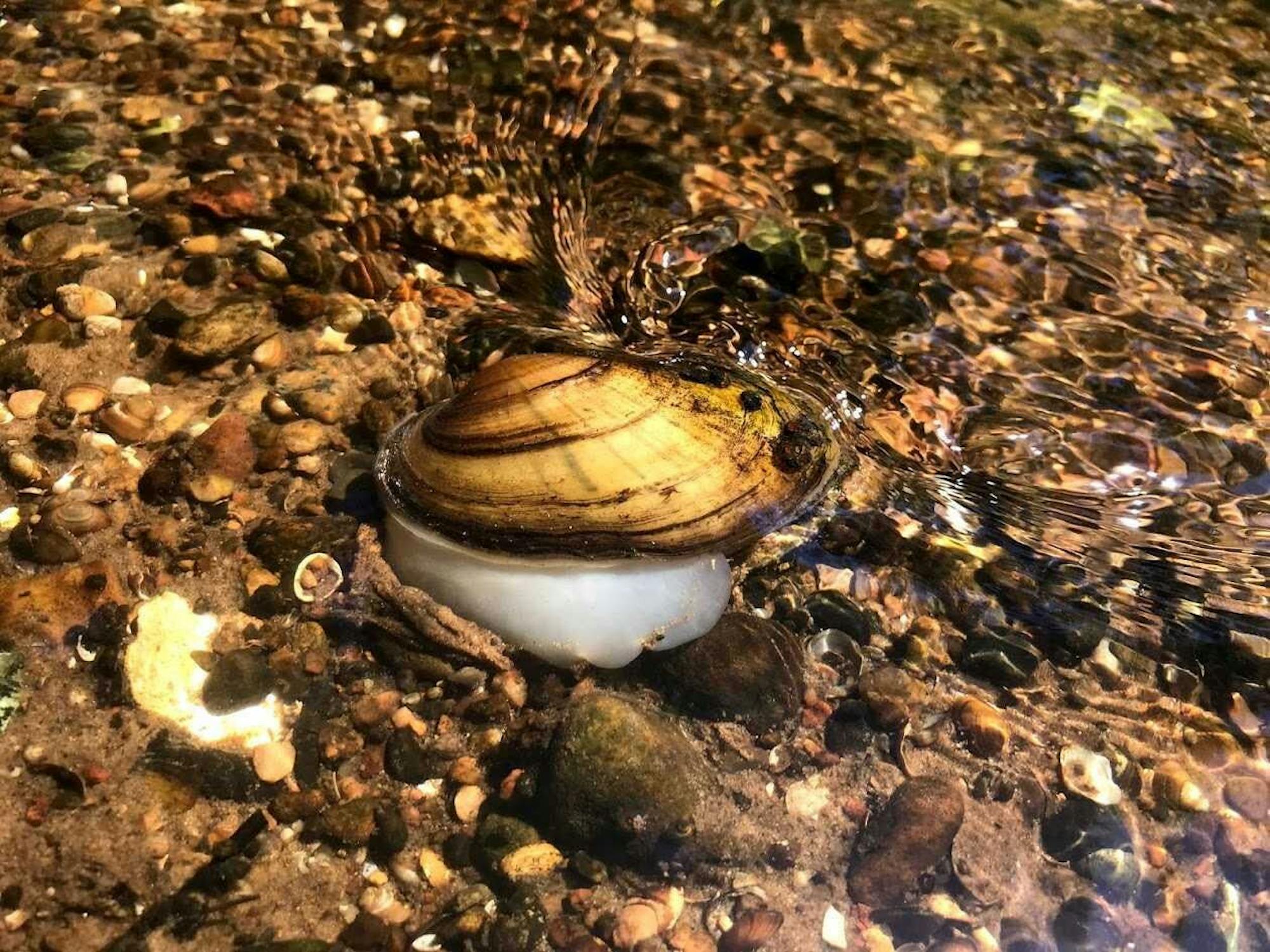
Ongoing severe drought conditions in Wisconsin are leaving native freshwater mussels stranded in shrinking rivers and streams, putting dozens of species at risk, according to the Wisconsin Department of Natural Resources (WDNR).
Wisconsin is home to over 50 mussel species, nearly half of which are classified as threatened, at-risk or endangered. Mussels are essential creatures for maintaining healthy waterways and ecosystems as they filter gallons of water a day, removing sediment and other contaminants. They also serve as a food source for animals such as raccoons and otters, and secrete a gelatinous mass (pseudo-feces) that aquatic insects and crayfish eat.
Mussels have an equally unique life cycle. When mussels are fertilized, they develop into a miniature mussel called a glochidia that temporarily attaches to fish gills or fins, using fish blood. The glochidia needs fish blood to finish developing.
When mussel die-off occurs, such as during a high drought year, populations of aquatic insects and crayfish that need the mussels to make food can decline.
Lisie Kitchel, a biologist for the WDNR, told The Daily Cardinal that prolonged and widespread drought conditions have greatly increased the risk for mussel strandings.
“Right now, the greatest drought conditions are in the western and northwestern part of the state… We have drought on the St. Croix, Chippewa and Black rivers and their tributaries, as well as others,” Kitchel said.
Kitchel said that as water levels drop, river temperatures can increase, which can stress the mussels further. Although mussels can dig into the riverbed to avoid dehydration, riverbeds can lose that moisture and leave the animals vulnerable.
The WDNR is encouraging residents to ‘throw’ the mussels into deeper water, if they are seen stranded in shallow bodies of water at this time.
Residents can also help rescue the mussels.
“People can go out and pick up mussels that are stranded and throw them into deeper water,” Kitchel said. “Collecting them in bags or baskets is helpful if there are a lot and they need to be transferred to deeper water further away. If you see stranded mussels while paddling or boating, you can collect and move them to deeper water.”
The Friends of the Lower Wisconsin Riverway, an organization dedicated to protecting outdoor experiences related to the Lower Wisconsin State Riverway, have created a sign-up page for volunteers to receive emails about where mussels strandings are occurring and what can be done to rescue them.