Madison has spent decades cultivating an image as one of America’s most progressive cities. It promotes inclusion, emphasizes equity and prides itself on compassionate leadership.
But those values can not be measured by campaign slogans, yard signs or political branding. They are measured by how a city responds when compassion is most necessary.
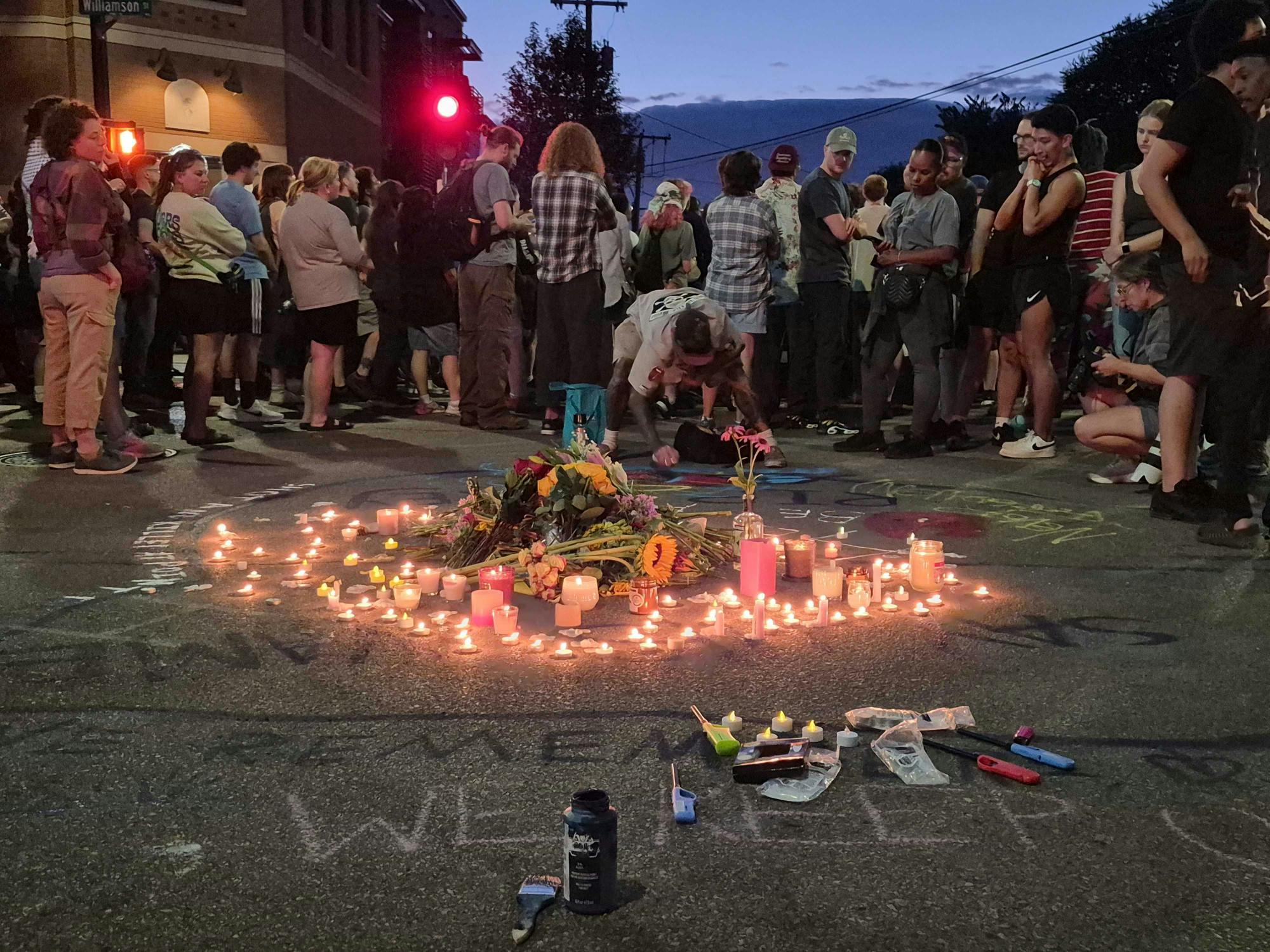
Last week, protests erupted after the fatal police shooting of 38-year-old Corey Ruiz, a Madison native experiencing homelessness and untreated mental illness. He was tased, restrained and ultimately shot three times by Madison police officers on Williamson Street outside the Willy Street Co-op. The location is significant, considering its place as the cultural heart of one of Madison’s most politically progressive neighborhoods. The Wisconsin Department of Justice is currently investigating the shooting as part of standard procedure for deaths that occur during an encounter with officers. The legal process deserves space to unfold, but patience cannot become another excuse for political paralysis. Bystander videos have already become publicly available, raising serious questions about the city’s repeated claims that de-escalation is central to its policing.
But waiting for the investigation’s conclusion should not prevent Madison from confronting a larger question that has existed long before Ruiz’s death.
What kind of city do we become when homelessness, untreated mental illness and behavioral crises continue to end in encounters with armed police?
Ruiz reportedly possessed a fixed-blade knife and an officer sustained injuries in the struggle. Those facts matter. Officers routinely face dangerous and unpredictable situations, and every use of force warrants a thorough investigation.
Yet acknowledging those facts does not dismiss the question confronting Madison.
If four officers could not safely resolve an encounter with one individual without resorting to lethal force, what does that say about the city’s crisis response system? If someone experiencing homelessness and mental illness is met first and foremost by armed officers, the failure did not begin when shots were fired. It began long before police were called to the scene.
Mental illness and alleged petty theft should not become death sentences, and no one should die because a community lacked better ways to respond to someone in crisis.
This is not a simple, isolated tactical failure. It was the predictable consequence of a city that continues to criminalize poverty and behavioral health crises while relying on armed law enforcement as its primary response. When vulnerable residents are consistently treated as public safety threats rather than neighbors in need of care, deadly outcomes are, unfortunately, increasingly foreseeable.
Madison demands to be recognized as a national model of progressive governance. Yet genuine progressivism demands more than supporting ambitious policies when they are politically convenient. The city cannot continue to hide behind a progressive image while state violence remains an accepted endpoint of its public safety model. It must build and support institutions that reflect its progressive values when circumstances are uncomfortable, unpredictable and sometimes dangerous.
And this tragedy did not occur in a vacuum.
The city’s painful history offers a reminder that promises alone have never produced accountability. After the 2015 police killing of 19-year-old Tony Robinson, Madison saw widespread demonstrations, emotional public hearings and countless promises to reform. Community organizations, including the Urban League of Greater Madison, responded by creating spaces such as the Unity Picnic to promote healing and solidarity.
More than a decade later, the same conversations have returned with striking familiarity.
The pattern has become painfully recognizable. A tragedy occurs. Demonstrations fill the streets. Listening sessions, task forces and committee meetings follow. Officials promise transparency while reforms move slowly through government channels, if at all. Eventually, public attention fades, political urgency dissipates and the institutions responsible for change outlast the communities demanding it.
Madison has become remarkably effective at managing outrage instead of solving the problems that create it.
The city’s failure to adopt one of the most basic accountability tools available to modern policing is another example of the same institutional inertia. Body cameras for frontline officers need to be available, funded and required. Disputes over this have repeatedly delayed implementation, leaving the public to depend on cellphone footage whenever an encounter occurs. Public trust should never be compromised. When accountability depends on a bystander capturing an incident, the system has already failed.
Public trust should never depend on whether someone nearby happened to press record.
Transparency is not a concession the government offers after a tragedy. It is a responsibility they must uphold under their oath.
Regardless of where investigators ultimately determine the officers acted within Wisconsin law is an important question. But legality alone cannot answer whether Madison has built the kind of public safety worthy of the values it professes.
Those are separate questions.
Madison must confront the societal failures that produced this encounter in the first place. A legal finding will not erase the reality that homelessness, untreated mental illness and addiction remain amongst the most significant public challenges our residents face. Those issues cannot be addressed through policing. Nor can it answer whether sufficient investments are being made in housing, behavioral health and civilian crisis response systems. Expanding civilian crisis response systems is not about vilifying law enforcement; it is about recognizing that many situations require expertise beyond traditional policing.
Some might argue that Ruiz’s possession of a knife justified the officers’ actions. Others will point to the ongoing investigation and caution against drawing conclusions before all evidence is released. Those considerations do matter and deserve careful examination.
Yet legality and morality are not interchangeable.
Even if the investigators come to the conclusion that the officers’ actions complied with Wisconsin’s use-of-force laws, that legal determination cannot erase the larger institutional failure that placed everyone in that position. Whether an action satisfies the law is separate from whether Madison has built a public safety system worthy of a city that claims compassion as one of its defining values. The conversation should not end when the Department of Justice releases its findings.
Waiting for investigations should not mean waiting to confront structural problems that have been visible for years. Lengthy review processes have, too often, become political cooling-off periods, allowing public momentum to simmer while institutions return to business as usual.
Madison has an opportunity to choose a different path.
City leaders should expand permanent, civilian-led crisis response teams so mental health emergencies, addiction and homelessness are no longer treated first as policing problems. Investments in housing, behavioral health care and other preventive social services would reduce the need for police intervention in many low-level incidents before they escalate into dangerous encounters. Strengthening independent civilian oversight should include granting review bodies meaningful disciplinary authority and increasing transparency surrounding officer misconduct. City leaders should also fully fund body cameras as a basic accountability measure rather than allowing budget disputes to delay reforms that strengthen public trust.
The University of Wisconsin-Madison cannot remain a passive observer either. As the city’s largest institution and one of its most influential economic and cultural forces, the university has the platform to advocate for policies that better protect Madison’s most marginalized residents. Thousands of students live, work and build their lives throughout Madison. The health of the city is inseparable from the health of its university community.
Ultimately, Madison’s identity is not defined by the values it claims to hold. It is defined by the people it chooses to protect it.
A truly progressive city is not one that simply speaks the language of compassion. It is one that builds institutions capable of practicing it, especially for those with the least power.
The investigation into Corey Ruiz’s death will eventually end. The larger question facing Madison will not.
Until the city matches its progressive ideals with equally ambitious investments in care, prevention and accountability, those ideals remain aspirations rather than achievements.