The Wisconsin Alumni Association hosted a webinar on May 19, “From War to AI: Forces Shaping Today’s Economy,” examining how conflict, global trade disruptions and artificial intelligence are influencing the United States and global economy.
Panelists included Kim Ruhl, co-director of the Center for Research on Wisconsin Economy and a former member of President Donald Trump's Council of Economic Advisors and Patrick McDaniel, professor in UW-Madison's School of Computer, Data and Information Sciences.
Ruhl and McDaniel outlined three factors they believe are currently shaping the global economy: conflict in the Middle East, broader geo-economic shifts and adoption of AI.
War
“There are three big sets of forces at work right now.” Ruhl said. “The first and most immediate, of course, is the Middle East situation and the closure of the Strait of Hormuz. The second is a combination of things, some of which are being driven by U.S. policy and some by other policies I'm going to call geo-economic changes.”
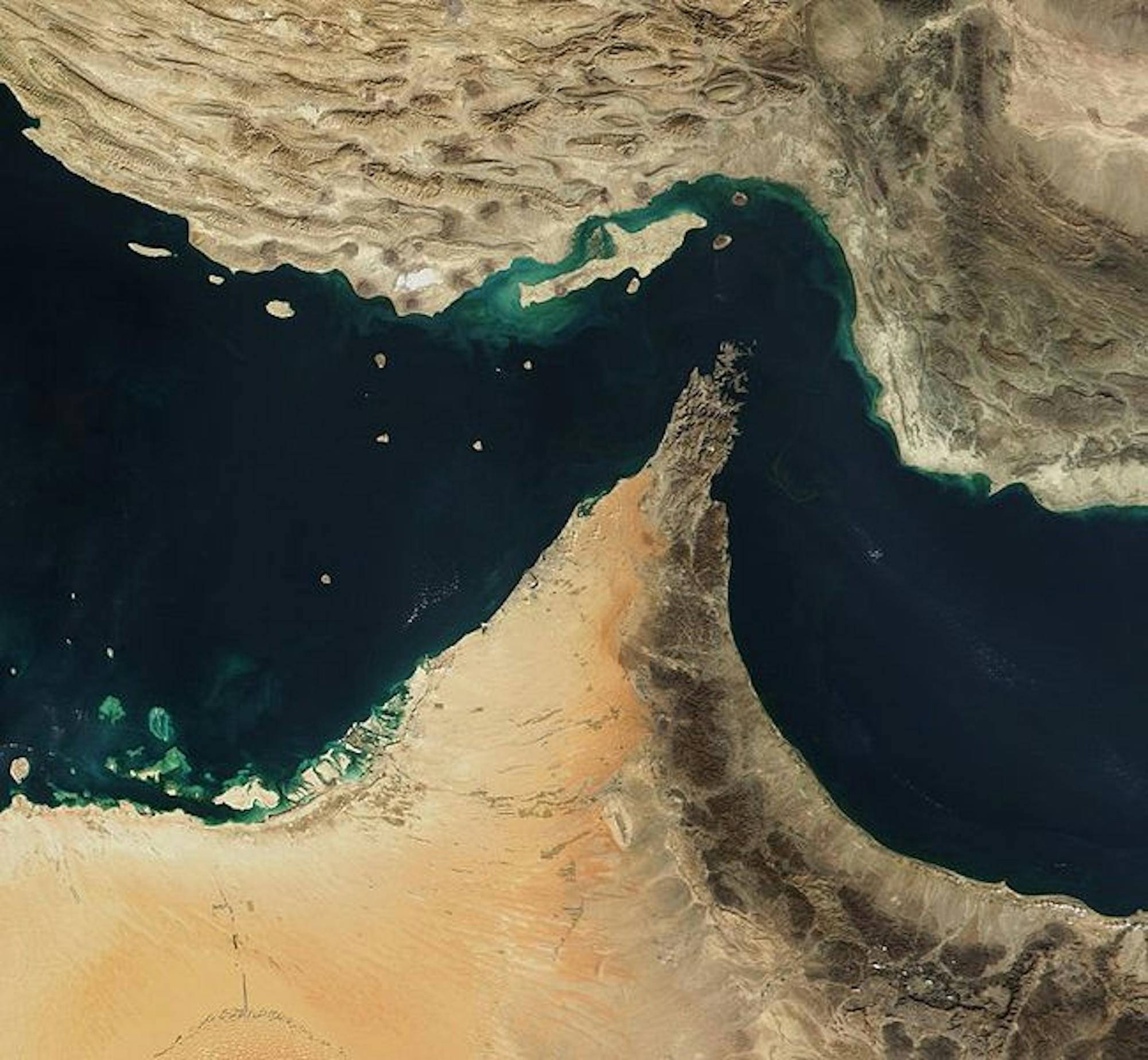
Ruhl said the closure of the strait has contributed to rising oil prices and inflationary pressure worldwide. The strait, a key global shipping route, accounts for 20% of the world's oil and liquified natural gas supply (LNG) and a significant amount of petroleum-based products used in manufacturing and agriculture.
“This is a very large shock to oil, but it’s much broader than that,” Ruhl said. “Petroleum products, things like helium and other speciality gasses, that are used in high-end manufacturing — urea and ammonia — these things show up everywhere.”
The closure of the Strait by Iran and subsequent blockade by President Trump have halted the flow of products from major Persian Gulf oil producers, driving up prices for fuel and other petroleum products.
According to Ruhl, the disruption reaches beyond gasoline prices and could affect industries including aviation, agriculture and technology.
“Most of the world's economy, in one way or another, touches something that looks like petroleum, petroleum products, so this is not just the price of gasoline going up, but it's the price of lots of things,” Ruhl said. Jet fuel, fertilizer and plastic semiconductors, all of which require LNG or crude oil to produce, are among products facing shortages.
According to the Food and Agriculture Organization, the closure of the Strait of Hormuz could lead to global food shortages and an increase in agricultural costs as fertilizer becomes increasingly scarce — a major concern for import-dependent countries.
Ruhl added that prolonged conflict in Iran could worsen inflation globally.
“This is not just a U.S. phenomenon. Countries across the world are facing inflationary pressures from this campaign,” Ruhl said.
Using projections from the International Monetary Fund, Ruhl said economists expect the length of the conflict to determine the scale of long-term economic damage. In a shorter-term conflict, he said global growth projections decline modestly. In a prolonged disruption “the worst case scenarios for 2026-27, GDP growth is down around 2% globally and inflation is up near 6%,” Ruhl said.
“This is really a question of how quickly the engagement [in Iran] can be wrapped up,” Ruhl said. “Even once it’s wrapped up, you’d anticipate it being months, probably, before markets normalize.”
Beyond the war in Iran, Ruhl discussed broader shifts in global trade and manufacturing, particularly involving China, the European Union and the U.S.
Ruhl pointed to the decline in U.S. imports from China since the first Trump administration, saying imports peaked at 22% around 2015 before declining steadily.
“That's been a sort of enormous change in the trading relationship between these two countries, and quite a decrease in the amount of imports U.S. is getting from China now,” Ruhl said.
European countries are increasingly seeing a new wave of Chinese imports.
“The E.U. might be staring down China shock 2.0,” Ruhl said. Many European countries are showing concern about Chinese goods hurting local industries. In recent years there have been European tariff efforts against Chinese imported electric vehicles, machinery and steel, he explained.
Ruhl also discussed the growing fragility of international supply chains, citing the COVID-19 pandemic, Russia’s invasion of Ukraine and Chinese export restrictions on rare earths, like neodymium and praseodymium, as examples of how fast global production networks can be disrupted.
“We saw it when Russia invaded Ukraine and cut off gas supplies to the E.U., COVID-19 – you’ll remember lots of supply chain disruptions and things you could and couldn’t get,” Ruhl said.
AI
The conversation then shifted toward AI’s growing role in education, industry and employment. McDaniel focused heavily on public skepticism toward the emerging technology and the risks associated with its rapid adoption.
“I think it will be important for the next generation of users to know something about AI,” McDaniel said. “But we have to be really careful about the hype and take the assertion of big tech promises of utility in a way that makes the user accept these technologies without reservation.”
McDaniel challenged the idea that younger generations oppose AI primarily out of the fear of job loss, instead arguing that many students distrust the technology itself.
“Theres this common perception that the rejection of AI is due to fear,” McDaniel said. “The fundamental reason they’re rejecting AI is that they don’t trust it, and they shouldn’t.”
McDaniel highlighted recent graduation ceremonies where students booed speakers promoting AI and pointed to survey data suggesting many members of Gen Z remain skeptical about the long-term effects of AI.
Economically, Ruhl said while many companies are eager to adopt AI into daily tasks, industries remain cautious due to the lack of sufficient safeguards.
“We haven’t actually figured out the engineering around AI,” Ruhl said. “We have to put guardrails around AI to make sure it does not do unsafe things.”
Ruhl added that high-risk industries, such as business or healthcare, and businesses working in critical infrastructure remain hesitant to adopt AI systems they do not fully understand or trust.
“I think there’s this notion that we can just kind of sprinkle AI on and we’re suddenly a new industry,” Ruhl said. “People are very wary of putting AI in the pipeline because they don’t really understand what the risks are.”
Despite these concerns, McDaniel said AI will likely become increasingly important across industries and labor markets. He compared the current technological shift to the Industrial Revolution, suggesting that workers who fail to adapt may struggle economically.
“There were people that accepted that transition, and there were those that don’t,” McDaniel said. “Those people that are not interested in being retrained or learning to redo their jobs or embracing the new tools are going to be less employable.”
Universities, according to McDaniel, could play an important role in helping workers navigate technological change through retraining and workforce education initiatives.
“This is the place where potentially the University of Wisconsin could really make a difference,” McDaniel said. “We can make a conservative effort for the people of Wisconsin to create those opportunities [and] help people in upgrading those skills.”