Jon Pevehouse, a professor of political science at the University of Wisconsin-Madison who specializes in international relations, discussed the Iranian war, its effects and what its outcome might look like in the United States in an interview with The Daily Cardinal.
The U.S. began bombing Iran in February 2026. The campaign, Operation Epic Fury, was intended to upheave Iranian leadership, destroy their military and end Iran’s nuclear program, according to President Donald Trump.
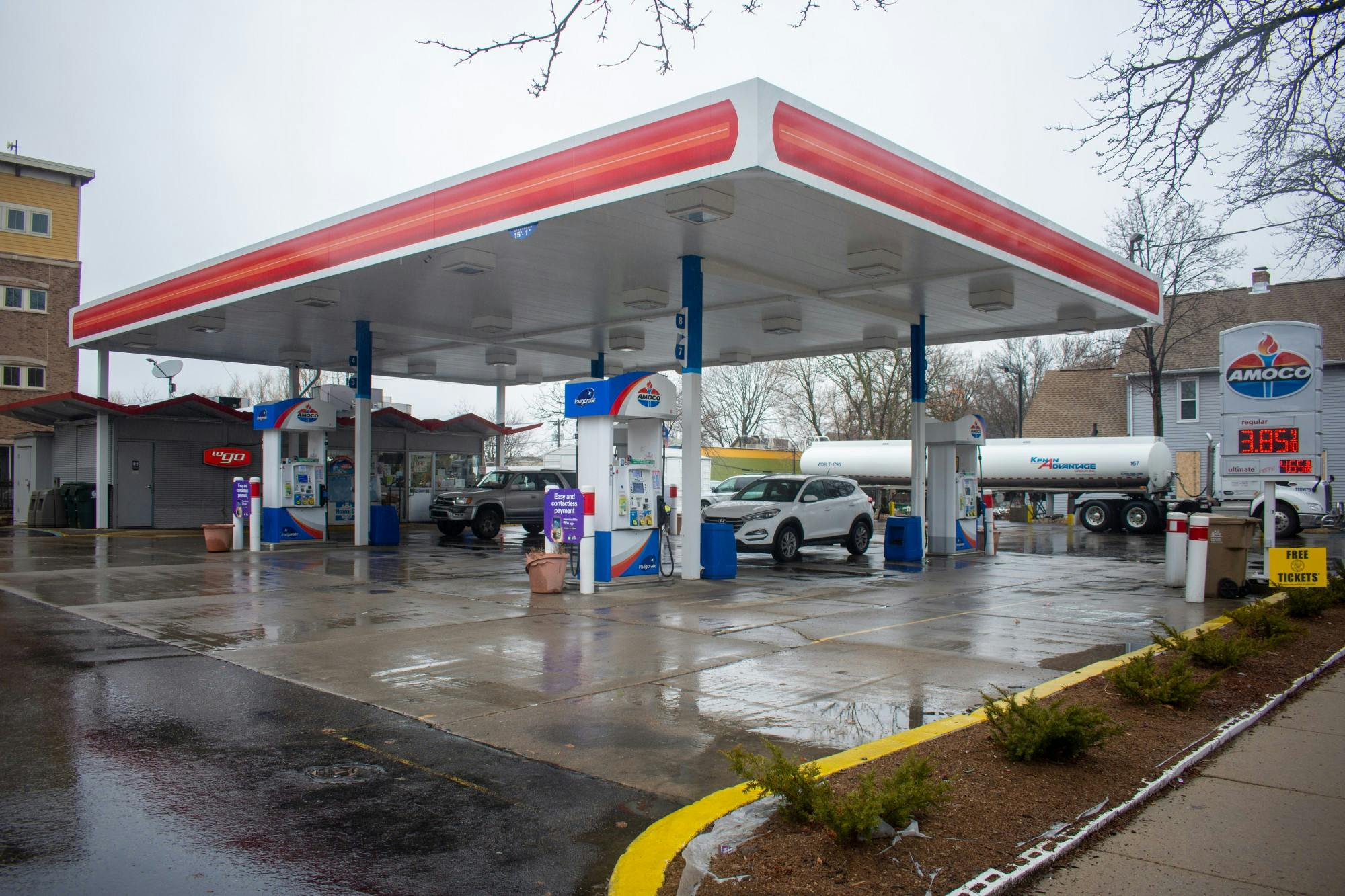
The result — a deeply unpopular war that Wisconsinites are noticing at the gas pump. On May 10, gas prices in Wisconsin hit an average of $4.378 per gallon, just below the national average of $4.522 and $1.448 more than a year ago.
Now, residents want to know how long the prices will continue to rise.
“With the war still going on, you're seeing daily fluctuation,” Pevehouse told The Daily Cardinal. “The saying in the industry is always that prices go up like a rocket and fall like a feather.”
According to Pevehouse, much of the increase in prices might be from indirect market reasons: gas suppliers immediately raised prices once the war started, hoping to financially pad themselves from future supply instability.
“We’re paying more for gas the day after the war starts,” Pevehouse said.
Since the conflict broke out, Iran has closed the Strait of Hormuz and armed it with sea mines, drones, naval vessels and missiles. Hormuz is a vital trade route that transports 27% of crude oil and 20% of liquefied natural gas globally.
President Trump placed a retaliatory blockade on Iranian ports in an effort to prevent Iran from exporting oil to allies like China.
Effectively, these actions have halted all ship transit out of the Persian Gulf.
The attacks on oil centers in Iran and Persian Gulf states “led to a huge spike in oil prices due to a decline in supply and a concern over the safety of that supply, which then reverberated around global energy markets for the last three months,” Pevehouse said.
Pevehouse also said the international scale of increasing energy prices will affect other sectors of the economy at all levels.
“All countries need energy to run their economies,” Pevehouse said. “Anytime you get a disruption or increase in energy costs, it’s going to ripple through every facet of the economy.”
He explained how when energy costs rise, so does the cost of production — that strain is placed on the backs of everyday consumers.
“Anytime the prices of [energy] go up, the price of everything is going to go up,” Pevehouse said.
Oil drills, refineries and supply chains in the Persian Gulf have been repeatedly struck by Iran in retaliation for the U.S. strikes — only driving costs higher.
“The complicating factor in this particular war is that a lot of the supply chains were damaged,” Pevehouse said. “Some estimates are upwards of $60 billion [worth] of pumps, refineries, pipelines and shipping outlets were all damaged in this war. So even if the war ends tomorrow, you’ve got to fix all those things.”
When will fuel prices go down?
In addition to rebuilding the refineries and supply chains, Pevehouse explained how the process of opening the Strait itself could take a long time.
According to Pevehouse, the ships piled up in the Gulf could take a long time to reach their intended markets. Large oil tankers move at a slow pace, 12-15 knots (14-18 mph) or roughly the speed of a bicycle.
Restabilizing the markets could take months, he said.
“Some are saying if the war ends tomorrow it'll be nine months before you get a decline in gas [prices],” Pevehouse said. “I think that's a little pessimistic, but I do think the continuation of the high prices will be measured in months, not days or weeks.”
While the war might seem distant from Wisconsin, its consequences will linger at the gas pump as the situation continues to develop.
How did the U.S-Iran conflict start?
U.S. Secretary of State Marco Rubio characterized the first strikes against Iran as pre-emptive, expecting increased attacks on U.S. forces after hearing Israeli plans to attack Iran. President Trump offered several political justifications for the conflict, including giving Iranian citizens an opportunity to overthrow their government.
“For the last decade, there have been a growing number of protests against the Iranian regime,” Pevehouse said. “Israel believed that… some well timed and well placed strikes on the leadership of Iran by the U.S. and by Israel would cause the Iranian government to collapse.”
The goal, he explained, was to establish a new, more cooperative Iranian government willing to abandon its nuclear ambitions.
“There's a lot of concern about the nuclear program,” Pevehouse said. “The U.S. and Israel — and frankly, most of the world — does not want to see Iran get a nuclear weapon for many reasons.”
Is the end in sight?
The U.S. and Iran signed a ceasefire on April 8 limiting airstrikes. Despite this, hostilities persist.
Pevehouse said the deal, which allowed Iran to toll the Strait, was a driving factor behind Trump's subsequent blockade. The goal — putting naval and economic pressure on Iran to force concession in future negotiations.
The blockade has been a major point of contention. On May 7, U.S. and Iran exchanged fire in the Strait, followed by further Iranian missile strikes in the United Arab Emirates, a U.S. ally. On May 9, the U.S. struck Iranian vessels departing Iranian ports as a part of its blockade efforts.
Despite the fragile ceasefire, Trump claimed the conflict was nearing its end, citing “very good” talks between U.S. and Iranian officials. Trump expressed clear interest in ending the conflict, declaring "victory” and insisting that the war was “over.”
“Trump wants out and Iran wants out,” Pevehouse said. “They would both love for this war to end tomorrow, but they both want to be able to claim some victory and get something out of it.”
Pevehouse said Iran hopes to keep its nuclear program, while Trump wants to open the Strait of Hormuz so that energy prices fall ahead of midterm elections. As a result, both sides are “trying to feel each other out,” he said.
“Neither wants to walk away being able to say they were ‘defeated,’” Pevehouse said. “The likely outcome, I think, is that in the next couple of weeks you'll get… a medium-term ceasefire where Trump gets to say the war's over, no more hostilities [and] Iran gets to say, ‘we kept our nuclear program, we'll debate it later.’”
After the midterms, Pevehouse predicted a restart of the war or a compromise on Iran’s nuclear program “where Iran gets to keep, for example, enriching small amounts of nuclear material.”
U.S.-Iranian negotiations are ongoing.