The University of Wisconsin-Madison plans to debut public, free-of-charge metals casting and CNC machining Wisconsin Hubs this summer in partnership with the U.S. Department of War (DOW).
Metallurgical Engineering Trades Apprenticeships & Learning (METAL) and America’s Cutting Edge (ACE) are Department of War-sponsored hubs offering free, hands-on workforce development courses. ACE’s bootcamps focus on introductory CNC machining, a process involving a computer-controlled machine that carves material into a user-designed part. METAL’s offerings focus on introductory metals casting and forging.
UW-Madison’s METAL and ACE hubs will be Wisconsin’s first. The DOW previously communicated with The University of Wisconsin-Milwaukee about forming a METAL hub, but halted after the university planned to suspend undergraduate admissions to their materials science department.
In a May 28 statement to The Daily Cardinal, UW-Milwaukee spokesperson Luella Dooley-Menet said significantly declining enrollment and financial challenges led to a “consideration” to suspend admissions to their materials science undergraduate program, amending an earlier statement that described a “decision” to suspend admissions.
“UWM continues to engage with faculty governance to determine the program’s future,” Dooley-Menet said.
UW-Madison and DOW offices are finalizing contract details for UW-Madison’s hubs, which will ensure METAL offerings can remain available at universities with foundries across the state, according to UW-Madison mechanical engineering professor Frank Pfefferkorn.
“There’s no prior experience or knowledge required,” Pfefferkorn told The Daily Cardinal. “They’re not just designed for engineering students, or somebody who knows they want to do something in manufacturing. It’s for anybody with curiosity that might want to explore it… Everybody’s welcome. We really want people to learn about this.”
What programs will the Wisconsin Hubs offer?
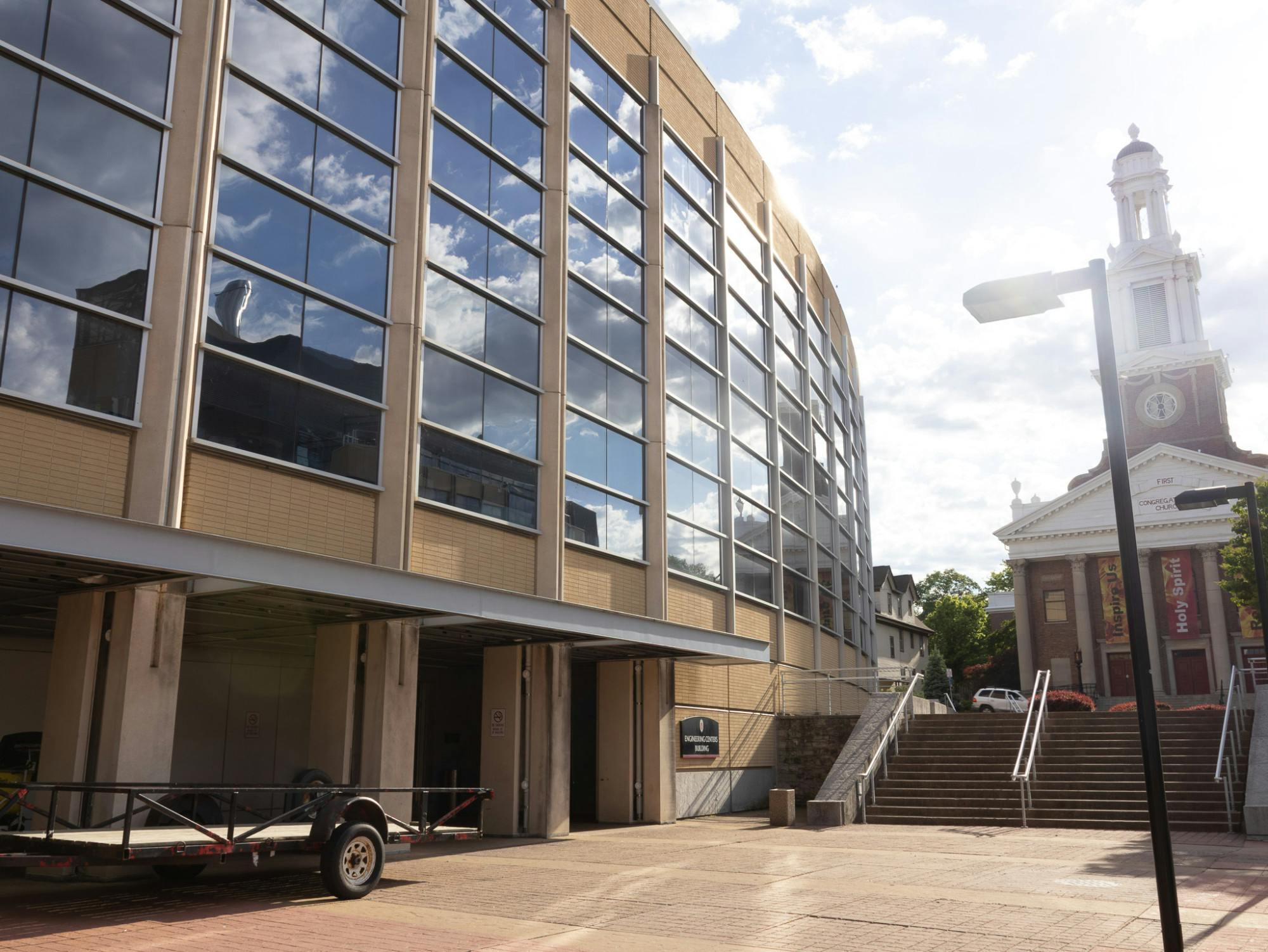
The ACE course, offered in cohorts of 10, will take place in the Engineering Centers Building’s Advanced CNC Lab and a nearby UW-Madison computer lab.
In the METAL course, cohorts of 15 will spend most of their time melting metal, making molds and casting in the Art Foundry next to the Kohl Center, a space shared by the mechanical engineering and art departments.
The program also uses other campus facilities: a computer lab for metal casting simulations, a machining lab in the basement of the Engineering Centers Building and mechanical testing in the Jun and Sandy Lee Wisconsin Structures and Materials Testing Laboratory.
The programs are intended for anyone, Pfefferkorn said.
UW-Madison students can take METAL and ACE courses for one credit each as ME 401: Special Topics in Mechanical Engineering Lab 1 and Lab 2, respectively, according to Pfefferkorn. The first public, noncredit METAL courses will be offered July 14-17 and August 25-28, eight hours per day with an additional six to eight hours of self-paced online training.
Pfefferkorn and mechanical engineering professor Michael Decicco led a METAL pilot program with six students May 11 to May 15, including graduate students, a student finishing their first year and a linguistics student. The ACE program, which follows a similar time structure as the METAL program with one more day of in-person training, is scheduled to pilot later this summer.
After one day of online training, Decicco said students spent two days pouring aluminum and brass in the foundry, followed by two days analyzing the materials’ strengths. Students cast brass medallions, and made replicas of bowls and hatchets found in the Art Foundry using a technique called loose pattern molding. They also performed a “fluidity spiral,” pouring metal into a spiral ring to analyze “how well the material flows,” Decicco told The Cardinal.
Students also learned how to use Magma, a software that simulates the casting process and identifies defects. Magma allows students to “get sound castings more quickly than [they] could with a trial and error approach,” Decicco said.
Programs are planned to be offered during the semester, over winter breaks and in summers, Pfefferkorn said. The next for-credit enrollment of CNC Machining will be offered during the Fall 2026 term, with registration opening later this summer. The next for-credit offering of Metals Casting and Forging will be offered May 2027, the week after finals.
Pfefferkorn anticipates 50 participants will take part in each program in the 2026-2027 academic year, half of the participants being UW-Madison students. He said he was motivated to start the hubs by a need to increase the number of people pursuing careers in manufacturing — almost 500,000 U.S. manufacturing jobs remained unfilled in 2025 — and a desire to help the Wisconsin manufacturing industry.
Lennon Rodgers, director of the Grainger Engineering Design Innovation Lab, told the Cardinal two machinists with experience in computer-aided manufacturing will serve as instructors for the ACE courses.
Rodgers told The Cardinal the ACE machining programming overlaps with training currently offered in the Engineering Centers Building TEAM lab. In the ACE course, students will build a small air-powered engine — the size of a deck of cards — out of aluminum and plastic parts, some machined and some 3D printed. UW-Madison will receive two new CNC machines for the ACE program, Rodgers said.
“It's some good training. It’s not an appetizer,” Rodgers said. “The people that enroll in it won't be experts in the end, but they'll have a good foundation for what the software is about and manufacturing in general.”
UW-Madison’s Research and Sponsored Programs office is handling contract negotiations with the DOW’s ACE and METAL offices, but the actual contract is between the DOW and the Board of Regents of the Universities of Wisconsin System, Pfefferkorn said.
“To be precise, the contract hasn’t been signed yet, so we’re not the hub yet,” Pfefferkorn said. “But we all want it to happen, and fully expect it to happen.”
Wisconsin Hub plans to offer METAL and ACE bootcamps statewide
Pfefferkorn said UW-Madison and the University of Wisconsin-Platteville worked together to write the METAL Hub proposal.
They did not collaborate with UW-Milwaukee on the proposal. UW-Milwaukee was in discussions about METAL hub funding that ended when the METAL Hub group learned of the university's potential suspension of enrollment to the materials science undergraduate program and declined to award UW-Milwaukee a hub, which “was not part of the original criteria but later became a condition in the process,” Dooley-Menet said.
But Pfefferkorn hopes the Wisconsin Hub based in Madison can act as a “flow-through” funding system for the DOW to offer the METAL course at other state schools with foundries, including the University of Wisconsin-Stout, University of Wisconsin-Plateville and UW-Milwaukee. UW-Madison is both a site and a hub: as a site, the university offers ACE and METAL bootcamps while negotiating its budget directly with the ACE and METAL offices; as a hub, it’s responsible for creating a network of other sites.
UW-Milwaukee and UW-Platteville are certified by the Foundry Educational Foundation, a cast metal industry program which offers scholarships to students. UW-Madison and UW-Stout are affiliated.
“A hub means that we're not just one site; we're also tasked with finding other people in the state to offer it,” Pfefferkorn said. “[UW-Milwaukee, UW-Stout and UW-Platteville] are all also Foundry Educational Foundation schools… We hope that we become a network.”
The DOW will contract with UW-Madison at the Wisconsin Hub, which can fund bootcamp programs at other state universities, Pfefferkorn said. Other sites submit a statement of work and participation-based budget parameters to UW-Madison, which coordinates with ACE and METAL offices to add the amount to the UW-Madison contract. UW-Madison then issues a sub-award to the site.
“Money's not the issue,” Pfefferkorn said. “Manufacturing workforce development is an urgent need in the country… they want us all to be offering this.”
Rodgers said the ACE and METAL programs are attached to other UW-Madison manufacturing initiatives, including the upcoming Wisconsin Drives Manufacturing Summit hosted by the College of Engineering and industry partners at Lambeau Field.
“I'm excited that the College of Engineering is really starting to look more at workforce development,” Rodgers said.
Sonia Bendre is the campus news editor for The Daily Cardinal. You can reach her at sonia.bendre@dailycardinal.com.