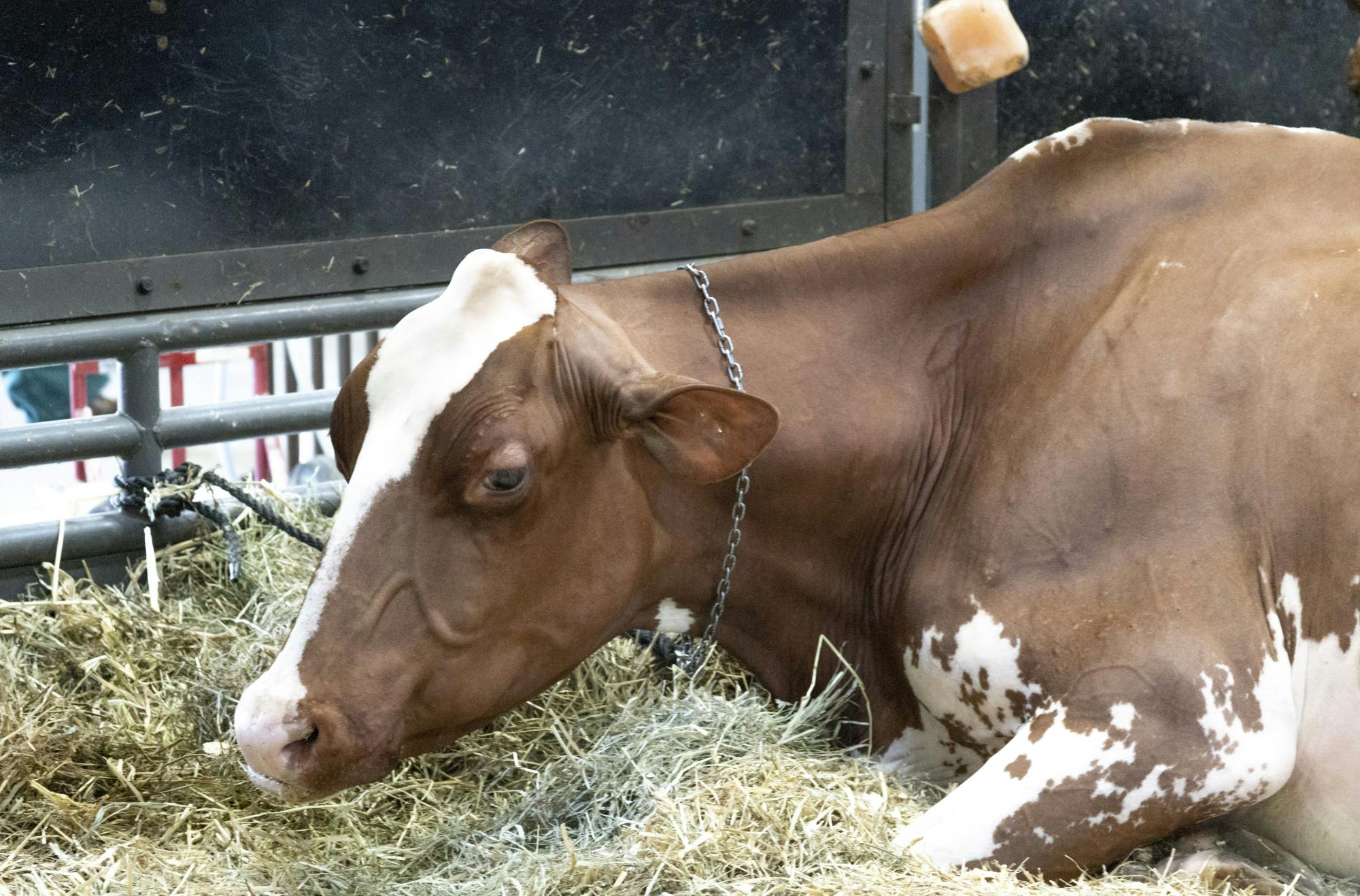
Dairy Farmers of Wisconsin (DFW) announced in early May that the beloved ‘Adopt a Cow’ program will be returning for the 2026-27 school year.
The free program pairs Wisconsin K-12 students and community members with local dairy farmers who provide monthly updates to participants about calves in their care. Student participants get updates about their assigned calf throughout the academic year, starting with a birth announcement, followed by monthly photos, weight and height updates and information about how the calf is cared for.
“Wisconsin has about 55,000 students enrolled in the program each year, and that can be classrooms from public schools, private schools, daycares and preschools. It's even open to libraries, nursing homes or anyone who's interested in learning about dairy,” Erica Schade, the Community and Schools Manager for DFW, told The Daily Cardinal.
The four Wisconsin farms participating in the program are Nellie Farms in Eau Claire, McFarlandale Dairy in Watertown, Schleis Farms in Kewaunee and OrthRidge Jersey in Lancaster. Schools and community groups are assigned to farms based on proximity and often get to tour their assigned farms at the end of the school year.
Schade said both students and farmers love participating in the program.
“How excited students get to see their adopted calf makes it so worth it,” she said.
The program is so much more than the cuteness of the cows, it also teaches Wisconsin residents from all walks of life about a fundamental sector in the state: dairy.
While Wisconsin is known as “America’s Dairyland,” dairy farm numbers are dropping. Fifth-generation dairy farmer John Rosenow touched on the decrease in Wisconsinites working in dairy farming.
“It used to be that everybody was from a dairy farm. There were 43,000 dairy farms, and today there's [around] 5200, so we've dropped by 90% almost,” Rosenow told the Cardinal. “Because of that, the people in the state don't know much about dairy anymore, even though it's still called the dairy capital.”
On his farm Rosenholm Dairy in Cochrane, Wis., Rosenow finds that working with students from local schools helps inform younger generations on the importance of dairy in the state.
The ‘Adopt a Cow’ program follows a similar philosophy. DFW believes providing outreach to the next generation will help the dairy industry prosper in the future, especially in a state where it is so prevalent.
“It's connecting students to dairy who may not be as in tune to the dairy industry because they are from an urban background.” Schade said. “But it's still connecting our rural kids too, because we have kids in the program who maybe are on a dairy farm, and it's now their time to shine, because they get to tell their class about, ‘this is how we do it at my farm,’ or ‘I have a calf too at my farm that I really love.,’”
She said teachers often write that these rural kids come “out of their shells” in class through the program.
She highlighted that even if participating students are not interested in a career in the dairy industry, understanding the effort that goes into their food is still as important.
“This program is there to grow trust and transparency,” Schade said. “Even though they're in kindergarten now, in 18 years they're going to be the next consumer who is going to be buying that milk, cheese, ice cream or dairy product, and we want to make sure that they have grown up knowing how our dairy farmers are caring for their cows.”
Enrollment for the 2026-27 ‘Adopt a Cow’ program is open now and closes Sept. 1 at https://www.discoverdairy.com/adopt-a-cow/.