The University of Wisconsin-Madison embraced its strange side with its second-annual Weird Science Fair at the Steenbock Library March 25, inviting students and community members alike to digest the oddities of niche, underrepresented science realms.
The event, curated by Steenbock’s scientists-turned-librarians, was held as a study break for students to discuss unique science topics with researchers from across campus before spring break.
Graduate students and faculty led engaging activities like energy conservation demonstrations from the Wisconsin Energy Institute, creating fake wet specimens with librarians and busting sleep myths with the Wisconsin Institute of Sleep Consciousness. Booths ranged across science disciplines from the Department of Physics to the Wisconsin National Primate Research Center, offering hands-on experiences that made science exciting for everyone.
The fair encouraged cross-campus interaction by being open to all, fostering a sense of community and excitement for science among students, faculty, staff and community members.
Allen Centennial Garden: Natural dyes and the science of color
At the Allen Centennial Garden, a free public garden near the Lakeshore dorms, horticulturist Jenny Zinniker is the caretaker year-round. The garden is an educational facility for the horticulture department and 27 distinct gardens showcase horticultural techniques. It is a great place for students to relax, but also hosts a lot of educational workshops, events and classes in the garden. Their exhibit tested natural dyes and the effects of differing pH levels on fabric.
UW Sea Grant: Building Shorelines and Battling Waves
Marian Azeem-Angel, a ‘coastal amazement’ fellow with the Wisconsin Sea Grant, lived up to her title. At the fair she did a wave tank demonstration of coastal engineering structures, allowing people to make literal waves: placing rocks, plants and Legos to represent houses and materials, and then adding waves to visualize how engineering structures mitigate wave action.
Azeem-Angel talked to people about wave action and how it impacts coastal shorelines, and then showed different engineered solutions, as well as a mix of protective and green infrastructure, to show how engineers work to mitigate the impacts of strong wave action.
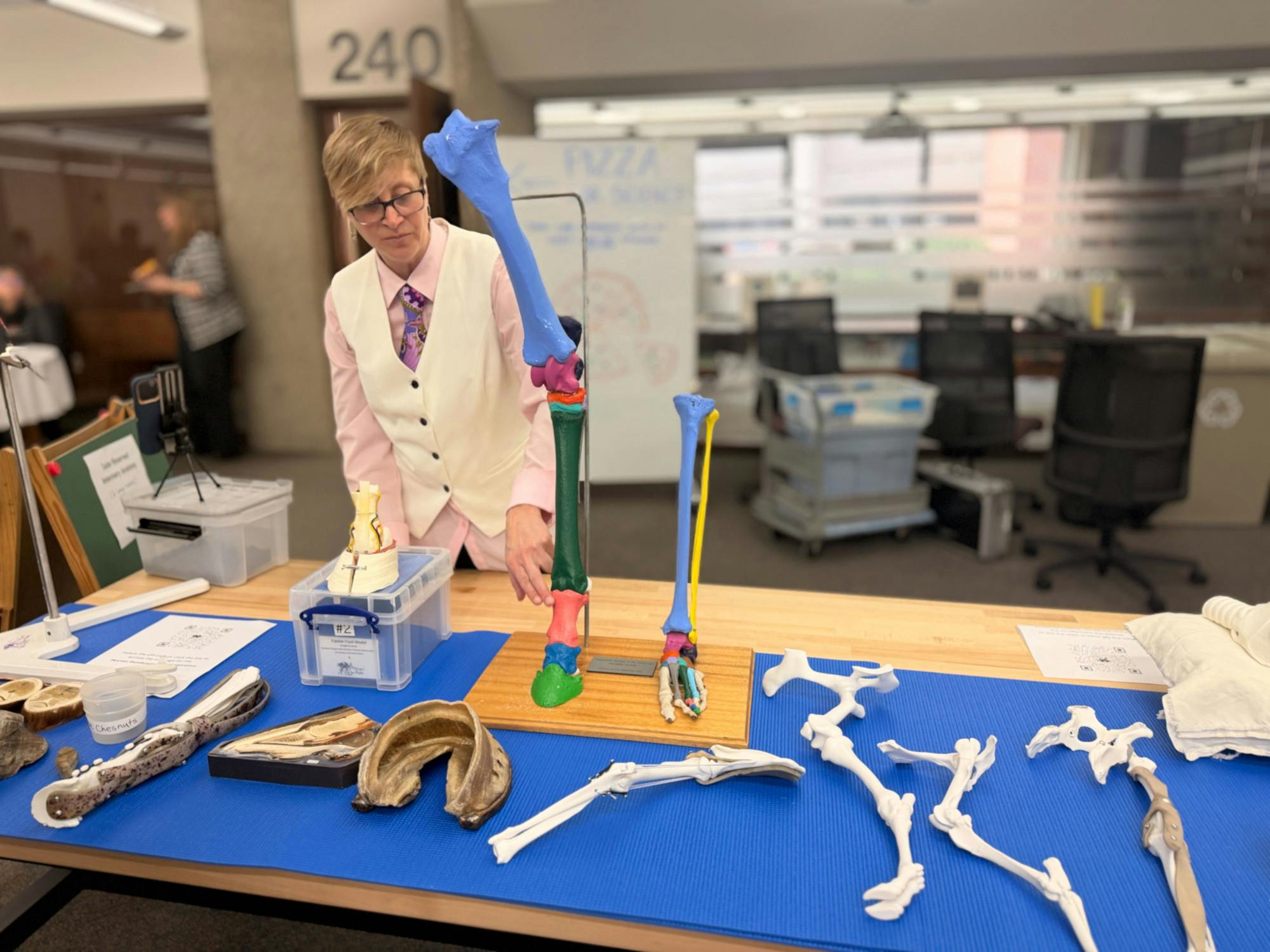
Veterinary anatomy: Learning humans through animals
The UW School of Veterinary Medicine professors taught anatomy by bringing various animal-related courses to the fair. Their main objective was to show the importance of dogs, cats, horses and cows, since those are what UW primarily studies in the veterinary school. The professors taught their booth-seekers that the best way to learn a human example is to compare it to an animal. Since animals share much of the same anatomy as humans, they had models and real specimens to excite the public about the UW-Madison Veterinary School.
Wisconsin Energy Institute: Engineering petroleum replacements
Scientists at the Wisconsin Energy Institute are trying to figure out how to make petroleum replacements. In this event, they walked community members through making oil out of plants.
Participants could feed yeast one of four plant options. If the yeast fermented over time, it showed the plant substitution would be a good petroleum replacement.
Busting sleep myths with the Wisconsin Institute of Sleep Consciousness
Graduate students and faculty presented a program called the Sleep Health Ambassadors: high school students educated about sleep health, sleep medicine and sleep research. In return, they expect high schoolers to engage with their peers and the greater community in outreach programs about the importance and hygiene of sleep.
Along with their ambassadors, their booth featured pieces of sleep technology and the debunking of common sleep myths.