Gov. Tony Evers vetoed Assembly Bill 554 on March 27, which would have heavily regulated lab-grown meat products by requiring them to bear the label "lab-grown meat" and imposing criminal penalties for violations.
Lab-grown foods are created by nurturing animal stem cells in bioreactors. The first public consumption of lab-grown food was in 2013 when a professor from Maastricht University created a patty made from cow cells.
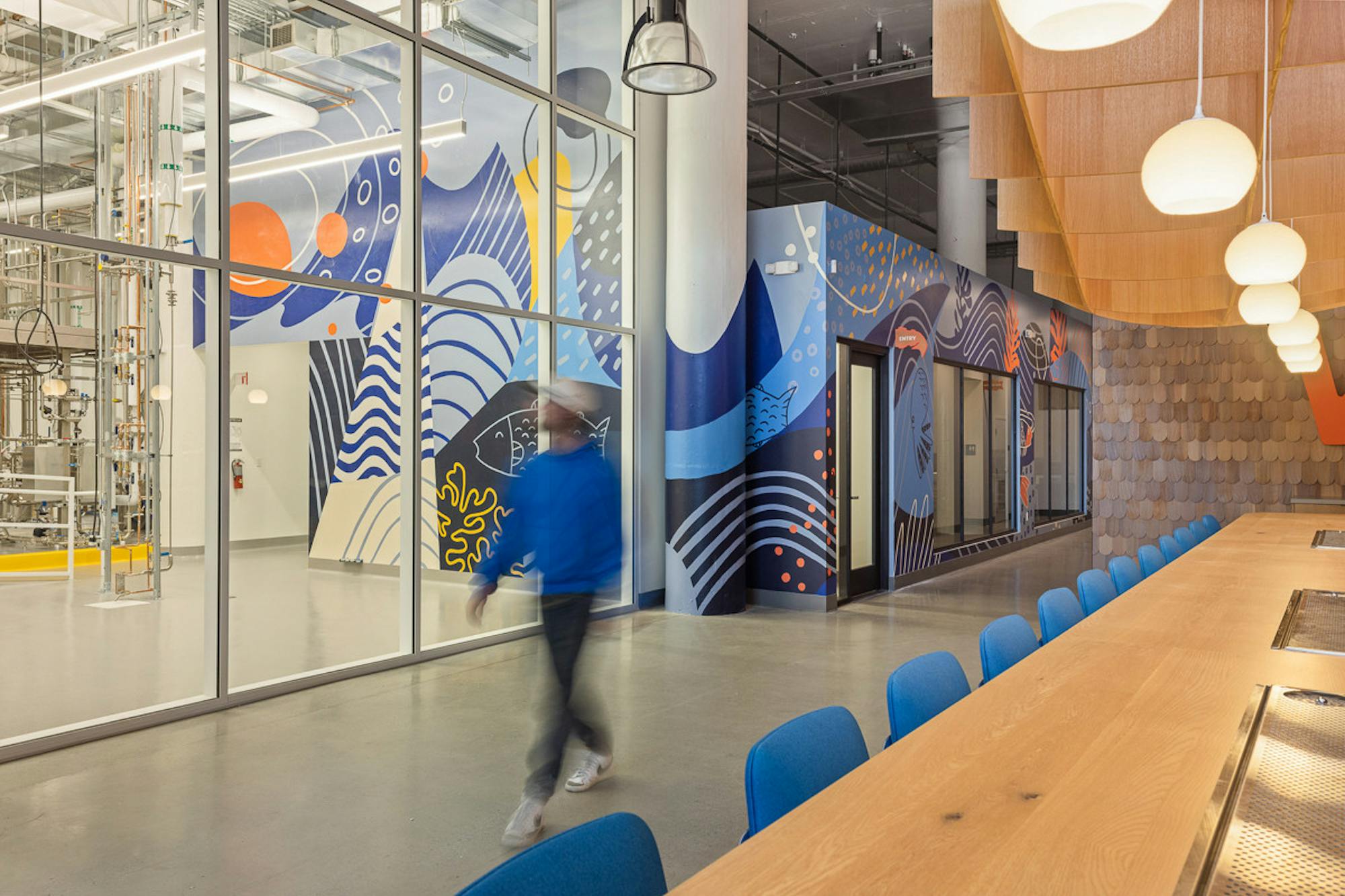
Recently, lab-grown foods have evolved from meat to other products, such as fats, oils, dairy and seafood. Companies such as Savor and Perfect Day focus mostly on dairy products. Another facility, Wildtype, was the first to produce seafood using cell cultures. Co-founder and CEO of Wildtype, Justin Kolbeck, told The Daily Cardinal the objective was to create a new type of seafood without mercury, microplastics or parasites.
"Wild stocks of fish have been declining for at least the last 50 years, and that’s not going to improve anytime soon," Kolbeck said. "Salmon is the second most consumed seafood in the United States, after shrimp, and so we wanted to focus on something that could have a very big impact on our food system."
Based in San Francisco, Wildtype was the first company to be FDA-approved for cultivated lab-grown salmon in the U.S., but Kolbeck said the process took multiple years.
"We started conversations with the FDA back in 2018, and the process was completed in 2025," Kolbeck said. "It was a multi-year process, which is appropriate for this kind of new technology."
Wildtype became the only cultivated seafood product sold in the United States. Kolbeck said getting there wasn't easy, but it paid off as it takes around 10 days to grow the cells and another week to manufacture the product, versus at least a year or two for a farm fish.
"We developed our own cell line, and that was just a trial-and-error process that took [around] two and a half years, and we had to train the cells to grow in a three-dimensional, agitated, almost beer‑brewing type of environment," Kolbeck said.
Audrey Girard, assistant professor in the University of Wisconsin-Madison Department of Food Science, told the Cardinal lab-grown food holds great promise but has limitations, especially in production.
"There's a lot of excitement behind it, but the science is still budding," Girard said. "One of the biggest ones is 'how do we grow this stuff and where do we grow it?' We have to have clean environments to grow these microbes where they don't get contaminated, and then we can harvest them."
Kolbeck said there were three main stages when creating the salmon.
“We needed to use a combination of some manufacturing techniques in plant‑based foods and some plant‑based ingredients...to create a very tasty alternative to wild and farmed salmon,” Kolbeck said. “So it was really those three planks...cell lines, large‑scale cell culture, and product development."
Another limitation companies face is gaining public trust. Seven states have banned the sale, manufacturing and distribution of lab-grown meats, limiting their sale, manufacturing and distribution processes.
In Florida, the first state to pass such a ban, Gov. Ron DeSantis argued that lab-grown meat competes with the farming industry. Kolbeck said cultivated seafood isn't a threat, but rather meant to expand the seafood supply.
"It’s not to replace wild‑catch fishing. It’s not to replace fish farming. It’s to inspire companies to innovate and to pull in more technology…so it can be better in balance with the planet," Kolbeck said. "We don't want people to feel shame if they eat a burger or if they eat some natural salmon, we just want them to give us a try. And hopefully, that helps everybody."
Girard said when it comes to this new idea of food, she’s excited to train innovative and creative scientists to solve food-related problems.
"We need more proteins to feed our growing population, so I'm all for exploring different types of proteins," Girard said. "I’m a proponent of a 'yes, and' approach to protein research. We always think about how we have to replace meat…What if we can create something else that has a really unique texture? That…is what excites me most right now."