Coming into a film of this magnitude, I had low expectations for “Michael” because of negative reviews from early critics, but the latest installment in the biopic genre has easily become one of my favorites.
Directed by Antoine Fuqua, “Michael” is the story of Michael Jackson’s life, played by his nephew Jaafar Jackson. The movie follows Michael’s life from his childhood in the Jackson 5 in 1966 to his “Bad” album tour in 1988. It recounts some of the King of Pop’s most popular songs and moments — all in two hours and seven minutes.
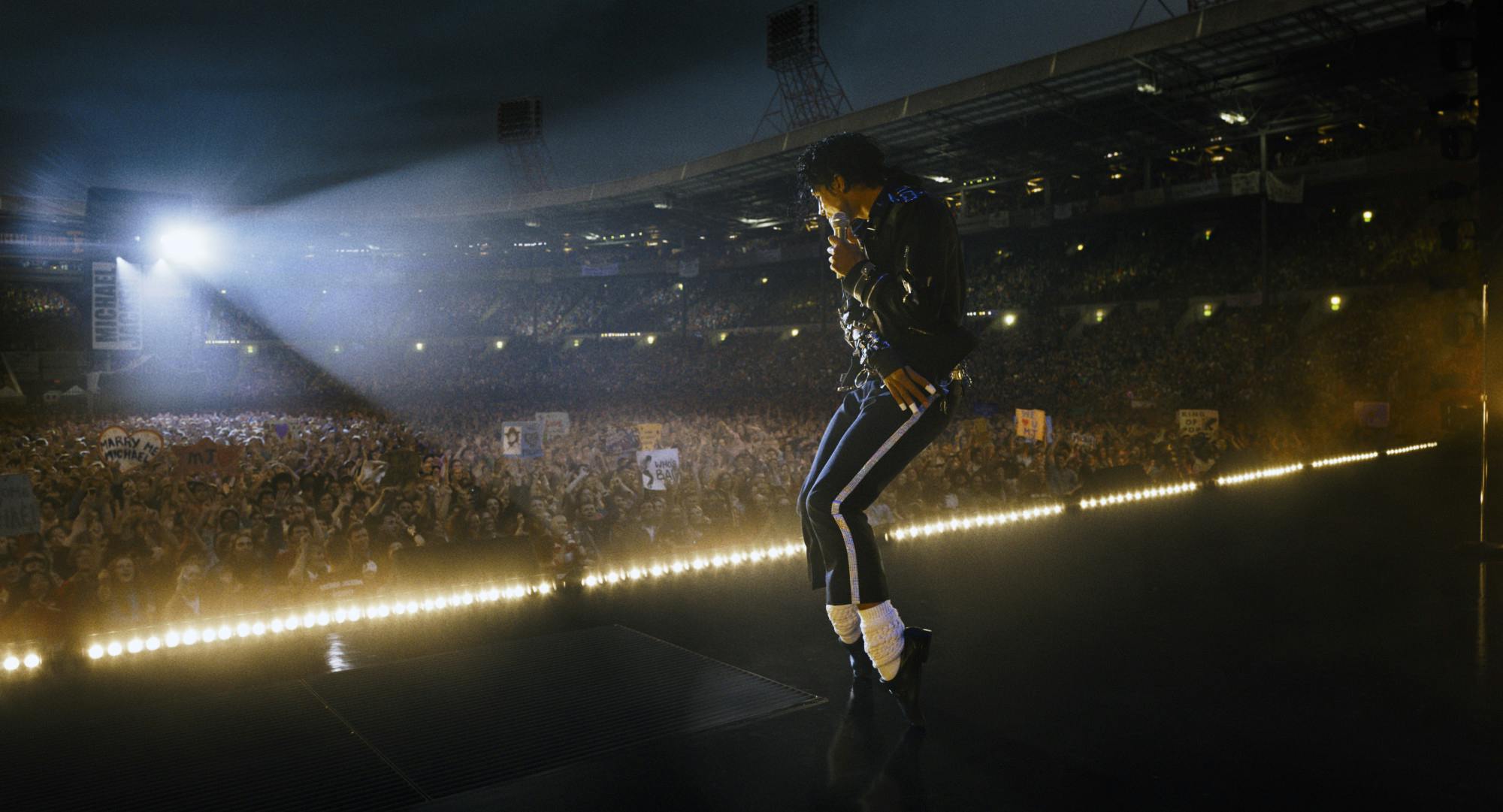
Before seeing “Michael,” I was never a huge fan of the artist. I knew his hits, but never fully understood what he meant to older generations. The film’s camera work and the set designs put how fans reacted to his music and his rise to superstardom into perspective.
My rating for this film wouldn’t be so high if it weren’t for Jaafar Jackson’s acting. He nailed his uncle’s soft speaking voice, mimicked his mannerisms and had his dance moves down to a science, including the iconic moonwalk. Jaafar embodied who Michael was, and it might be the best portrayal of a musical artist since Jamie Foxx’s portrayal of Ray Charles in “Ray.”
Colman Domingo played Michael’s father, Joe, great as well. He served as the relentless antagonist looking to control Michael and the Jackson family business. Although it's never explained why Joe acted this way, Domingo encapsulated the egotistical father figure whom I grew to despise within the first minutes of the film.
Even with limited screentime, young Michael’s (Juliano Valdi) story provided a glimpse into what Michael was like as a child. As the star of the Jackson 5, he couldn’t live an ordinary life. He did not have many friends and instead relied on connections with his mother, Katherine (Nia Long), and animals. Valdi taps into Michael’s early turmoil and how he dealt with loneliness.
The immersion and believability of “Michael” wouldn’t have been possible without capturing the evolution of his distinctive look. Throughout the film, Michael’s hair gradually transforms from his afro to his Jheri curl in the “Bad” era. The recreation of his outfits was also an important part of the process. The bright red jacket and pants from the “Thriller” music video, the royal blue and gold 1984 Grammys jacket and the heavily accessorized jacket from his “Bad” tour were all featured and looked almost identical to the originals.
Though “Michael” was a spectacle, it lacked total historical accuracy. The absence of three Jackson siblings and Diana Ross, the overdramatization of some events and the inaccurate chronology may leave some Michael truthers upset. I do think some accuracy is necessary, but it’s nearly impossible to get everything correct in a film, especially with the legal restraints and opt-outs that stopped the original cut of the movie from being released. I would rather experience a celebration of his music over a complete mirror into his life.
That being said, I would have liked to have seen more of Quincy Jones’ (Kendrick Sampson) involvement with Micheal’s music. Jones’ involvement as a producer was crucial for the success of both the “Off the Wall” and “Thriller” albums, but he only appears in a few scenes of the film, and doesn’t receive much credit for producing Michael’s albums.
Overall, the tandem of Jaafar’s performance and the recreation of Michael’s most monumental events in a theatrical setting undoubtedly outshone the flaws in “Michael.” This was a thrilling film and one of the most memorable theater experiences I’ve had.
At the end of the film, a final frame displayed “His Story Continues” across the screen, hinting at a sequel. While not much is known about the sequel at this point, it should address the child sexual abuse allegations and the important people in Michael’s life that were missing in the first film.
And if it’s not called “Jackson,” I will be rioting.