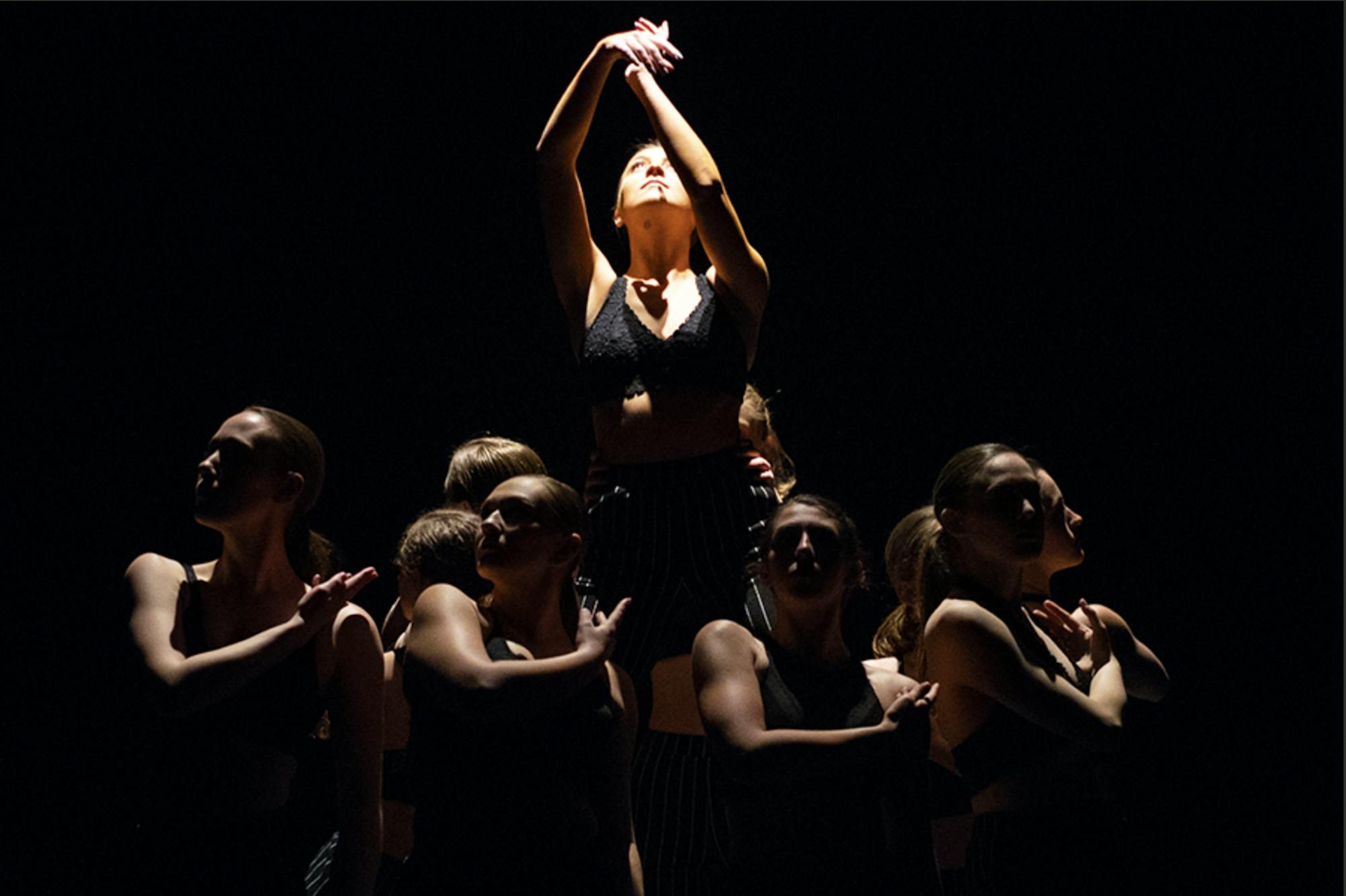
The University of Wisconsin-Madison’s Dance Department is celebrating its 100th year of operation, making it the oldest in the United States to offer an accredited dance degree. While the program was established in June 1926, founder Margaret H’Doubler began her instruction nine years prior.
H’Doubler started teaching the university’s first dance classes in 1917 with a strong focus on improvisation and understanding of anatomy to aid dance exploration. This method of experimentation differed greatly from the standard at the time, which instructed students to strictly model their instructor without imagination.
As dance classes grew in popularity at the university, H’Doubler founded Orchesis, a dance group that showcased student talent and H’Doubler’s approach to performance. Members of the group often traveled with H’Doubler to other universities for showcases and later offered on-campus performances.
Though the dancers faced many challenges, including opposition by former UW President Edward Birge, a segregated campus and periods of decreased funding, students continued enrolling in dance classes. These efforts inevitably led to the creation of the first dance major in the nation and its growing success.
Since its inception, UW-Madison’s dance department has produced many notable alumni — such as Mary Hinkson, Matt Turney and Mary Alice Brennan — and is continuously developing its program to inspire generations of dancers.
Ana Morrow, a sophomore in the dance department, told The Daily Cardinal that studying dance “is definitely a privilege to me.”
“I think being able to study dance and dance education specifically is a really important part of being a dancer or a dance educator,” Morrow said. “Without that, I think you can’t really fully be the dancer that you are.”
UW-Madison students can choose between a Bachelor of Fine Arts in Dance or a Bachelor of Science in Dance, as well as certificates in Dance, Introductory Studies in Dance/Movement Therapy, Pilates, Dance Studies and Dance Education.
“Although I auditioned at many colleges, the atmosphere and the students I met at my Wisconsin audition really stood out to me,” freshman Sadie Hazleton told the Cardinal. “I also was very intrigued by the dance certificate options such as pilates and dance education.”
The dance department has also reinstated its Masters of Fine Arts in Dance program to begin offering a Dance MFA in Screendance, an artform that creates choreography intended to be viewed on a screen rather than on a live stage, and a Dance MFA in Creative Research, Culture and Practice to graduate students beginning next fall.
The Masters of Fine Arts in Dance with a specialized focus on Screendance is the first terminal degree in the screendance field, signifying another historic development in dance by UW-Madison.
“The Dance Department continues to grow and expand its reach in the field,” Faculty Member and Pilates Certificate Director Collette Stewart told the Cardinal. “Since I’ve been here, we’ve expanded the number of dance styles that are core to the major, particularly emphasizing Hip-Hop and urban dance styles.”
Through all of its programs and years of operation, the dance department retains H’Doubler’s original multidisciplinary approach to dance as both a science and an art.
Andrea Harris, a dance historian and professor, emphasized H’Doubler’s role in incorporating science into her dance education theories and what that means for dance in higher education.
“Because dance activates the physical, emotional and intellectual realms, H’Doubler felt it was an exceptional medium for developing the whole person,” Harris told the Cardinal. “She worked with dancers to gain a deeper understanding of the body’s structure and function, to foster a relationship between body and mind and to become more expressive in movement.”
Harris highlighted H’Doubler’s beliefs toward the idea of conformity and the role dance plays in self growth.
“Like many thinkers in the first half of the twentieth century, H'Doubler believed that conformity was a threat to the individual and society, and she argued that dance education could help the person gain greater self-knowledge, develop the unique aspects of their personality and grow their ability to relate to others and contribute to a democracy,” Harris said.
Understanding the inner workings of the human body is critical to those in the dance department, with instructors still using tactics from H’Doubler’s era to teach current students.
“I think that influence is very much still a part of the dance major at UW. We have the skeleton that she used to teach anatomy on in our classroom. It’s still used today to teach anatomy and to teach people about their bodies,” Morrow said.
Students are required to take anatomy and physiology classes to understand more about H’Doubler’s emphasis on kinesiology and understanding how the body moves.
Stewart said the Pilates certificate often piques the interest of kinesiology students, along with dance students interested in pursuing careers in physical therapy or nutrition, saying the certificate “seems like an extension of the idea of dance and science.”
The dance department also strives to challenge and support students as they strengthen their creative perspectives to keep the foundational principles of art alive.
“Dance has become much more of an artistic outlet for me since starting at this program rather than the competitive and pressured perspective I had before,” said Hazleton. “I have really grown in my artistic expression and explored my own artistry and what it means to me.”
UW-Madison’s dance department also provides many opportunities for its students to further their dance education outside of the classroom.
“I think something cool that the dance department does is they have a whole Canvas course for dance-wide dance majors,” said Morrow. “They post opportunities and internships and announcements for performances and auditions.”
These options range from professional development programs like the Dance Education Laboratory and internships to student organizations within and outside the dance department.
“These opportunities are crucial to the growth of its students because it allows them to truly apply the knowledge they have gained and learn how to put yourself and your art out there,” Hazleton said.
With the crucial influence of Margaret H’Doubler’s philosophy, a comprehensive curriculum and supportive faculty, the dance department continues to grow in enrollment and success.
Harris described what she read in archival documents at UW Archives, noting that student enrollment varied over 300 to 500 each year after the program’s creation.
“That demand for dance has only increased in the past 100 years,” Harris said. “UW dance courses allow students across the university to meet requirements, continue dancing at the university and learn about dance in ways they never thought about before.”
In regards to what has made the dance department succeed for 100 years, Stewart simply said, “People love to dance.”
The official celebrations of the dance department’s 100th anniversary will begin next year. The department will host a variety of events culminating in the Centennial Celebration beginning April 14, 2027. The four-day festival will feature various performances, screenings, social events, panels and workshops.
Staff writer