The Wisconsin Institute for Law and Liberty filed a lawsuit against the University of Wisconsin-Madison last year for offering ‘race-based scholarships’ during the 2024-2025 academic year. The group, which represents UW’s chapter of the Young America’s Foundation, said these programs violate Title VI of the 1964 Civil Rights Act.
This comes amid a nationwide push from the Department of Education and conservative groups to eliminate what they label as ‘DEI programs’ on college campuses.
Last November, Chancellor Jennifer Mnookin announced campus organizational changes, which eliminated the Division of Diversity, Equity & Educational Achievement (DDEEA). Programs previously housed under DDEEA were not terminated, but largely relocated to the Division for Teaching and Learning, including the Precollege Enrichment Opportunity Program for Learning Excellence (PEOPLE) program.
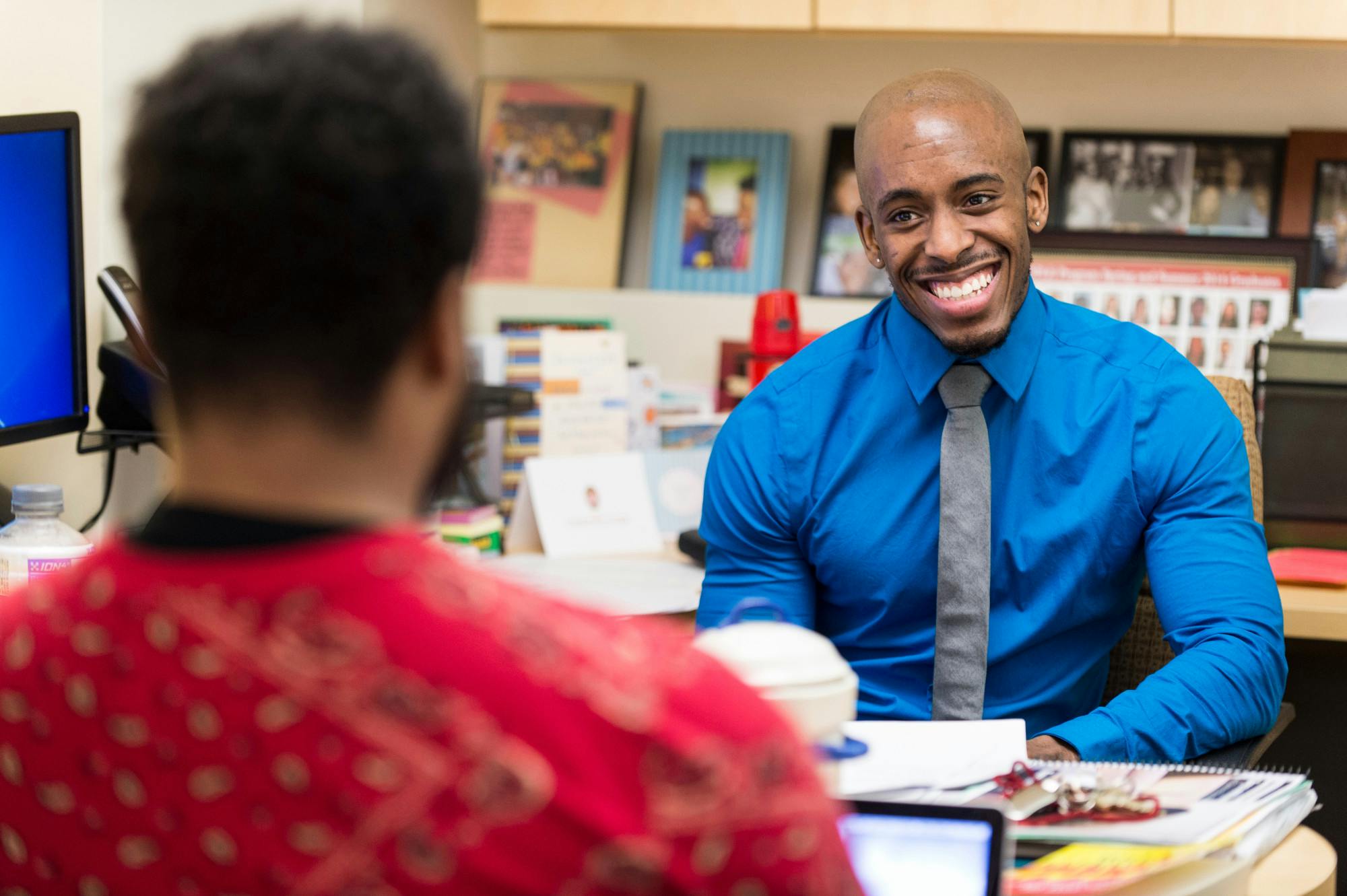
PEOPLE Program College Success Specialist Alexander Hopp said that although the program is not a part of WILL’s lawsuit, the organization still is concerned about broader cuts to diversity scholarships.
The program recruits middle and high school students from underrepresented backgrounds to participate in programming to get them college ready. Hopp said this includes ACT preparation, tutoring, work with a precollege advisor and supplementary summer instruction. PEOPLE focuses on preparing students to enroll at UW-Madison, but offers no admissions boost.
He said the PEOPLE program is “the place where the Wisconsin Idea happens.”
PEOPLE scholars dedicate hundreds of hours to the program in addition to GPA requirements. “There's a myth that says that students who are in a program are somehow less deserving of their place at UW-Madison because they were in this program,” Hopp told The Daily Cardinal. “Our scholars are the absolute best that our state has to offer.”
Hopp also is involved with Dreamers for Wisconsin, a non-profit organization that works with undocumented students to address educational inequities. The group previously faced challenges and continues to navigate a changing political climate under the Trump administration.
In 2011, Republican Governor Scott Walker repealed legislation that made undocumented students eligible for in-state tuition. Additionally, the UW-Madison Center for Dreamers closed in 2023 after their funding grant was not renewed. Hopp said groups are being overwhelmed by increasing need because of Trump’s policies.
“The fact that they have come under so much scrutiny and so much attack is an incredible shame,” said Hopp. “I think that there should be an intense outcry from everybody in the state about the fact that these programs are threatened, and I would encourage somebody who has concerns about these programs to look into what they actually do.”
While the PEOPLE program is not facing any immediate threats, Hopp is concerned about the federally-funded Center for Educational Opportunity (COEO). “I think about my peers who are here in the Center for Educational Opportunity, and although they did have their grant renewed, I think that they deserve better than the uncertainty and the challenges to their work.”
Threats to diversity in education
The Department of Education launched an “End DEI” portal in spring of 2025 where parents could report instances of discrimination based on race or sex in publicly funded K-12 schools.
And while some aspects of this initiative have been unsuccessful, such as the DOE’s recent “Dear Colleague” Letter which was struck down by courts and sought to restrict DEI initiatives at public schools nationwide, many programs, which historically worked to help students from underrepresented groups attend college, are worried about their futures.
66.3% of UW-Madison’s 2024 graduating class did not take out student loans for their degree, the ninth straight year more students graduate without debt than with. Scholarships at the school help to lower costs for students, but opportunities for underrepresented and minority students are receiving scrutiny.
WILL’s lawsuit is the second Title VI complaint YAF filed against UW-Madison regarding race-based scholarships. The suit mentions several scholarships and awards, calling them “racially discriminatory.”
The Alliant Energy Erroll B. Davis Jr. Achievement Awards, which is named in the suit, requires an undergraduate student to be from a traditionally underrepresented minority group pursuing a business or engineering degree. Other scholarships, like the Department of Bacteriology Underrepresented Minority Undergraduate Student Scholarship have the racial requirement in the title.
“Title VI embodies the same principles as the U.S. Constitution,” the lawsuit says. “Publicly funded universities that engage in racial discrimination violate both the U.S. Constitution and Title VI.”
The Ph.D Project at UW-Madison was eliminated due to these pushes. The organization supports historically underrepresented candidates, who may not know someone with a doctoral degree, obtain a Ph.D.
John Lucas, a spokesperson for UW-Madison, said they signed a voluntary collaboration to resolve a pending OCR investigation of the university’s relationship with the Ph.D Project on Feb. 17 2026, but that they “ended its connection with the Ph.D Project nearly a year ago.”
The resolution agreement does not include fines or penalties and specifically provides that it does not constitute an admission of liability or wrongdoing by the university.
UW-Madison abides by the law and the university’s policies comply with evolving federal compliance standards. Lucas said the university “remains committed to expanding pathways for student belonging and success.”