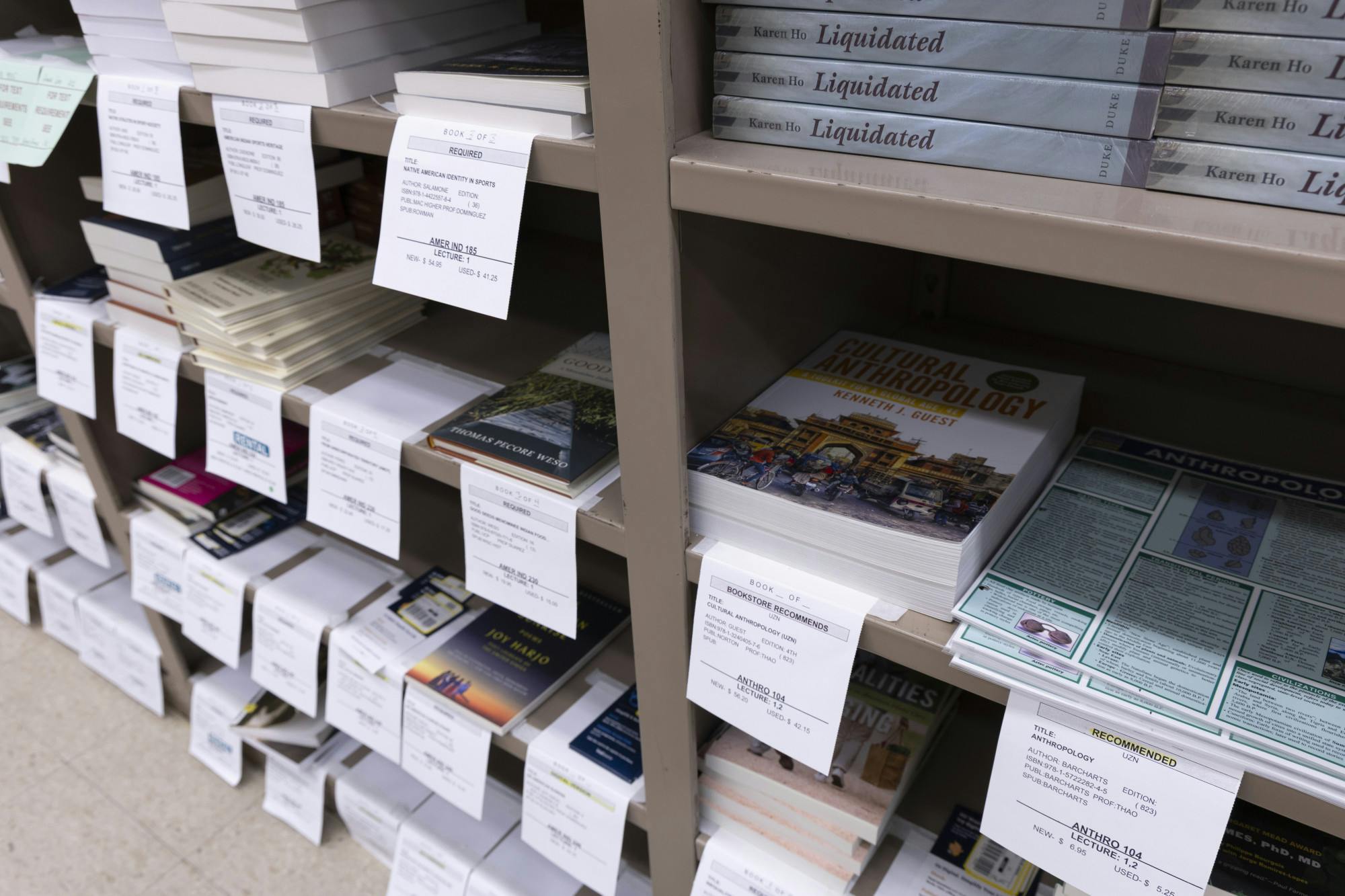
College undergraduates at public four year universities routinely spend $1,000 on books and supplies every semester. But one University of Wisconsin-Madison organization — the library’s Open Education Resources — is working to ease access for students.
The U.S. Bureau of Labor Statistics reported that consumer prices for college textbooks increased 88% between January 2006 and July 2016, with this increase felt especially by low or moderate-income students, as most textbook costs are paid out of pocket by students.
UW provides access to OERs as part of their Division for Teaching & Learning. The OERs include teaching and learning resources available to the public, either because they fall in the public domain or have been released with a license that allow their use and re-purposing by others. Resources include full course materials, including textbooks, modules, tests, videos and other tools used to promote learning.
These rising textbook costs occur for a variety of reasons.
Publishers frequently produce new editions of the same textbook with much of the cost coming from the supplemental materials it includes. These new editions cause faculty to assign newer editions at a higher turnover rate, making the used copies from previous years obsolete.
The monopoly that certain publishers hold in this market leaves their high whole-sale price the only options for students, particularly if The University Book Store does not stock enough used or past edition textbooks.
UW-Madison freshman Ava Waeckerlin went through a lengthy process to find an affordable textbook for her psychology class, after realizing the only available option was one copy in College Library.
She said her priority was looking for an affordable price. “Amazon had [the textbook] for $45, which I wasn’t going to spend on a textbook for one semester.”
Waeckerlin added that she had difficulty finding a reliable online copy. “I had to make sure it was real. Sometimes these things you can buy and they’re not what they say they are,” she said.
Some students avoid these costs by pirating educational materials, finding their textbooks on illicit websites, which often pose a privacy threat. Not only is this a federal crime, but it also puts students at risk for viruses and other scams and could possibly result in them relying on outdated information.
Though Waeckerlin eventually found a copy that met these standards, she said she felt frustrated, believing her instructor and library resources did not provide enough information to help her with this search.
However, UW-Madison’s new copyright policy, proposed in late 2024, could impact students’ OER access, shifting ownership of educational materials from faculty creators to the university. In enacting this policy, UW-Madison would own institutional and scholarly work, taking that singular ownership away from the faculty member who created it. This could potentially result in faculty members not sharing the extent of their educational tools with students.
Since OER operates in part due to faculty offering their materials, this new copyright policy could result in a fewer number of free alternatives for students. After backlash from faculty, this policy was temporarily stopped from being released in February 2025 and is currently undergoing review.
UW-Madison has also implemented a program called Engage, giving students and instructors an opportunity to access digital textbooks at a lower cost through Canvas. Engage automatically adds any fees to the student’s tuition at a significantly lower price than any print texts. Other resources, such as OER, can be added through the Engage program. These resources are available for students for as long as they are a student at UW-Madison.
UW-Madison’s student government the Associated Students of Madison works with the university directly to be involved in and advocate for student needs. Press Director Drew Wesson said many of the concerns students bring to ASM are related to the rising costs of college.
Wesson said he always tries to shop in various areas for physical textbooks. “I usually Google search the book and sometimes it leads me to these really weird websites that I’ve never heard of, but they’re cheap so it works out,” he said.
A lot of Wesson’s classes operate on the Inclusive Access Model, a system that includes the price of textbooks into the cost of the course. Looking to the future, he thinks that textbooks for UW students should be on a unified educational platform, as it’s difficult to navigate many different platforms at once.
Wesson said he prefers the Inclusive Access Model.
“When it’s in the syllabus, it’s there and ready to go. But it’s also easier to look it over and not realize the price differences [between different textbook platforms] at the same time,” he said.
Editor’s note: Drew Wesson wrote for The Daily Cardinal.
Staff Writer