“Is the Mosse Humanities building a historical building?” student government Rep. Amelia Alvarez asked at a March meeting where representatives debated symbolic legislation aimed at saving a building the University of Wisconsin-Madison has been trying to demolish for at least two decades. “It depends. Up to personal interpretation,” the legislation's co-sponsor, Rep. Amitabha Shatdal, replied.
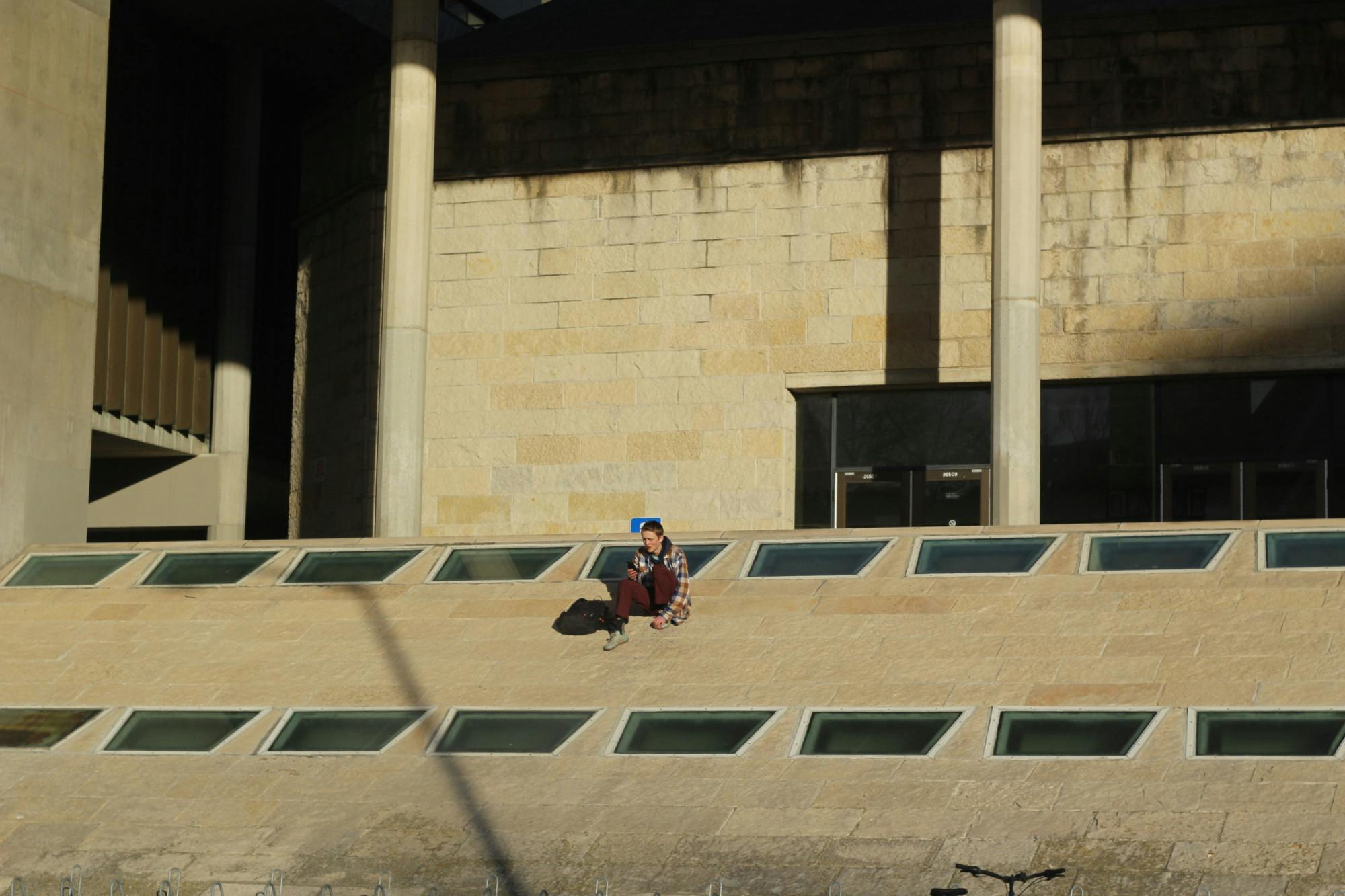
The Mosse Humanities Building, a Brutalist structure that has anchored the UW-Madison campus since 1969, is not technically a historical landmark, but it is many other things. To university administrators, it’s a financial drain — deteriorating, inaccessible and unsafe, with an estimated $292 million price tag to demolish and replace. To students who navigate its maze-like hallways daily, it can be a difficult yet necessary part of their routine.
But to others, the concrete hulk has earned a quiet affection, enough that the Associated Students of Madison recently considered — and eventually voted down — legislation urging the university to consider renovation over demolition.
Robert Bruegmann, a historian and Distinguished Professor Emeritus of Art History, Architecture and Urban Planning, spoke about Mosse Humanities in an online lecture about Brutalism and Brutalist architecture.
“This building is a perfect test case for which view of Brutalism will win out: Is this building an example of Brutalism meaning one that merits protection and rehabilitation, or is it an example of Brutalism meaning an overly large, aggressive and raw building that should be demolished and replaced by something more acceptable to current taste?” he said.
Bruegmann said he believes the majority opinion has shifted, and people in the architecture and preservation communities are “now mostly in favor of saving this building and many Brutalist structures.”
A storied history
In the 1960s, the university prepared plans for new buildings to hold its music, art and history departments. At that point, the Department of History was located in Bascom Hall, where 23 professors and 34 teaching assistants shared 16 offices.
The music, art and history departments were originally supposed to be housed in three separate buildings, but in 1962, the building committee suggested all three structures be built together.
Mosse Humanities was the result. Built over the course of three years, the Humanities Building opened in 1969, bringing all three departments under one roof. In many ways, it was an act of compromise: The building committee was forced to alter the design in order to reduce expenses because just one contractor submitted a bid, and that bid was $1.9 million over their budget. As a result, the finished building using architect Henry Weese's approach reflects budget-driven compromises rather than the original vision.
It was renamed after George L. Mosse in 2000, honoring the distinguished history professor who died the year before.
Over the years, the Brutalist building has shown significant signs of deterioration.
Lori Wilson, spokesperson for UW Facilities Planning and Management, said the humanities building is “well past its expected useful life.”
“Several practical concerns exist with its condition, suitability for today’s learning and research and difficulty in renovating the facility,” Wilson said.
In a video published by UW-Madison Campus Connection in 2022, Letters & Science Dean Eric Wilcots and Assistant Dean for Facilities Christopher Bruhn tour Mosse Humanities, pointing out its many weaknesses.
The building had an in-floor radiant heating system when it was first constructed, but the system failed within a year of opening and is unable to be fixed.
The fixed seating in all the lecture halls makes it difficult for an active learning environment and raises safety concerns. In many classrooms, installing technology to keep up with modern instruction is nearly unachievable because of the high probability of water damage to the equipment. Wilson added because the building is constructed of concrete, installing wires and conduit would be difficult.
There is also an open exhaust air duct in the middle of a hallway in violation of state building code. If there was a fire in any of the classrooms, Wilcots and Bruhn said those ducts would draw fumes and smoke from the classrooms and into the hallway, making safe evacuation that much harder.
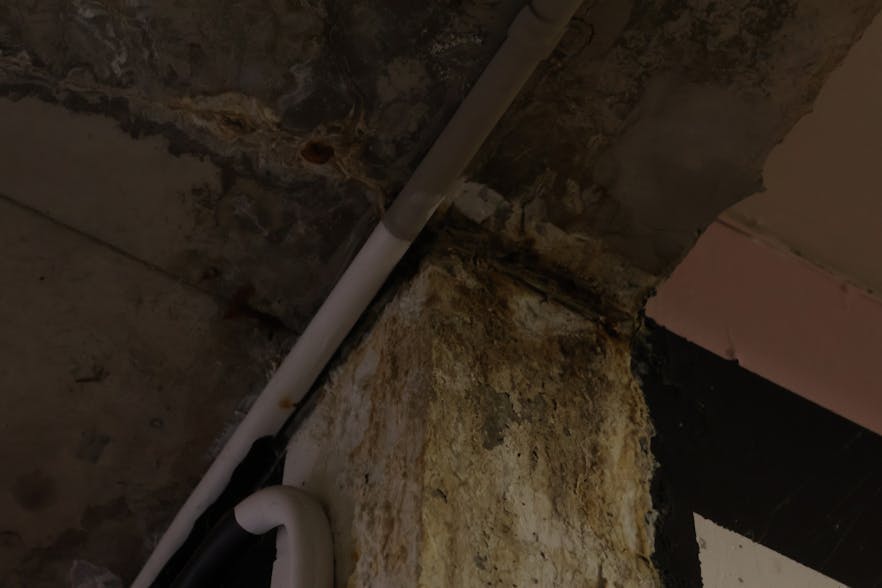
In addition to everything else, Wilcots and Bruhn stressed the building’s continual water leaks, falling ceiling tiles, and odor issues. In 2016, the estimated cost to repair deferred maintenance and design problems was $62 million.
Wilson said instructional spaces are damaged from regular water leaks from the plumbing and drainage system. “Condensation from single-pane windows and a lack of vapor barrier have compromised musical instruments, art equipment and materials, acoustical wall treatments, floors and drywall,” she said.
Wilson said university facilities fix leaks, falling tiles, odors and complete mold remediation as they are discovered and reported.
“The elevators and mechanical systems are often down for repairs and the building has major humidification, heating and cooling control issues,” she said.
The building’s demolition has been a long-anticipated project, with UW officials floating it since 2003, long before most current UW students were even born, much less stepped on campus. In the last state budget, the university asked the state for $292 million in support and private contributions to demolish the building. The state provided just $5 million in planning funds in return, which the university decided to allocate to relocating departments in Mosse, rather than its demolition.
Wilson said next steps for the building are deconstruction, which is estimated at $16.8 million.
“Humanities costs $2.26 a square foot to maintain, or about $753,400 a year,” Wilson said. Other campus buildings constructed around the same time such as Helen C. White, Van Hise and Vilas halls cost $1.37 to $2 per square foot annually.
These numbers do not include capital renewal projects. “Money spent on preventative maintenance and regular repairs doesn’t include the $88 million in deferred capital renewal costs — or what it would cost to bring the Humanities Building and its systems back from the end of their life cycles,” Wilson said.
Wilson added that even if the university spent $88 million toward the building, Moose Humanities would still not be fully renovated or support today’s changing programmatic, teaching and space needs.
Another Brutalist building, Master Hall, an apartment complex on Gilman Street, was considered for demolition earlier this year, but The Madison Trust for Historic Preservation nominated the building for preservation in early March.
John Rolling wrote the nomination for Master Hall and spoke in opposition to demolishing it.
“Perhaps the single most telling characteristic is implied by the style's name itself — a ‘brutal’ or commanding presence on the site and the unapologetic presentation of the building's structure and its service elements,” he said in his nomination.
Heather Bailey, City of Madison preservation planner, said Brutalist architecture is one of the hardest styles to love. “It’s not cute or quaint. It is monumental architecture that conveys hulking mass [and] power, and it tends to dominate its environment.”
Because of these characteristics, Brutalist buildings are usually public or civic buildings. “They symbolize power,” Bailey said.
Rolling said Master Hall is one of Madison's most unique buildings. “It is a cardinal example of the Brutalist style. There are other Brutalist buildings in Madison — the most significant of these is the Mosse Humanities Building,” he said.
Brutalism debate meets campus
ASM debated legislation opposing Mosse Humanities’ demolition at a Wednesday meeting three weeks ago, urging the university to choose renovation as a more environmentally responsible option. The council ultimately rejected the proposal.
Shatdal put forth the legislation after hearing from his friends.
“They sort of appreciate the building,” Shatdal said. “But also I do know there’s a lot of people who really don’t like the Brutalist architecture.”
Camila Smith, a first-year undergraduate, is in Mosse almost every day for classes and acapella practice.
“The lack of windows in every single room is extremely depressing and creates a space that is not ideal for learning,” Smith said.
Shatdal doesn’t have a strong opinion on the building himself, but he thought it was a good topic to put forward in debate.
“At least there could be some students who come forward and voice their opinions. I guess that’s how I usually treat legislation: less of ‘this is my opinion’ and more of ‘this would be cool to talk about,’” he said.
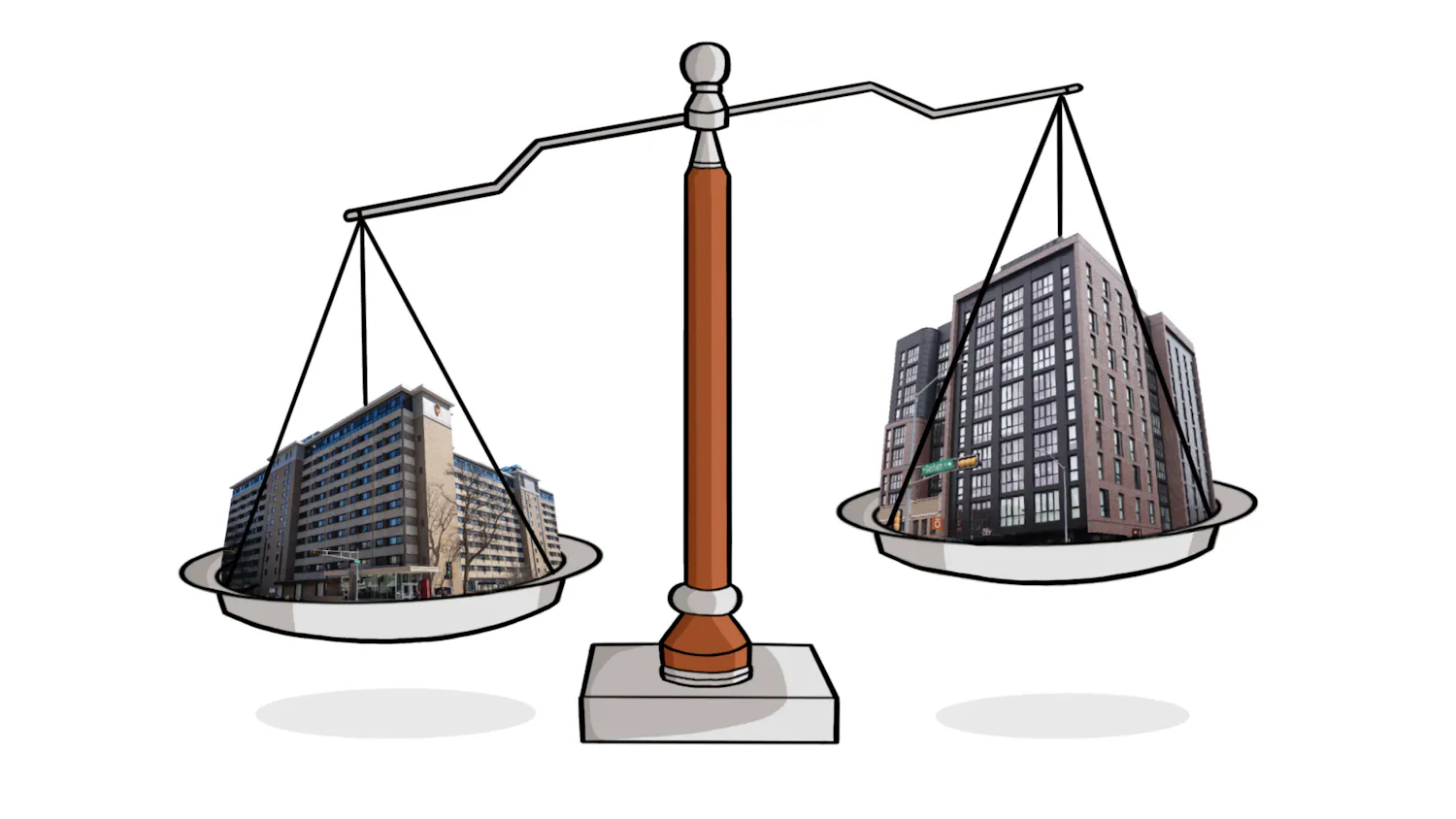
The legislation requested the university commission make and publicize an independent comparative analysis of the full life-cycle costs of a Mosse Humanities deep renovation, versus the proposed demolition-and-rebuild plan.
The legislation said this analysis should be carried out by an institution not previously involved in the demolition proposal and should include embodied carbon, demolition waste and displacement impacts. They asked that the study be published before any demolition happens.
“The idea is, you have two options here. We can either remodel the building and pay some amount of money, which, according to a lot of people out there, they estimate it to be a lot less than the cost to destroy the building and then build a whole new building there,” Shatdal said.
The university is already building a new Humanities Hub, Irving and Dorothy Levy Hall, which will act as the new home for the College of Letters & Science. The history department, along with eight other humanities departments, are already set to move there when it opens this summer.
Gov. Tony Evers and the state legislature included Levy Hall in the 2021-2023 state budget, granting $60 million in state support. Over half of the building’s construction costs came through private gifts, including a $20 million contribution from UW-Madison alumni Jeff and Marv Levy.
The cost to demolish Mosse Humanities is estimated at $292.6 million after the over $70 million worth of deferred maintenance needed to fix the building’s current limitations.
A big issue is Mosse’s complicated design layout of non-contiguous floors, unused open plazas and disconnected hallways that create navigation issues, especially for disabled students.
To bring the building to ADA standards, it would cost $12 million, including installing more elevators and seating for disabled students.
Wilson said the building doesn’t meet all ADA requirements due to when it was constructed and infeasibility caused by structural barriers, but it is compliant.
“Accessibility improvements have been made per code during every major alteration, and alternate locations in the building have been identified for restrooms, classrooms and offices,” Wilson said. “Facilities Planning and Management works closely with the McBurney Center and Office of Compliance to address accommodation requests.”
Although Smith herself hasn’t faced accessibility issues, she “noticed the extreme lack of accessibility in the majority of the classrooms.” She added that her roommate struggles to get around the building.
Misha Beggs, another first-year undergraduate, has musculoskeletal issues in one of her legs that requires her to use a cane to walk.
“It’s such a nightmare to navigate, accessibility-wise,” Beggs said. “The accessible routes feel maze-like, and they’re often harder to find or take significantly longer to get through.”
Shatdal emphasized the need for student participation in deciding how UW-Madison handles academic buildings.
“I would say it’s more on the student’s role than the university’s,” he said. “The university has to be open to students to be involved. A lot of the time, I think, students participate on things that are hot button issues but for smaller things, there’s less interest and it’s harder to garner student interest.”