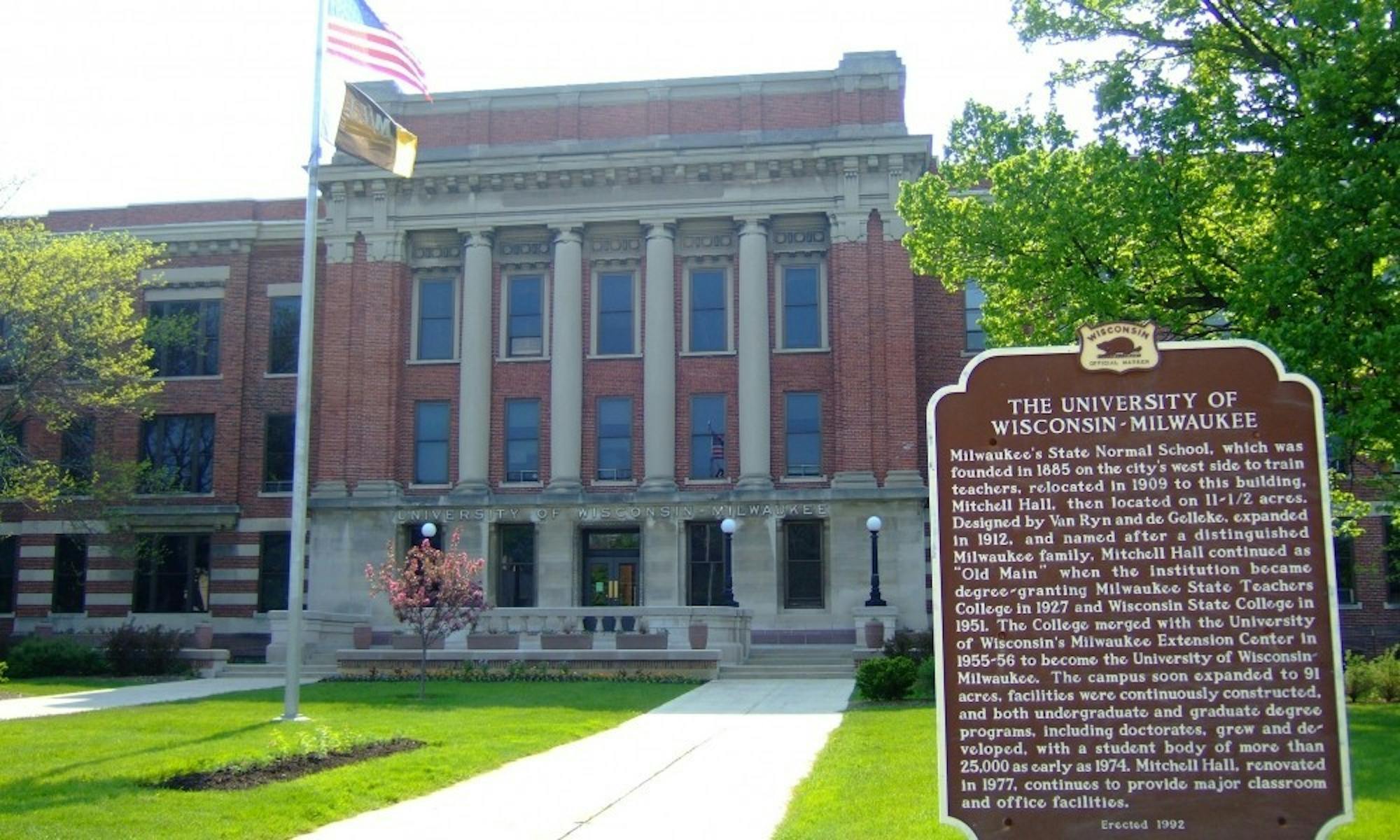
Despite opposition from faculty, industry and federal groups, the University of Wisconsin-Milwaukee plans to close its undergraduate materials engineering program after next academic year due to low enrollment.
Because of UWM’s new budget model — which prioritizes funding based on undergraduate credit hours instead of research activity and degrees awarded — lower program enrollment and “ongoing financial challenges”, university spokesperson Luella Dooley-Menet said the program will close. Currently, 25 students are enrolled in the program, down from 57 in 2015.
But industry partners and current students argue the program is uniquely positioned to support Southeastern Wisconsin’s manufacturing industry. Wisconsin has the second-highest manufacturing density in the country, and there has been a nationwide push to expand manufacturing with the field projected to require 122,000 more casting and forging professionals nationwide by 2028.
Had the program stayed open, the Department of Defense planned to offer $1.5 million to UWM for a metallurgical hub in Milwaukee, but Dooley-Menet said it wouldn’t sustain the program long-term. Materials electives will remain available.
Local industries who hire graduates describe a long fight with administration
Last spring, engineering faculty voted for the first time against the materials engineering department closure, but the university still closed many materials engineering teaching assistant positions and canceled short-term staff contracts, beginning to restrict new undergraduate students from enrolling in the major.
In the fall semester, another faculty vote reversed that process so the program could enroll students again.
Over the summer, four faculty members transferred to other engineering departments, leaving just 2.5 faculty positions in the materials science and engineering department. All transferred faculty are still teaching materials science courses, which “will remain part of the engineering curriculum,” Dooley-Menet said.
UWM evaluated “labor market needs, employer input, student interest, program costs and long‑term sustainability” before suspending admissions to the program, Dooley-Menet said.
But when news that UWM was removing the undergraduate materials engineering major broke to students and staff in February 2025, 50 people from 25 companies in Southeastern Wisconsin petitioned against the closure, speaking with UW System leadership in meetings Assembly Speaker Robin Vos, R-Rochester, helped facilitate.
“Foundries, forges, heat treaters and all kinds of other manufacturers rely on materials engineers coming out of the UWM program,” Dave Palmer, a metallurgical engineer at Racine transmission manufacturer Twin Disc Incorporated, told The Daily Cardinal.
UWM students tend to stay in-state at a higher rate than the University of Wisconsin-Madison students, providing crucial pipelines for industry.
Materials engineers typically work in processing, characterizing and developing materials, including biomaterials, metal casting and specializations in ceramics, polymers, composites and electronic materials.
“If you [UWM] knew something bad was happening, why didn't you reach out to local Milwaukee industries who've been part of the materials program?” Carol Martinez, a materials undergraduate, told the Cardinal. “Why didn’t you reach out and ask for help?”
Martinez is graduating in May and will work in Milwaukee’s foundry industry. Although students could transfer to other universities with four-year programs like the UW-Madison or the University of Wisconsin-Eau Claire, she said the UWM’s program is the best option for most students.
“[For] a lot of students, moving away wouldn't be financially reasonable,” Martinez said. “UWM is a pretty affordable school, so making that jump to go to Madison or go to [UW-Eau Claire] would be a really big challenge. I've talked to some [students] and they would say that they would stay. It's just really tough because you're leaving home, you're leaving family and all of that.”
UWM fills a necessary niche, professionals say
While UW-Madison has a materials engineering undergraduate degree, Palmer said their program doesn’t highlight metals manufacturing, Southeastern Wisconsin’s primary manufacturing industry, to the same degree as UWM’s program.
UWM hosts the largest metal casting foundry in the state. It also offers the state’s only Foundry Educational Foundation certified four-year materials engineering degree, awarded for metal casting training. Over 50% of materials engineering majors at UWM receive four-year scholarships from the Foundry Educational Foundation. UW-Madison is affiliated, but not certified.
“UWM really has been the workhorse in providing trained materials engineers for industry in our region,” Palmer said.
UWM’s materials science program works closely with local industry, with students often collaborating with industry members on year-long senior design projects. One recent project saved Saukville steel company Charter Steel $43,000 per year. Students at UWM have also recently won regional and national competitions in forging and metal casting.
Heat treatment and metals casting are Wisconsin’s main manufacturing industries, Perepezko told the Cardinal.
“Wisconsin needs a materials science and engineering campus in Milwaukee — not just for Milwaukee, but for the whole state,” Perepezko said.
Industry says budget model hurts specialized programs
Palmer said UWM’s new budget model unfairly favors higher-enrollment majors that are cheaper to run, despite an industry need for specialized programs.
“From a 50,000-foot view, if you say, ‘All programs are basically equal, so let's just get rid of the smaller ones,’ it makes sense,” Palmer said. “But when you look at the details, it really doesn't.”
UWM currently has a strong graduate program in materials engineering that may no longer be able to award teaching assistant scholarships and could lose a pipeline of local students with the materials program’s closure.
UWM plans to continue its graduate and PhD-level materials engineering programs, but Palmer said losing that pipeline of undergraduate students will hurt its strength, especially with access to international talent under threat.
“[UWM] may suddenly find enrollment in the graduate program dropping off very quickly as well, and with it, [their] research money,” Palmer said.
UWM started non-renewals of materials staff contracts, according to meeting minutes. They told materials engineering faculty they could transfer to other departments and continue to teach.
“Apparently the idea is [to] get rid of TAs and non-faculty instructors, then have the faculty members teach those courses,” Palmer said. “In the private sector, that kind of thing wouldn't really fly. ‘Hey, let's save money by having a higher paid person do a lower paid person's job.’ Here, if we said, ‘Let's get rid of our machinists and just have the engineers be machinists,’ people would say, ‘You're crazy.’”
Palmer also questioned how much money the move would really save, pointing out faculty salaries are likely the highest expense in the materials engineering program.
Martinez said the hardest part of the closure was seeing its impact on professors: in particular Benjamin Church, her favorite professor and the department chair. She said he inspired her to switch majors, encouraged her to restart a materials engineering club, showed up to all her club meetings even after hours and cared deeply about her education and the program.
“He's the reason why I stayed in the program and why I have become so passionate about it,” Martinez said. “There aren't that many people out there who would go out of their way to support others, and he's definitely one of those that cares about his students… It’s really tough to see him hold up a program when faculty have been removed to other departments.”
For now, the materials engineering department remains open. But by announcing the closure, Perepezko said UWM effectively sounded its “death knell.”
“A lot of people say if you are struggling with something, reach out to your network or reach out to your community, but that's something that the College of Engineering didn't do, and didn't want to try to explore,” Martinez said.
How is UWM’s budget changing?
The UWM College of Engineering is operating in a $3.5 million budget deficit, enrolling 29% fewer undergraduates than in 2011. Cutting the undergraduate materials program would save the university $850,000 a year, university representatives told the Milwaukee Journal Sentinel.
The 2025-2027 state operating budget includes a $256 million funding increase for the UW System, the largest funding increase in a decade. The budget includes $54 million to “recruit and retain” new faculty and $26.5 million annually for general program revenue. UWM also plans to open a general bachelor’s in engineering program next year.
Palmer said the budget increases made him less sympathetic to funding arguments.
“It's a matter of priorities,” he said. “Yes, maybe the overall funding is too low, but if you look at the cost of the materials engineering program at UWM, and if you compare that to what the UW System spends on special events catering in a year… I'm guessing they're in the same order of magnitude.”
One source of contention from advocates is the university’s decision to decline a $1.5 million offer from the Pentagon to open a city METAL hub, a center that would support materials engineering workforce development training. Pentagon representatives attended meetings with the Board of Regents in July 2025 in support of the program.
“Every two years, [UWM representatives] go to Madison and all the state legislators, and say, ‘Hey, we don't have enough money. We're dying here,” Palmer said. “Then at the same time, they're turning down $1.5 million.”
UWM told the Cardinal the proposed funding couldn’t be used for financially supporting the undergraduate major, however.
“External proposals to preserve the program using federal funding are not feasible, as these funds do not support undergraduate programs and are temporary rather than a stable source for ongoing operations,” Dooley-Menet said. “Similarly, METAL Hub funding was dedicated to new training and apprenticeship efforts, not to sustaining the Materials Science department.”
Palmer argued the METAL hub could have raised enrollment. But UWM’s materials department’s smaller size reflects similar schools around the nation, where materials engineering graduates are rare in comparison to larger pools of electrical, mechanical and computer engineering majors, Palmer and John Perepezko, a professor in UW-Madison’s materials engineering department, both said.
“Materials is by its nature a small program,” Palmer said.
Many previous graduates have pursued further degrees at colleges like Northwestern University, or work as metallurgical engineers in the Milwaukee area, joining a field with a 1.1% unemployment rate and an average salary of $97,340 in Wisconsin.
“Especially at a time when people are questioning the value proposition of higher education, this is a really solid career path that guarantees students a solid future with a lot of great job opportunities,” Palmer said.
Industry members offered to fund departmental scholarships and serve as adjunct professors, reducing costs and connecting students to employment.
Palmer, who is currently pursuing a PhD in materials engineering from UWM, said the university could also house the major within another department, avoiding paying for a department chair. The University of Minnesota-Twin Cities, for example, has a joint Chemical Engineering & Materials Science department.
Palmer mentors senior design students, has personally hired six program graduates and has close ties with faculty in the Materials Engineering department. He said Dean Brett Rogers told engineering faculty not to engage with the media about the materials engineering program closure.
Former Chancellor Mark Mone approved the program’s closure, but Palmer and other industry supporters hope the new chancellor, Thomas Gibson, will reverse that decision. Program advocates plan to meet with university leadership and the UW System Board of Regents in the spring.