Stand at the back of a crowded lecture hall any given morning, and you’ll get a full picture of the different note taking methods students employ at the University of Wisconsin-Madison. Some opt for the classic pen on paper, while others draw on iPads, type on Google Docs or stare at a full screen view of Tetris.
The spring semester is in full force with midterm exams, papers and projects. But as students scramble for an A, will one notetaking method actually get you the better grade?
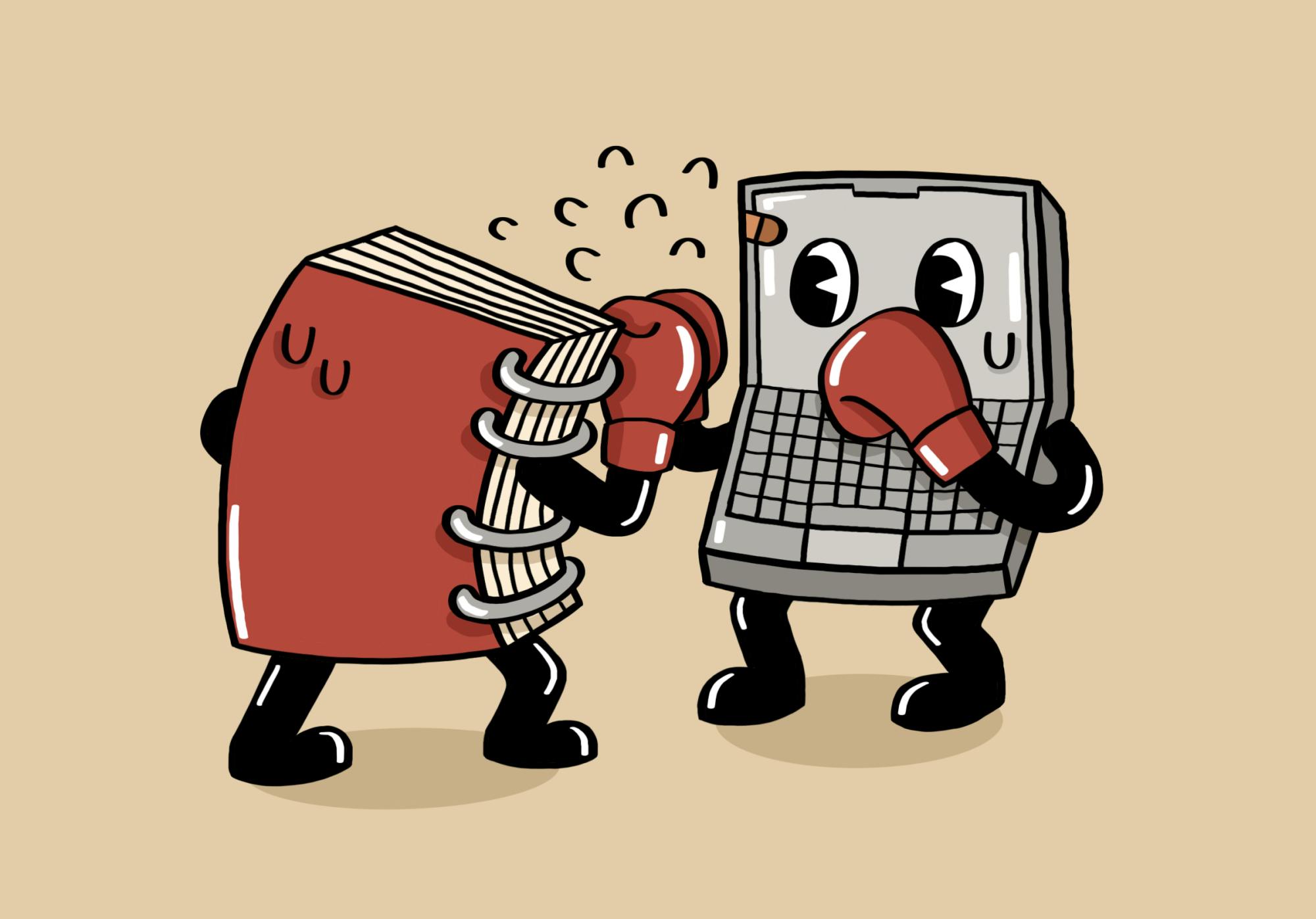
Laptop note taking has become increasingly prevalent in the classroom over the years, but this might not actually be the best option.
According to a 2021 study, university students who take notes on a laptop performed worse on questions than those who took notes by hand.
In a generation brought up on screens and social media, the new year has renewed calls to return to analog habits, and some students are choosing the physical notebook over their Macbook.
Carter Austin, a UW-Madison sophomore, handwrites his notes “100% of the time.”
“I did laptop notes my first semester, and it did not go well for me,” he said.
While Austin was unsure if his handwritten habits affected his midterm scores, he said taking notes by hand makes him slow down and pay more attention.
“It’s way better for memory and way better to go back and flip through an actual notebook than to be looking through a Google Doc,” Austin said.
Students who take notes by hand retain information better than those who type, according to a 2025 study.
However, when some professors lead their classes at a breakneck pace, some students find typing up their notes to be a more optimal experience.
“I'm able to summarize much easier without being scared that I'm going to miss something that's coming up next,” said Wesley Erpelding, a UW-Madison sophomore.
As a math student, Erpelding uses a mix of both handwritten and digital notetaking in his classes.
“With equations, it's so much easier just by hand in real time,” Erpelding said.
For his humanities classes, on the other hand, Erpelding opts to type his notes on Microsoft OneNote. He doesn’t see much difference between the two methods in his ability to retain class material.
While Erpelding enjoys the ease and speed of typing his notes, he said the laptop can be distracting for him in class.
“I'm usually on Tetris in low moments or doing [work for] other classes,” Erpelding said.
From HTML games to texts from friends, unintended distractions can find their way into the digital note taking experience. Both Erpelding and Austin have noticed a push from professors for handwritten notes in the classroom, with allowing for only notebooks or tablets.
“I think it’s unfair to ban people from [using laptops],” Austin said. “If people feel like they work better typing their notes out because it's faster, they get more ideas across and maybe pay attention with the remaining time they have left over.”
Notably, students with specific McBurney accommodations can bypass these restrictions, allowing them to access assistive technology for disabilities, such as real-time captioning of lectures.
Kajsa Dalrymple, a faculty member in the School of Journalism and Mass Communication at UW-Madison, asks her students to take notes by hand in some of her classes due to the distracting nature of laptops. She emphasized that these distractions are not necessarily the fault of the students, but results of the addicting culture of screen use.
“When we commit to something as a community, it means that we’re showing up for each other as well,” Dalrymple said. “We can’t be perfect everyday, but we’re trying the best we can.”
In the classes she only allows handwritten notes in, Dalrymple has noticed greater interaction from students in lecture and more comments on her class evaluations that “indicate more enjoyment of lecture.” She hopes encouraging students to be engaged — and off their screens — can better prepare them for the workplace.
“Classrooms are beautiful spaces where we can be brave,” Dalrymple said. “Unfortunately that’s not mirrored in the workplace.”
Whether or not taking out a composition notebook in class can actually guarantee a higher midterm score, the conversation surrounding digital note taking on campus is one that is sure to continue as technology grows more prevalent in the classroom.