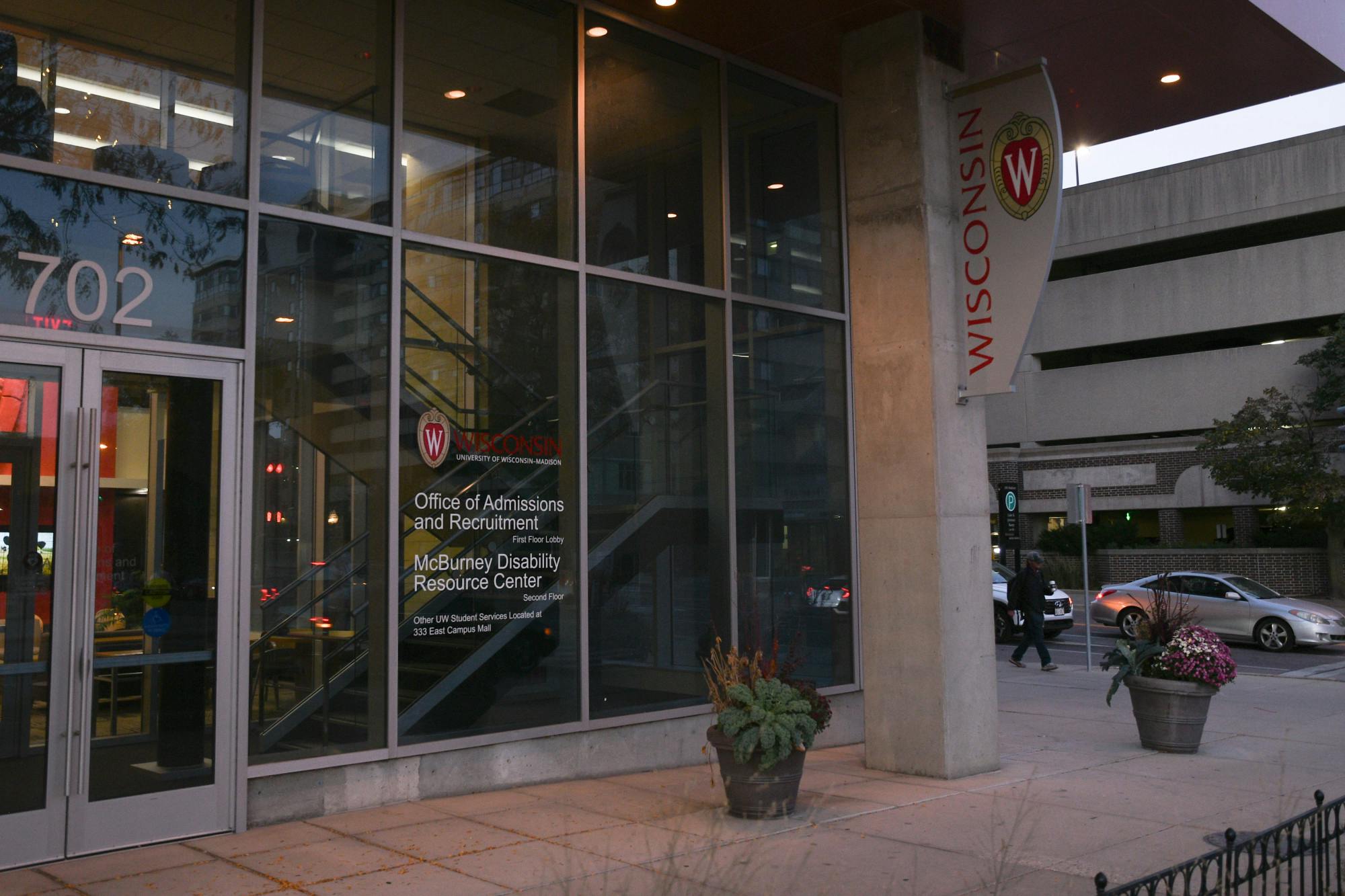
The University of Wisconsin-Madison’s McBurney Disability Resource Center has seen an almost 250% increase in the number of students receiving accommodations over the past 10 years, according to their director Mari Magler.
Nearly one in 10 UW-Madison students was affiliated with the McBurney Center between summer 2024 and spring 2025, with 5,791 students connected to the center and a fall 2024 enrollment of 51,791.
Just 10 years ago, during the 2015-16 academic year, the total student affiliation was 1,660.
This trend is not unique to UW-Madison. The number of students reporting disabilities has risen more than 50% over the last decade at institutions across the nation, according to a New York Times analysis of government data.
A rise in attention deficit hyperactivity disorder diagnoses plays a large role in this increase, with nearly 30%, 1,790, of the registered McBurney students reporting having ADHD.
A study by the National Health Interview Survey estimated the prevalence of ADHD in children aged 4 to 17 years to be around 6% in the 1990s, but that figure climbed to approximately 10% by 2016. The percentage rose to 11.4% in 2022, according to the Centers for Disease Control and Prevention.
The process for reporting a disability and getting accommodations, including awareness of the resources available and reduced stigma surrounding it, may also lead to rising numbers, according to Magler.
Liv Abegglen, a junior at UW-Madison who experiences severe, acute migraines and has registered with the McBurney Center, said registering with McBurney was easy.
“I decided to get accommodations after I had a migraine a day before an exam and, luckily, my professor just believed me and let me skip, but I knew I shouldn’t bank on that in the future,” she told The Daily Cardinal.
The accommodation application process begins with an online application through McBurney Connect. Students are then assigned to an access consultant, who contacts them and schedules an initial meeting to discuss their condition and requests. Finally, students submit documentation of their disability.
For Abegglen, the process was simple, and she was able to receive the accommodations she needed, but not all students have had the same experience.
Lana Fabish, a junior at UW-Madison who experiences chronic illness but has not been diagnosed despite significant testing, told the Cardinal she experiences symptoms including severe abdominal pain, extreme muscle weakness and stomach issues, and that these have led to fatigue and an inability to eat. She said she avoided going to the McBurney Center for her first two years at UW-Madison because her friends, with similar chronic conditions, had bad experiences.
However, Fabish eventually felt as though she had no choice because she no longer felt she could manage her classes without accommodations. While she found the process itself to be simple, she had concerns with the response she received.
She said the McBurney Center “kept trying to quantify my condition in a way that is not possible. I have a dynamic disability, which means that I am able to do certain things sometimes, and other times I need accommodations in order to do them.”
Fabish said she was asked to give a set number of absences needed per semester, noting that this was “impossible” to quantify because she experiences flare-ups which vary in frequency, symptoms and severity year-to-year. She said she could not continue the process of getting accommodations without providing a number, even when she explained that it did not seem to make sense to do so.
“The way McBurney works seems to be just minimally complying with [the Americans with Disabilities Act] standards in order to not get sued by students. They do not particularly seem to care about disabled students' feedback, and brush it off,” Fabish said.
Kyle Charters, the associate director of student services at the McBurney Center, highlighted that the ADA says “accommodations must focus on equal access to learning rather than on modifying coursework” and “cannot fundamentally alter the course.”
He said the flexibility team at the McBurney Center designed a questionnaire asking about course design and how much flexibility can be allowed without jeopardizing course progress to determine offered accommodations. According to Charters, the questionnaire “allows for consistent, effective and efficient implementation" to help address chronic health conditions that have unpredictable or episodic symptoms.
He emphasized that while students with chronic illnesses may struggle with attending classes, the attendance flexibility for the students must ensure that they still meet the course requirements and that accommodations must be “reasonable.”
Fabish also noted concern with the control instructors have on accommodations in the classroom.
“Essentially, each of your professors gets to decide on which accommodations they will allow you to have in their class,” Fabish said. “[Professors] are not properly aware of what sorts of accommodations disabled students actually need.”
However, university policy states that any faculty who faces uncertainty about or disagreement with an accommodation must bring their concerns to McBurney.
Magler explained the center has added additional staff and partnered with the Center for Teaching, Learning and Mentoring to help instructors better understand accommodations. She also highlighted what control instructors have, saying the center recently adjusted the Instructor Portal of McBurney Connect, an online portal to manage accommodations, to allow instructors to better adjust accommodation options to match the structure of their class.
Magler said the unprecedented demand for McBurney accommodations has strained what resources they can provide — and how quickly. Between 2019 and 2022, Magler noted some students waited longer for initial meetings, and the testing center exceeded capacity at its main location.
“The number of seats [for accommodated testing] at any given time is limited. In nearly all cases, appointments are available if the student is able to adjust their appointment start time slightly,” Charters said. “In rare instances where there are not seats available within the instructor’s prescribed testing window, the student and T&E work with the instructor to either extend the timeframe until a seat is available at the testing center or make arrangements for the student to take their accommodated test within the department.”
He also said the university is exploring additional options to address growing needs, such as expanding centrally managed space for accommodated testing and Human Online Proctoring, where exams on Canvas would be monitored through video camera by a team of proctors.
Magler expects to see the number of students with disabilities registering with the McBurney Center to continue to rise. She cited a CDC report finding more than one in four adults had a disability in 2022, along with a National Center for Education Statistics report finding that approximately 20% of undergraduates and 10.7% of graduate students had a disability in the 2019-2020 academic year.
Editors Note: This article was updated at 5:53 on March 24 to add clarification on university policy.