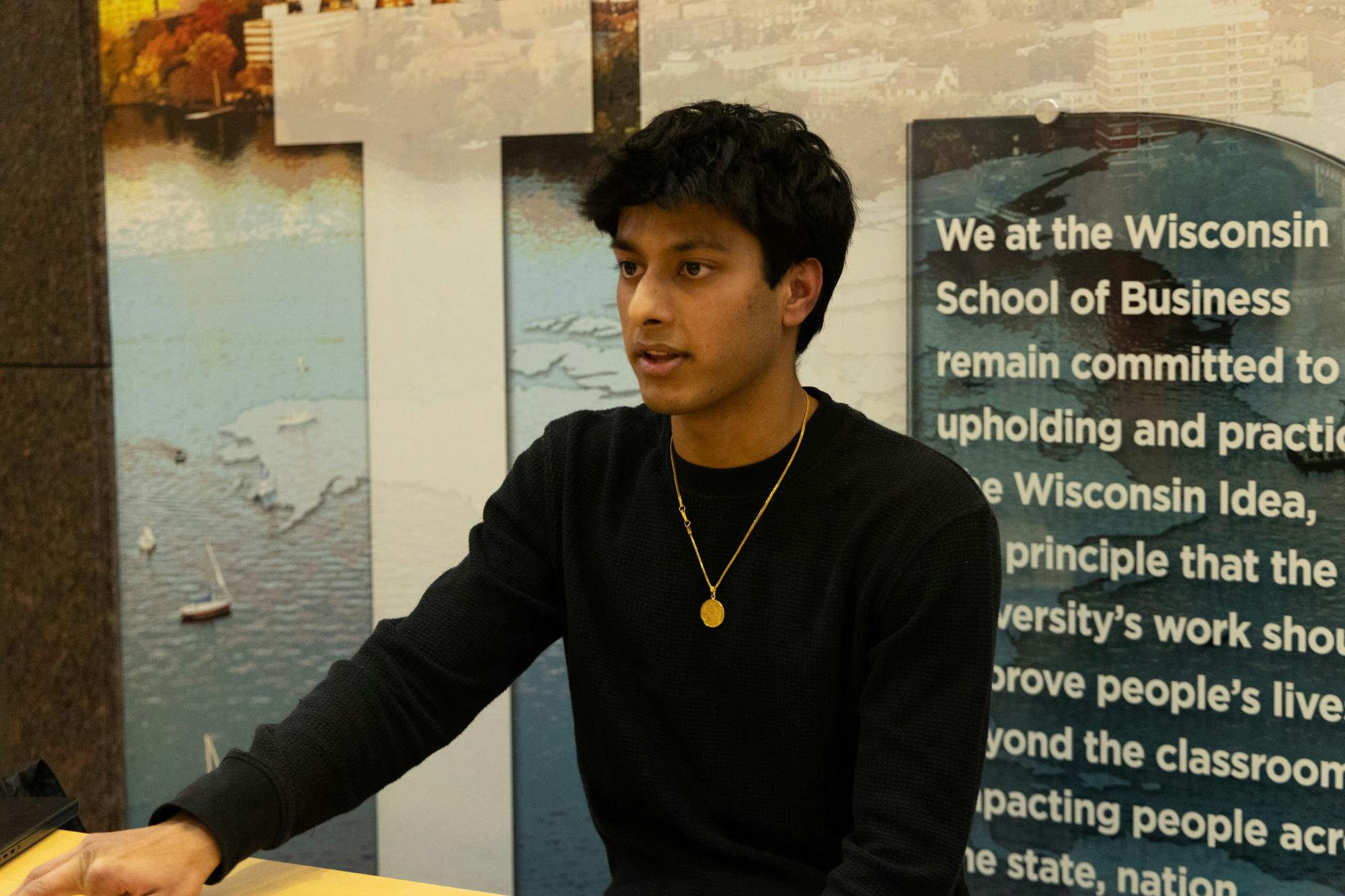
Armaan Jain didn’t grow up thinking he would start a company.
Coming to the University of Wisconsin-Madison from a small town in Minnesota, the sophomore finance major had a pre-imagined path set — classes, internships and a stable job.
Entrepreneurship wasn’t even on his radar. A self proclaimed introvert, he never thought he had what it took to build something of his own.
“I wasn’t very confident coming into college,” Jain told The Daily Cardinal. “I thought, ‘I could never make my own company.’”
Just over a year later, he launched the public version of Priority. a productivity software platform designed to bring calendars, tasks, goals and habits into one cohesive place.
The idea, Jain said, has been quietly forming since childhood.
Growing up in a first-generation Indian household, Jain was thrown into activities from a young age — baseball, basketball, soccer and everything but football. The packed schedule forced him to learn time management early, a skill reinforced by parents who deeply valued education and structure.
“From elementary school onward, I had to have systems in place to succeed,” he said. “I learned early that motivation isn’t always there, so you need something that keeps you going anyway.”
That mindset followed him through high school and into college, where the problem became clearer — and more frustrating. Jain tried every productivity system he could find: Notion, Google Calendar, Outlook, Canvas. But nothing was clicking.
“It was just too many platforms,” Jain said. “And none of them felt like they were actually built for how students live.”
Originally enrolled in both finance and computer science, Jain soon realized the coding path wasn’t for him — not because he disliked building, but because he wanted to build something of his own. Dropping computer science freed up time, but it also meant stepping away from a path that looked safe and impressive on paper.
“That was a big sacrifice,” he said. “In a household where education is everything, finance and computer science sounded like the perfect combination. Dropping computer science was kind of a bombshell.”
It was also the decision that made the startup possible.
The project officially began during finals week of Jain’s freshman year in 2024, after a hackathon didn’t go as planned. His team didn’t place, but Jain discovered something more important.
“We did terrible,” he said, laughing. “But we realized we worked really well together.”
He pitched the idea to two friends: Jay Dixit and Adhvik Thoppe, both sophomores in computer science. Thoppe left the team and Joshua Saji joined in November 2025. Jain reached out to Saji on LinkedIn after he noticed Saji reading Seneca in class.
Over winter break, the trio built their first version of Priority.
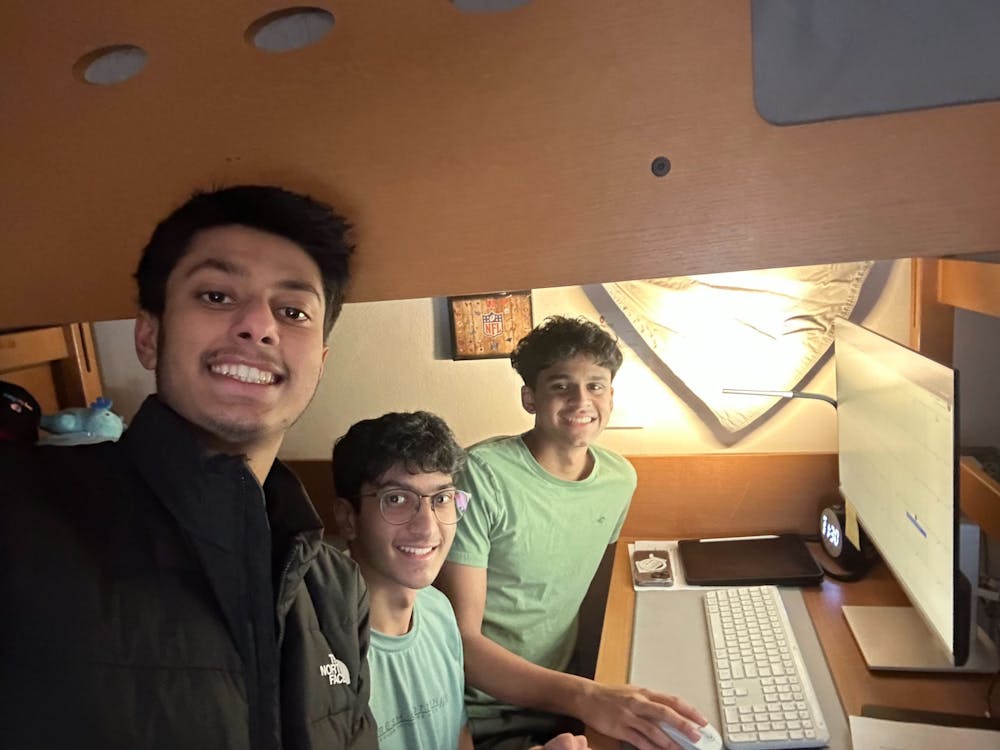
From left to right, Armaan Jain, Adhvik Thoppe and Jay Dixit work to develop their website Priority in a dorm room in February 2025.
“It was objectively a terrible product,” Jain said. “All we had was a grid that looked like a calendar. You couldn’t even do anything with it, but to us, it was the coolest thing in the world.”
Night after night, they worked out of dorm rooms, learning as they went. None of them fully knew what they were doing, and that, Jain said, was part of the point.
“That’s the thing about startups,” he said. “You work the hardest at the beginning, and the product isn’t even good yet.”
The platform has evolved significantly since then. In July, the team released a closed beta to a small group of users. Nearly 90 people tested Priority’s first beta, and over 120 people were on the waitlist before the public version launched on Feb. 1.
For now, the product will be free as the team focuses on feedback, which they collect through built-in forms and blunt messages from friends and early users.
“They’ll just text me and say, ‘You’ve got to fix this,’” Jain said. “And honestly, that’s the best feedback.”
The long-term vision is a subscription-based model, with student discounts built in, and Jain is firm about what the company won’t do: offer advertising or fragmented premium features.
“Our whole point is cohesion,” he said. “Your calendar, habits, goals and tasks all work together. Blocking parts of that misses the experience.”
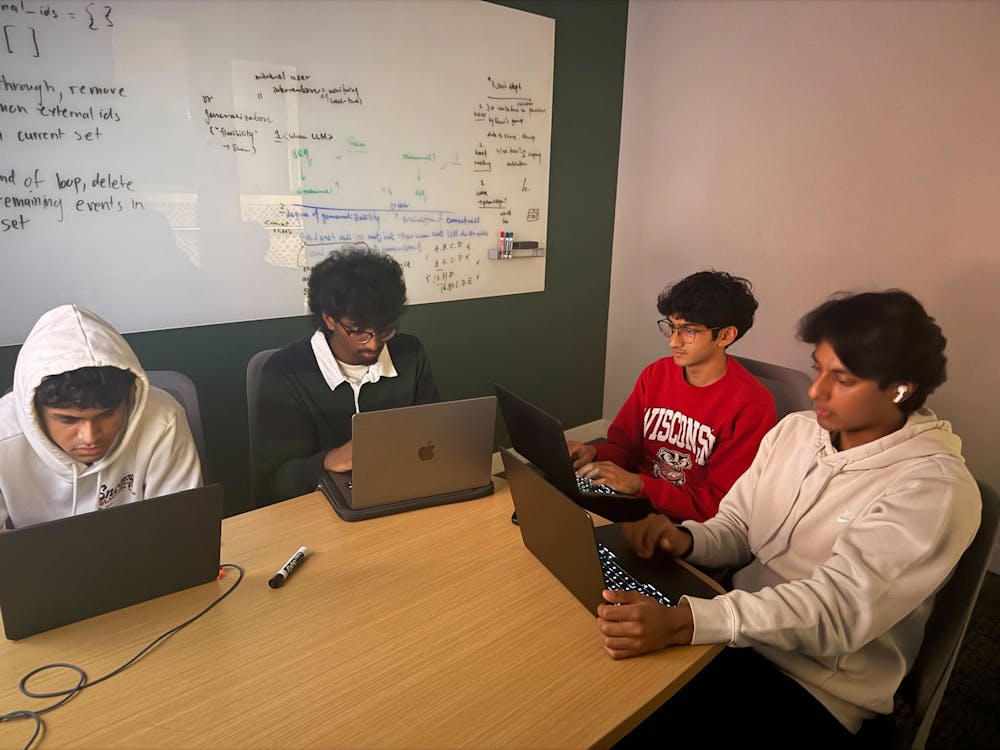
While UW-Madison’s entrepreneurship resources have become part of his journey, Jain says the university wasn’t why he chose the school. He came for balance — strong business and computer science programs, a respected music department and a well-rounded education. He even played alto saxophone in the UW band his first year. It wasn’t until he arrived on campus that entrepreneurship felt possible.
Looking back, Jain said the biggest lessons he’s learned have little to do with code or business plans.
His first lesson: letting go of other people’s expectations.
“Everyone means well,” he said. “But if you listen to what society says you should be doing, you’ll never start.”
His second lesson: accepting sacrifice.
“There are trade-offs,” he said. “I don’t go out much. I had to drop a major. You can’t do everything.”
And finally, his third lesson: learning by doing.
“No textbook can teach you how to build a startup,” Jain said. “You have to fail. Our first product failed. I’ve failed before. And every time, you learn more than any class could teach you.”
After his first public launch, Jain remains realistic — and optimistic.
“I don’t know exactly where this will go,” he said. “But I know that starting taught me more than waiting ever would.”
Alaina Walsh is the editor-in-chief for The Daily Cardinal. She formally served as the associates news editor and as the city news editor. She has covered breaking news on city crimes, a variety of state and campus issues, the 2024 presidential election and the UW-Madison budget. You can follow her on twitter at @alaina_wal4347