The University of Wisconsin-Madison General Library System disaffiliated with the Friends of the UW-Madison Libraries, an organization that provided donations and volunteers to the university for nearly 80 years, in January, leaving the status of $1.4 million in funding unclear.
The Friends of the UW-Madison Libraries has partnered with the university since 1948. Friends board member Debra Shapiro said the organization has helped the library system through fundraising for public events, gathering volunteers for the biannual book sales, providing grants for the Visiting Scholars program and supporting library collections by processing and funding materials.
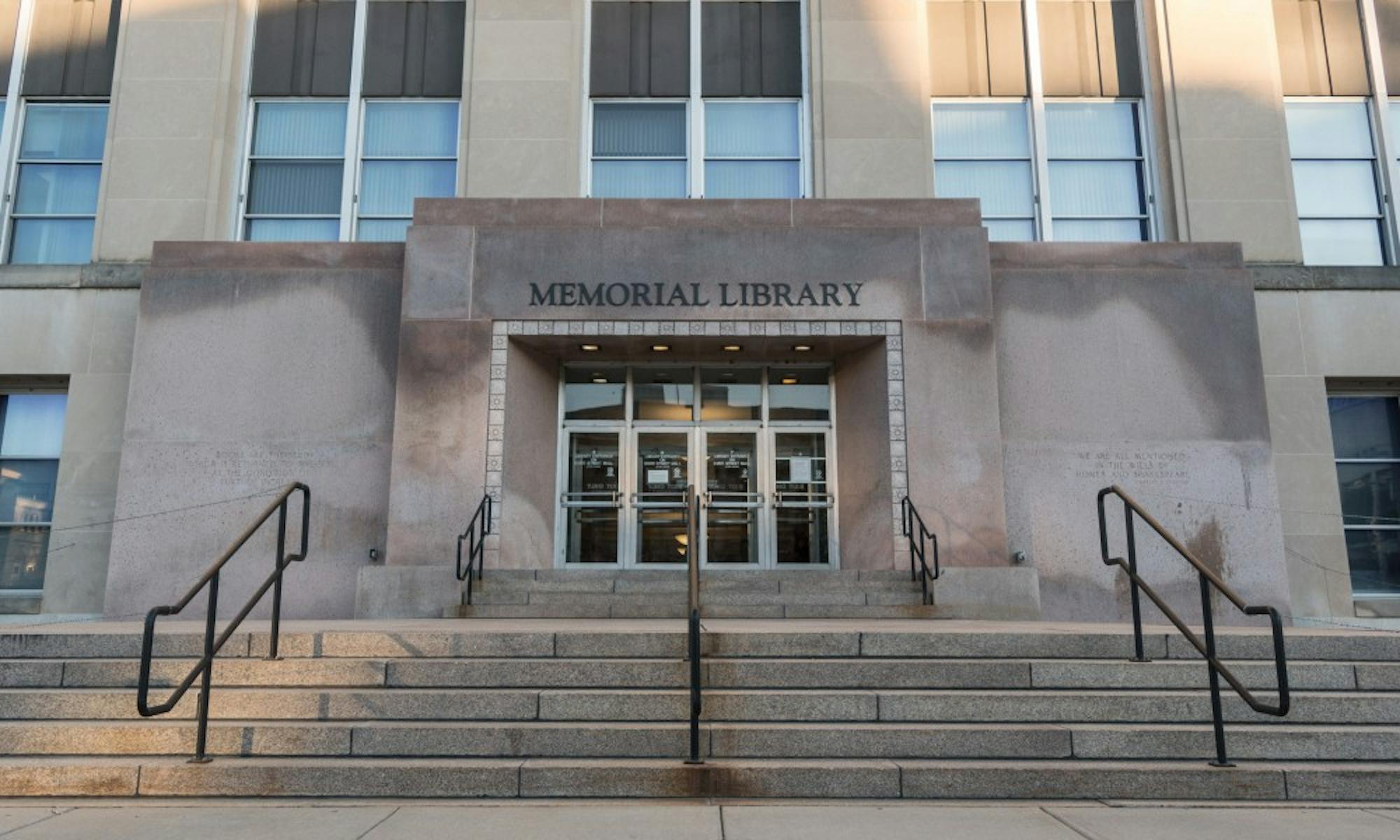
The Friends’ biannual book sale at Memorial Library attracts hundreds of Madisonians, offering nearly 10,000 books and materials at the latest sale in October. Between the two sales, the group raised between $50,000 to $60,000 a year, according to Friends Board President Ken Frazier. Friends also raised money through donations.
“It's a Madison tradition, and a major source of the Friends' grants and gifts,” Frazier said.
The university severed their association with the Friends following a legal review initiated in late October 2025 and completed in January 2026, School of Education Associate Dean Marianne Spoon told The Daily Cardinal. She and Frazier both said there was confusion among Friends members about the organization’s status prior to the investigation, with some believing it was a nonprofit, while others thought it was akin to a faculty governance group or a volunteer group.
In emails obtained by the Cardinal, the UW-Madison Office of Legal Affairs’ provided a legal analysis of the disaffiliation decision along with Dean and Vice Provost Erla Heyns’ announcement to Friends.
The review determined Friends meets the definition of an Associated Affiliated Organization (AAO) because they provide support to the university, but the group has an independent board — therefore making it a separate entity from UW-Madison. As an AAO, the group is subject to a Board of Regents policy requiring all AAOs to enter into a written agreement with the university outlining the terms and guidelines of the relationship if they want to continue providing administrative support to the university.
The Friends had not previously entered into such an agreement, and the legal analysis said UW-Madison Libraries has “no intention of entering into a written agreement for the provision of such services going forward.”
“[UW-Madison] Libraries is better served directing its limited resources toward its strategic plan, campus initiatives, facility needs and the foundational academic and research support it provides to students, faculty and staff at UW-Madison,” Spoon said in an email.
According to Spoon, Friends has two funds: $1.2 million for the Douglas H. Schewe Endowment and around $182,000 for the Friends of the Library Fund, which is currently held by the Wisconsin Foundation and Alumni Association, a private, nonprofit organization that manages donations to the university. Following the disaffiliation, the legal analysis said the university will no longer make draw requests for the Friends and the group must contact WFAA’s Chief Legal Officer to discuss the arrangement of these funds.
Frazier said the Friends would distribute grants to library departments across the university for various projects, such as preserving collections, speaker events and giving students the opportunity to attend the Rare Book School — a nonprofit educating people on the care and history of texts — rather than giving the funds directly to the university. All grants were evaluated by the Friends’ committee and distributed according to their decisions.
Frazier expressed interest in entering into an agreement with the UW-Madison Information School, saying Friends already provides support to it. He said applying to become a non-profit organization is another option.
“Nobody wants us to just throw in the towel and stop being an organization,” Frazier told the Cardinal. “I think we were very shabbily treated, and we might have been acknowledged as being a donor organization and not just being consigned to being just a bunch of volunteers.”