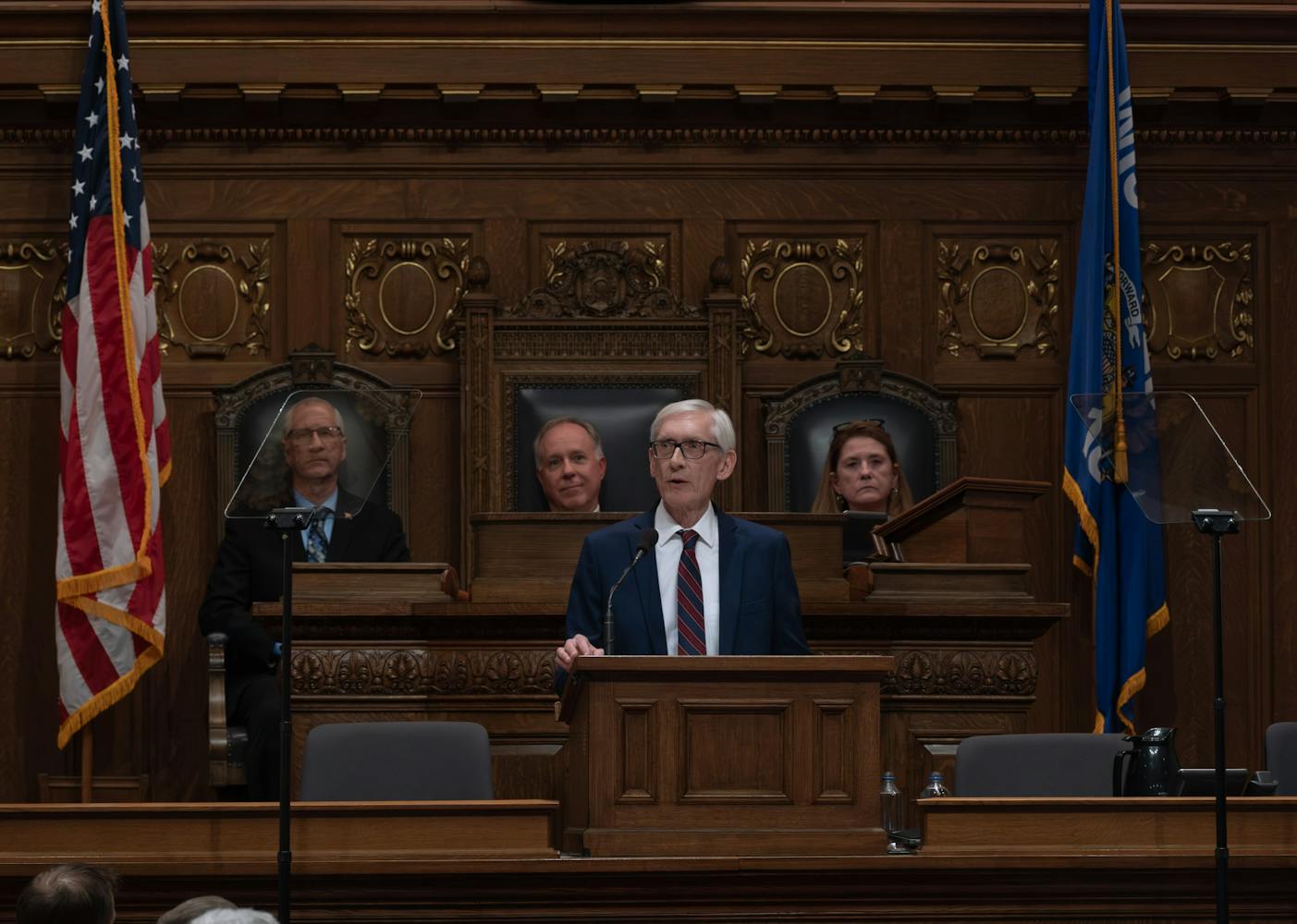
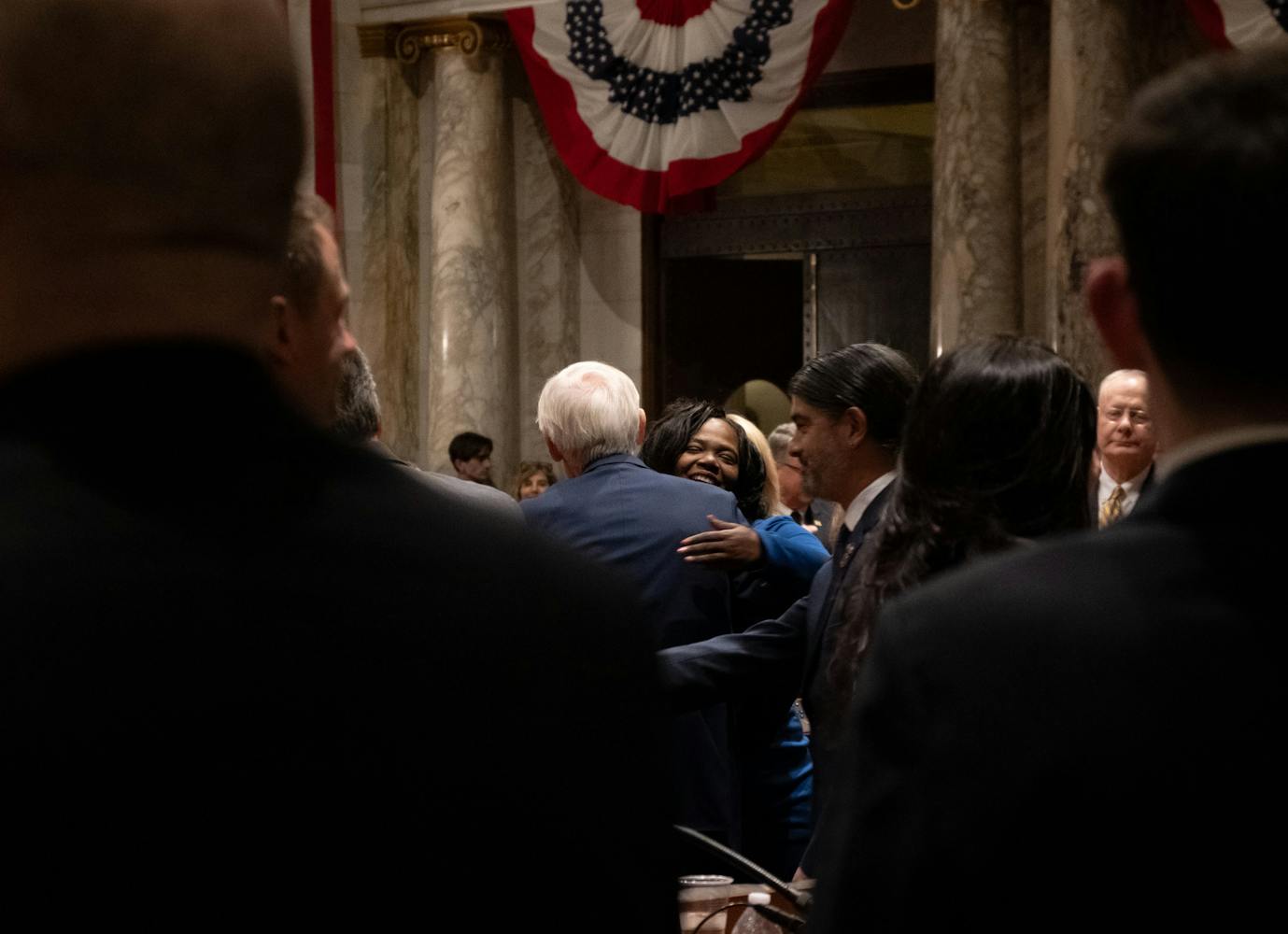
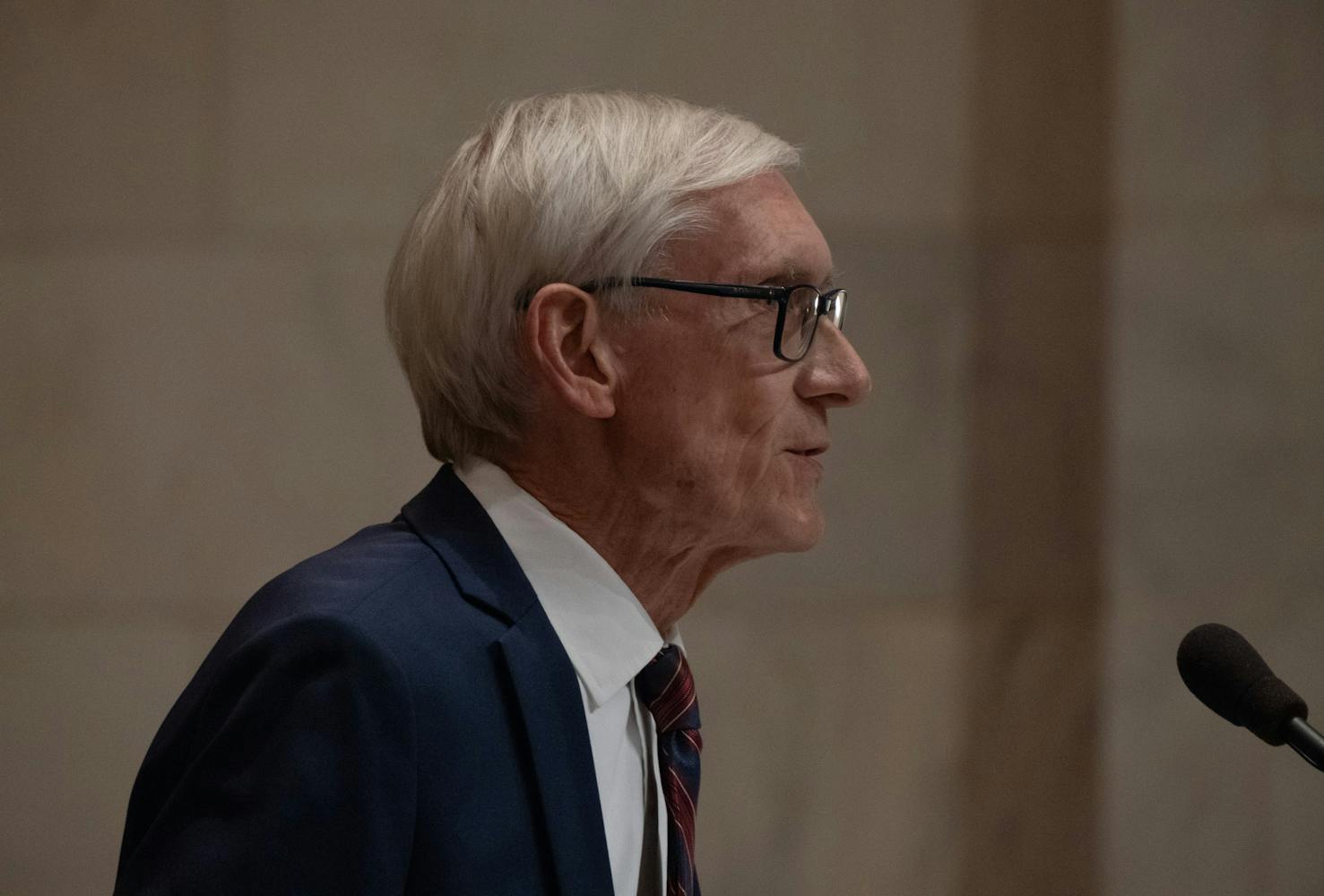
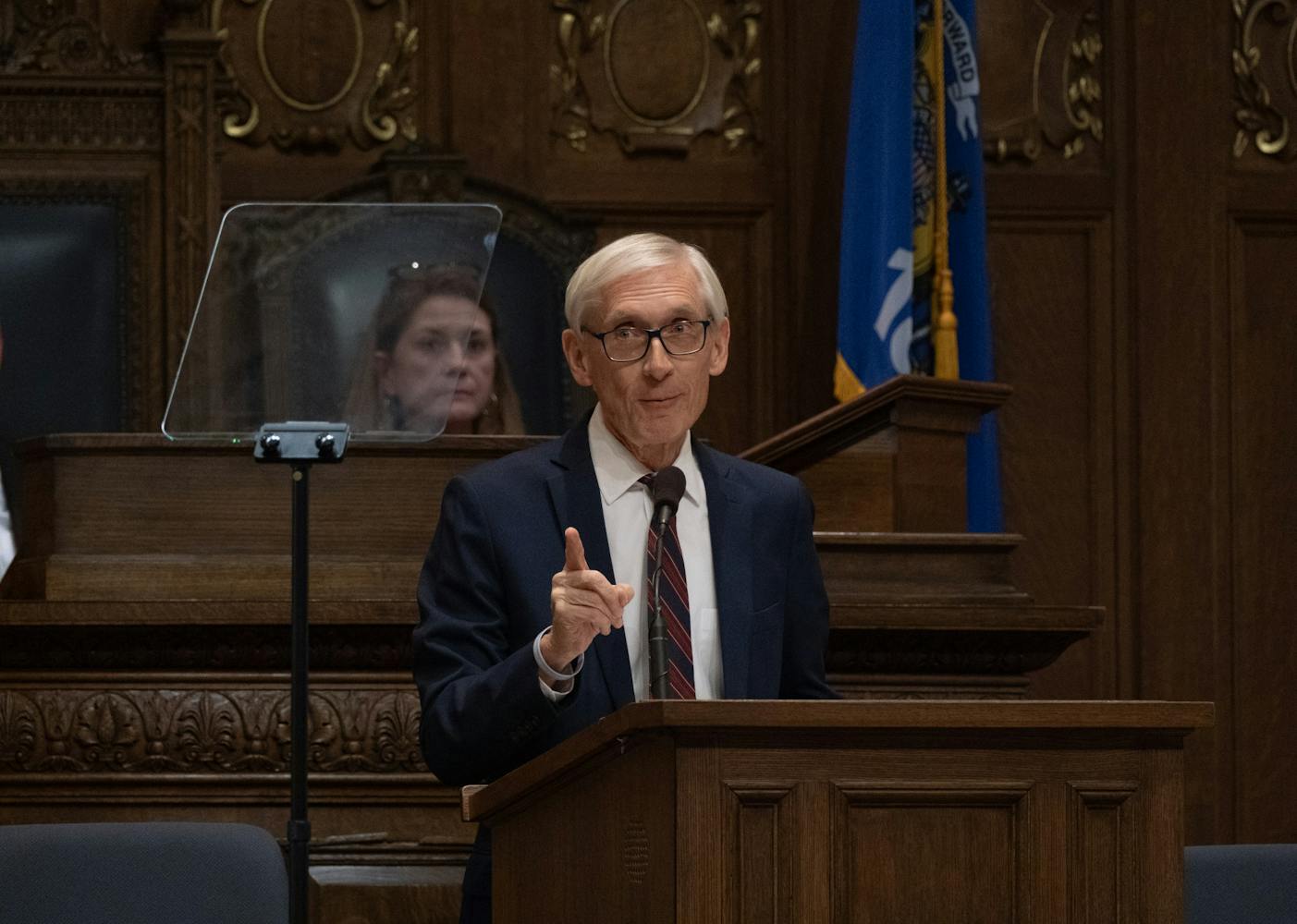
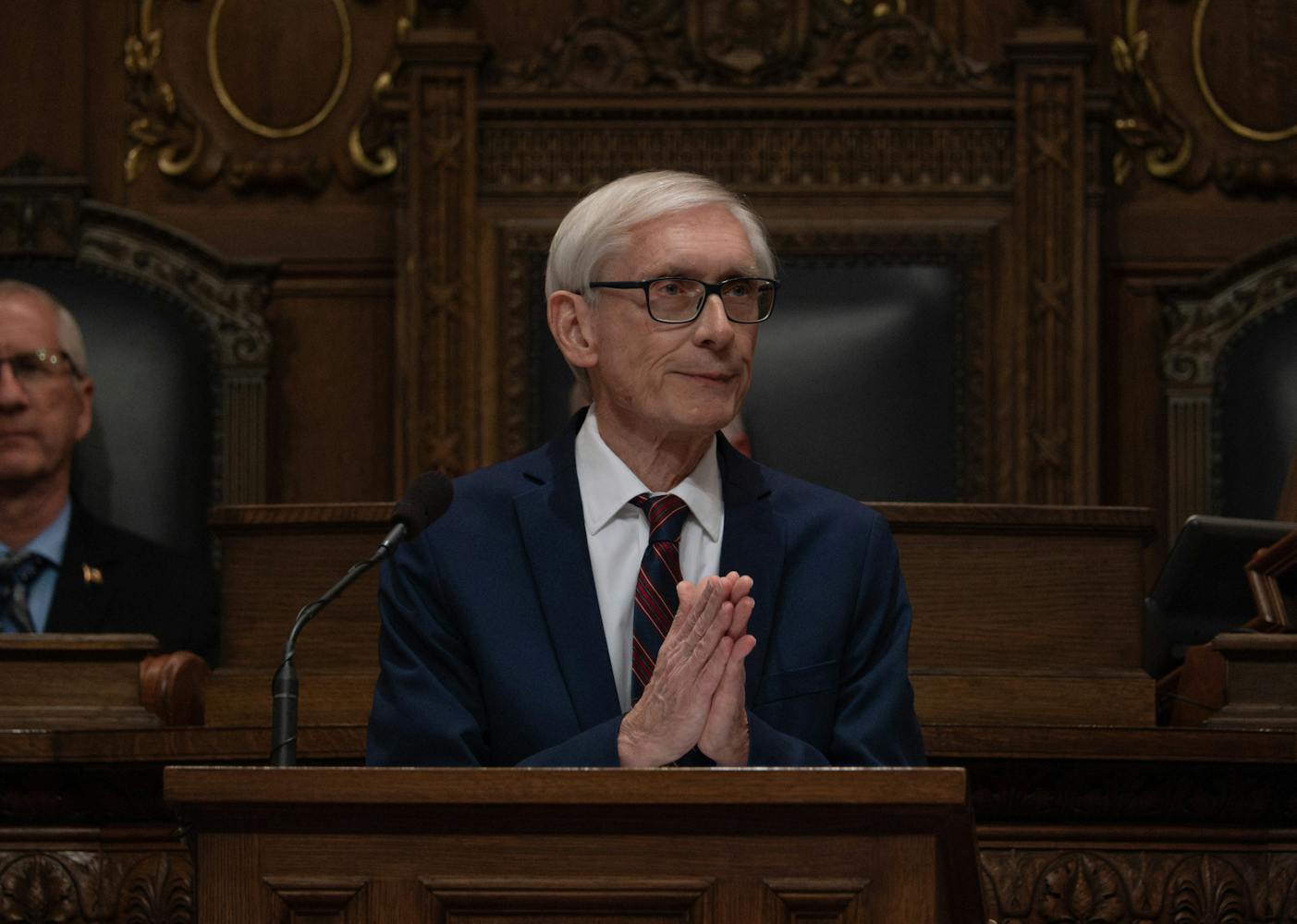
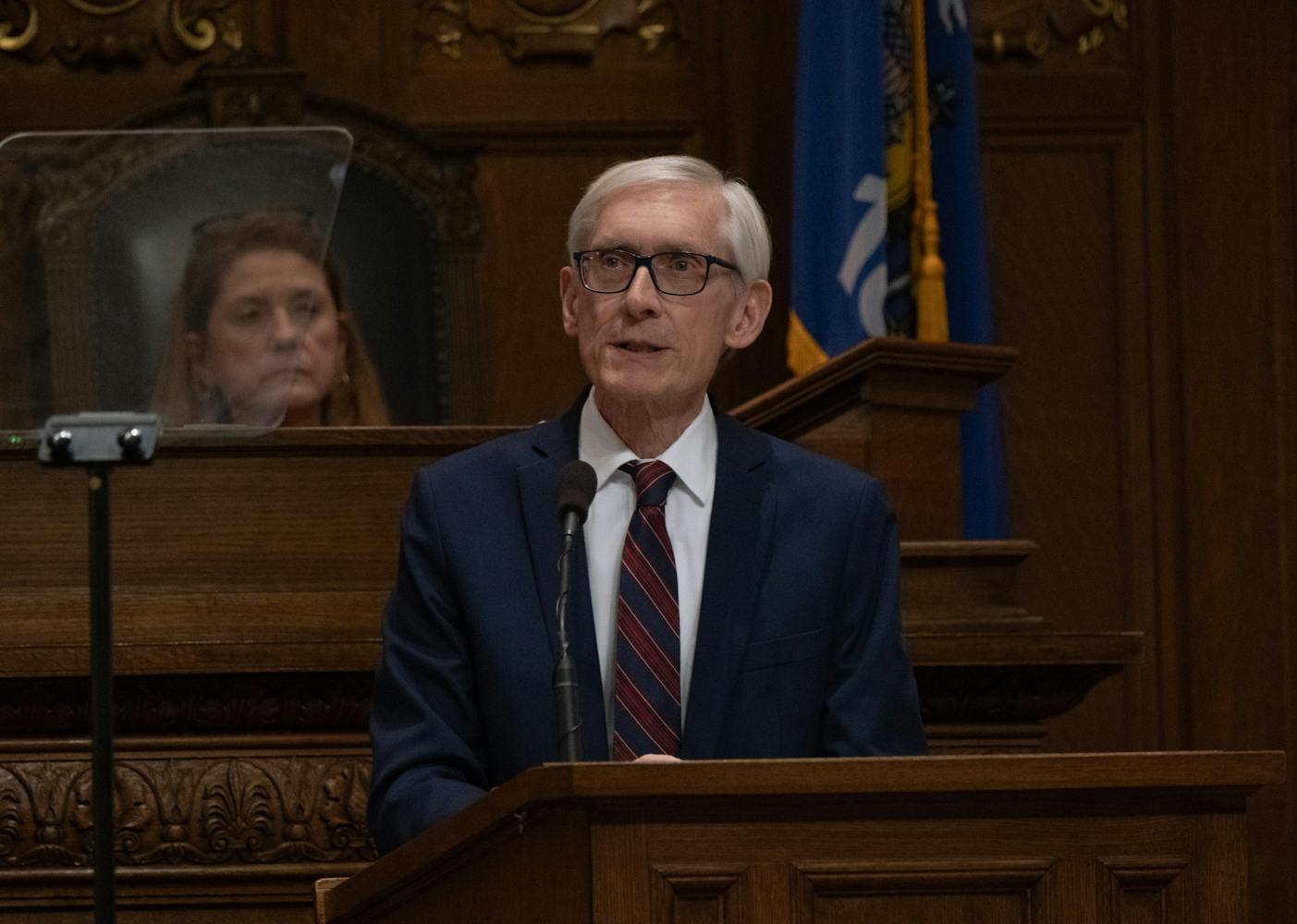
Gov. Tony Evers delivered his eighth and final State of the State address Wednesday, reflecting on seven years of service while outlining his hopes for the future of Wisconsin and declaring 2026 the “year of the neighbor.”
Here are three takeaways from the address:
Partnership with UW
A key guiding principle for the Evers administration in both terms was his support for public education. The former state superintendent declared 2025 the “year of the kid,” with the aim to support all levels of education, including the University of Wisconsin System.
Evers specifically addressed UW System budget controversies, saying he “fought hard” to ensure the final budget included the largest state funding increase for the UW System in almost two decades, including “$1 billion for UW projects across our state.”
Evers said Republican lawmakers threatened the Wisconsin idea and higher education by pursuing budget cuts, pointing to the Republicans floating a $80 million cut to the UW System in June.
This year, Evers also plans to partner with the University of Wisconsin-Madison’s Department of Nuclear Engineering and Engineering Physics to focus on developing sustainable energy, calling it “the Wisconsin Idea in action.”
Evers said the partnership will work towards nuclear energy, calling the energy source a “safe, reliable, carbon-free option to power our homes and businesses and a “game-changer” for the state.
Nonpartisan redistricting
Evers announced his plan to fix gerrymandering — a state constitutional amendment. He pledged it will be done this spring with a special session of the Legislature, which will “ban partisan gerrymandering once and for all in Wisconsin.”
If the special session does not succeed, Evers said he won’t hesitate to bring the Legislature into special session later this fall.
Evers said while current maps are fair, they are not guaranteed to stay that way because of Wisconsin’s redistricting process.
“While we have fair maps today, we still don’t have a nonpartisan redistricting process in place,” Evers said. “That means there’s no guarantee Wisconsinites will still have fair maps after the next U.S. Census.”
Evers signed new legislative maps into law after they passed the state legislature in 2024 with bipartisan support following a Wisconsin Supreme Court ruling the old maps were unconstitutional. Experts considered the previous maps to be some of the most “gerrymandered” in the country.
He also reinforced the need for this issue to remain nonpartisan.
“There’s one thing that we should all be able to agree on. Politics should stay out of redistricting from start to finish,” Evers said.
Tax cuts
Expanding his bipartisan efforts as governor, Evers recalled his commitment to tax cuts for Wisconsinites.
“We’ve saved taxpayers over $600 million by paying off about $3 billion of our state’s debt,” Evers said, adding that every full fiscal year as governor, Wisconsin ended with a positive balance.
Evers stressed that benefits from the tax cuts will be felt beyond his term, saying, “Wisconsinites are no longer paying sales tax on household utility bills, which is expected to save Wisconsinites over $178 million over the next two years.”
Evers said one of his accomplishments was a middle class tax reduction, which saw an income tax cut of 23%.
“This was more than double what I promised," Evers said. “Wisconsinites, you’re keeping more of your hard-earned money today than at any point in the last 50 years,” he added.
Evers acknowledged that many Republican lawmakers blame his 400-year veto for raising property taxes, but stressed the importance of public school funding.
In the 2023-25 budget cycle, Evers used his partial veto pen effectively securing a $325 per-student annual funding increase for public schools through the year 2425, locking in the increase for 400 years. Notably, property taxes saw the largest increase this year since 2018.
“Funding our schools is a responsibility that the state and local partners share. Local property taxes go up when the state fails to do its part to meet its obligation,” he said.