The Olympics aren’t just about sports —or at least, not at their core.
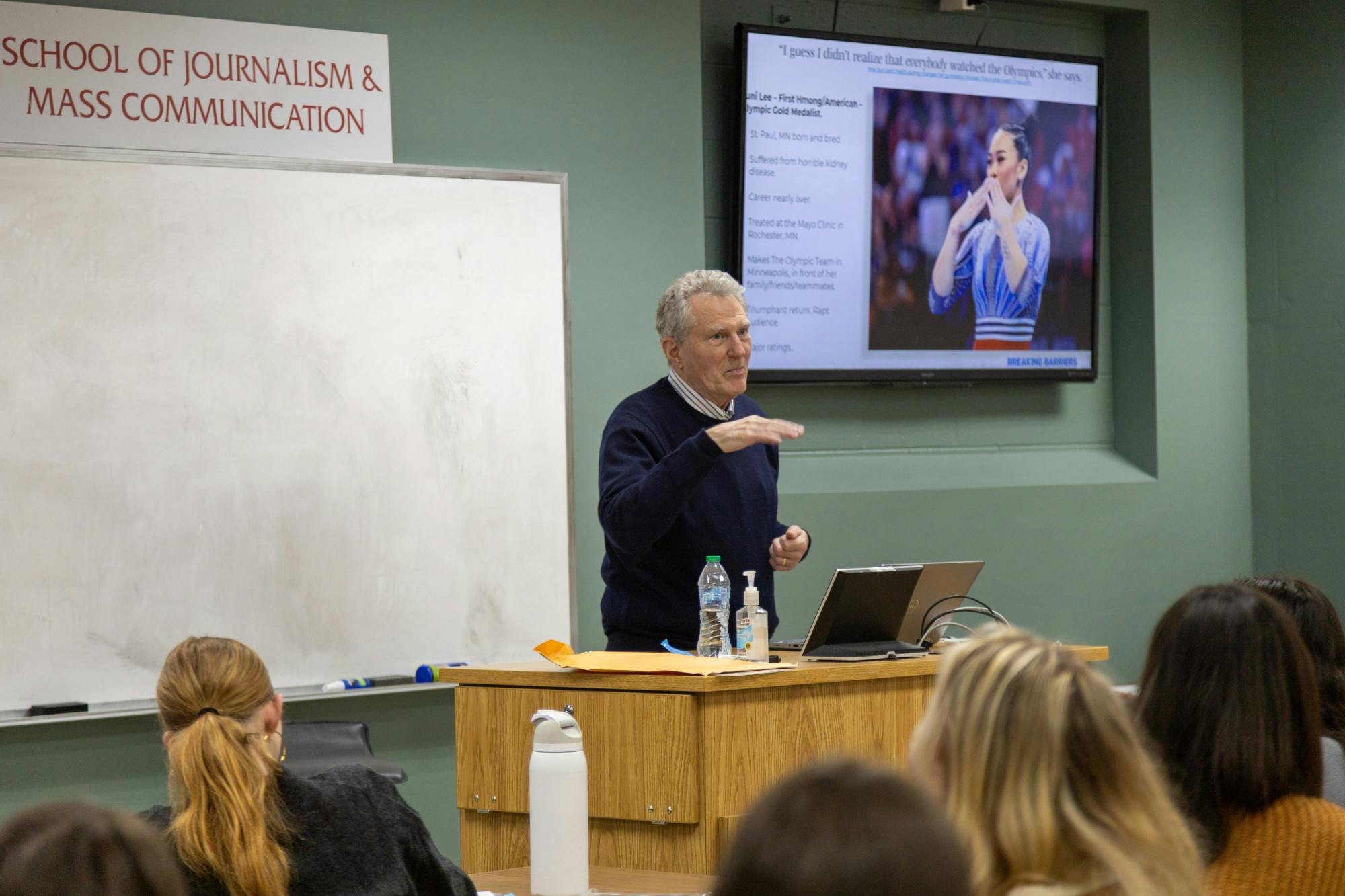
If you asked Marv Danielski, the general manager and former president of St. Louis’ KSDK-TV NewsChannel 5, he’d tell you the Olympics, more than any other sporting event in the world, are about humanity.
It’s his job to promote the Olympics by finding unique storylines in the haystack of national media.
“At NBC, it’s the Super Bowl into the Olympics, into NCAA basketball, into World Cup Soccer into the most political sport of all time: the midterm elections,” Danielski told The Daily Cardinal.
Danielski has worked on promotional events for countless international sporting events, but with the Winter Olympics underway, he’s focused on Milano Cortina. Looking back, he cites his contributions to the official Olympics website as one of his favorite assignments. He was a part of the team that constructed the very first version of the site.
But aside from the competition, his role as a producer has given him a multifaceted perspective on the power of sports, far beyond any field or court.
“Coming out of the Super Bowl, we have a story about flag football,” Danielski said. “The NFL recognized that there was a CTE and a concussion problem. They're now recommending getting more kids involved in flag football. We look at that news content and make sure that we promote that programming to make people aware of the story, but more importantly, the ramifications of the story.”
His time spent at the University of Wisconsin-Madison, where he graduated with a communication arts degree, set him up with all the professional skills he needed to succeed. Even more importantly, UW-Madison nurtured his interests beyond the classroom.
“[In Madison] you can access all this world class stuff. That doesn't happen everywhere,” Danielski said. “From medicine to sports to other academics, even walking up Bascom Hill in the middle of winter, it provides a really unique experience. The key is that there's lots of unique experiences that can happen here that you can wrap into your narrative.”
For Danielski, those experiences were intramural sports teams and campus film societies. He said those film circles contributed to how he sees stories in the media today.
“Even though I've really never been in the film business, [there was] exposure to things in the film societies. It was all about narrative, about storytelling, about [how to use] music. I was able to leverage all those things into my Badger experience, and that was very important in terms of how my career has gone,” Danielski said.
Another instrumental factor in Danielski’s success is his ‘impatiently patient’ mindset.
“What you have to do is be impatient to get where you think you need to go, but you have to be patient in terms of how you're going to get there,” Danielski said. “[You must] keep a global view and see where you have a role and have belief in your own system. That doesn't mean arrogant, but you have to believe that you have something to say.”
This belief has helped Danielski work in sports and hard news. Still, he said sports remain his favorite, particularly because their immense appeal gives them a unique role in mass communication.
To Danielski, the work isn’t just about winning and losing games. It’s about the leaders, research and conversations that are revealed through the vehicle of sports.
“They’re not all vacuous,” he says. “Sports are the fabric of the United States and other countries. They have such a platform, promise and power that lead to other more positive things.”