BadgerEMS gained formal support from the Associated Students of Madison last fall for their proposed student-run emergency medical services program.
Now, the organization is looking to gain formal approval from the University of Wisconsin-Madison and licensure from the state so that EMT-certified students can aid in campus emergency response alongside Madison first responders. The proposal was created in response to growing enrollment at UW-Madison and overall rising population in Madison.
ASM passed legislation last October to show support and dedicate its resources to help this program advance. The program would allow licensed student EMTs to improve on-campus emergency response and relieve pressure on Madison Fire Department and the University of Wisconsin Police Department, according to ASM legislation.
BadgerEMS began working on this proposed program four years ago near the end of the COVID-19 pandemic, ASM Anti-Violence Chair Jake Wesson told The Daily Cardinal. Wesson, who is also a Field Officer for BadgerEMS, got involved with the organization in 2024, heard about the proposal and wanted to pursue it. He brought it to ASM for discussion and said other representatives were initially very supportive of it.
ASM Press Secretary Drew Wesson also touched on some deliberation about the proposal.
“When [BadgerEMS] presented it to the ASM student council meeting, there was some original questions on the feasibility of it, how it would work, what’s ASM’s role in the legislation,” Wesson said. “A lot of those questions were cleared up with information around the support for the proposal, funding, stuff like that.”
BadgerEMS has “laid the groundwork” for a student-led EMS program through CPR and ‘Stop the Bleed’ trainings, which involve learning how to pack a wound, use a tourniquet and the basics on responding to bleeding, according to the ASM legislation.
Genevieve Simmons, BadgerEMS president, spoke about the different educational experiences and volunteer events the organization has done aside from trainings.
“Our general meetings resemble what you would find in a standard EMT course. We’ve touched on a variety of subjects, including mass casualty incident awareness, knowing what equipment is found in a jump bag and how to safely assess and respond in various medical and trauma scenarios,” Simmons said.
“For volunteering, we have recently been stationed at a variety of student events and also recreational events,” she said. “One of our most notable ones is we've been partnering with the Wisconsin Equestrian Team and have been helping them out a lot with their events, acting as standby emergency medical care.”
Simmons highlighted the gap in student-led emergency care, with many students having more than EMT certification.
“We’re trying to benefit the student body as a whole, and support them by being that first initial response. Then, move those patients onto Madison Fire to get them to the hospital or wherever else they may need to go,” Simmons said.
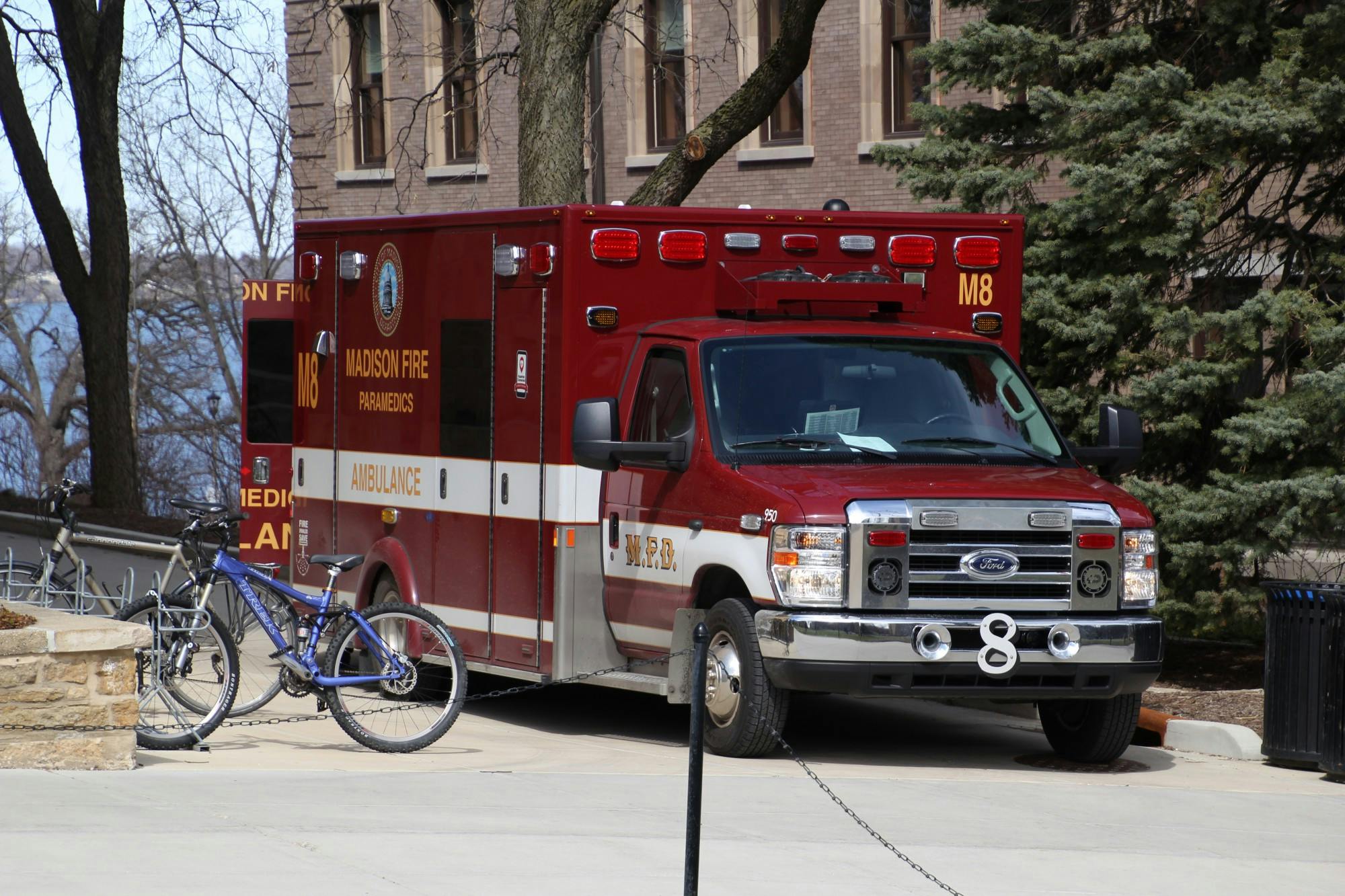
Currently, University Health Services directs students to call 911 for emergencies, which leaves emergency medical response to the Madison Fire Department, according to ASM legislation.
MFD has already been experiencing high call volumes. In 2024, the MFD was dispatched to more than 43,000 calls, according to the MFD’s 2024 annual report. Of those calls, more than 29,000 were for emergency medical services.
A large reason for the influx of calls has been due to an increased population in the Madison area, according to Jake Wesson. “As we see, the city population continues to grow, UW-Madison’s population continues to grow, were essentially a city within a city,” he said.
UW-Madison has seen increased enrollment over the past couple of years. According to the UW Office of the Registrar, there were more than 51,000 students enrolled in Fall 2025 compared to just five years ago in Fall 2020 when there were approximately 46,000 students enrolled.
Simmons also focused attention on the effects of Madison’s growing population.
“In 2024, we found that there were more than 200 times in which every ambulance was responding to a call," Simmons said. “And because the city’s population is expected to increase by 5000 people each year, according to Mayor Rhodes-Conway, it's important for there to be emergency care, especially for the students who make up a big chunk of the Madison community.”
The next steps for this proposal is to get formal approval from the university and then acquire licensure through the Wisconsin Department of Health Services and funding through ASM and other grants, Simmons said.
“We want to make ourselves as accessible to the university as possible and show that we can do this,” she said, “and we must do this for the safety of our students.”