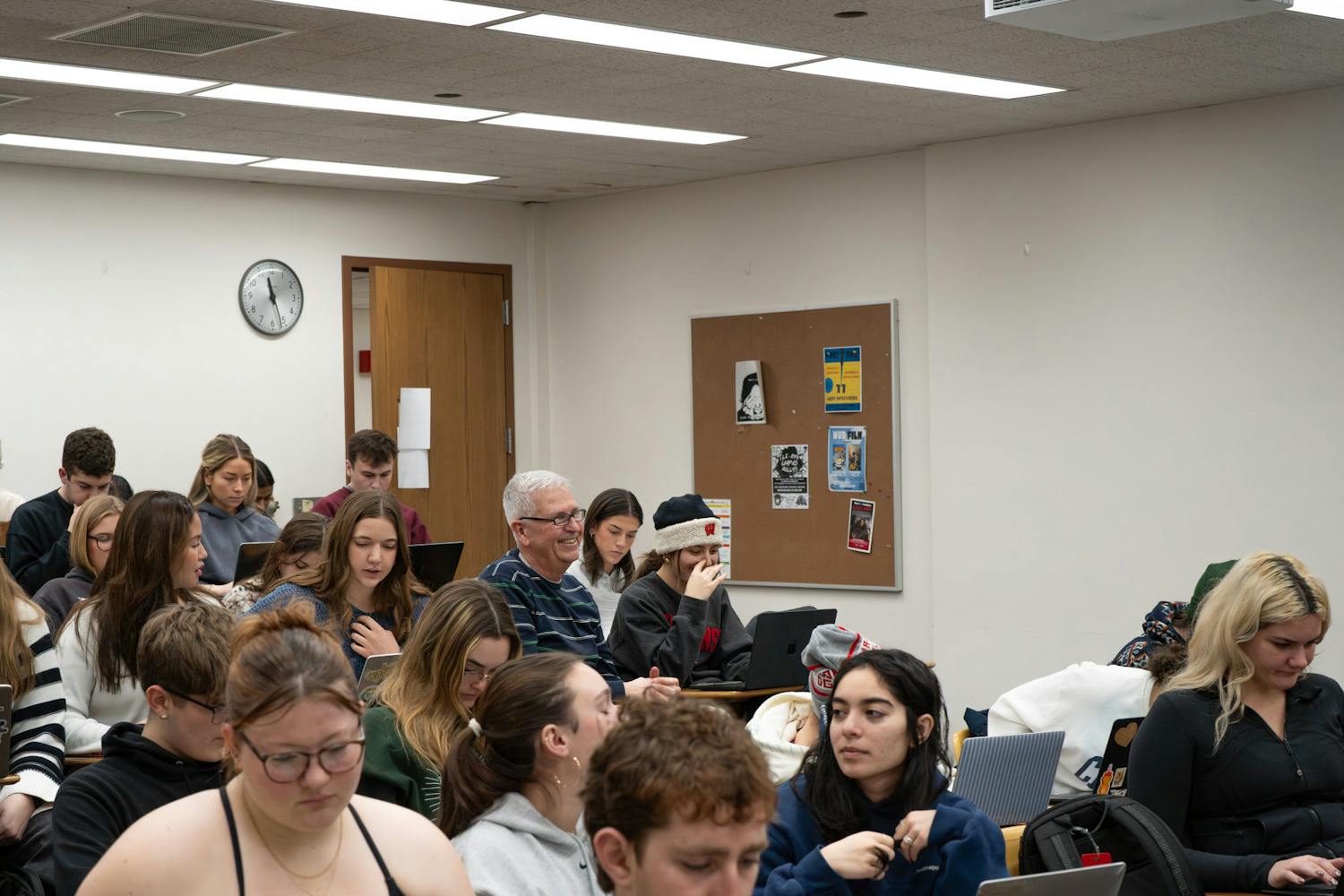
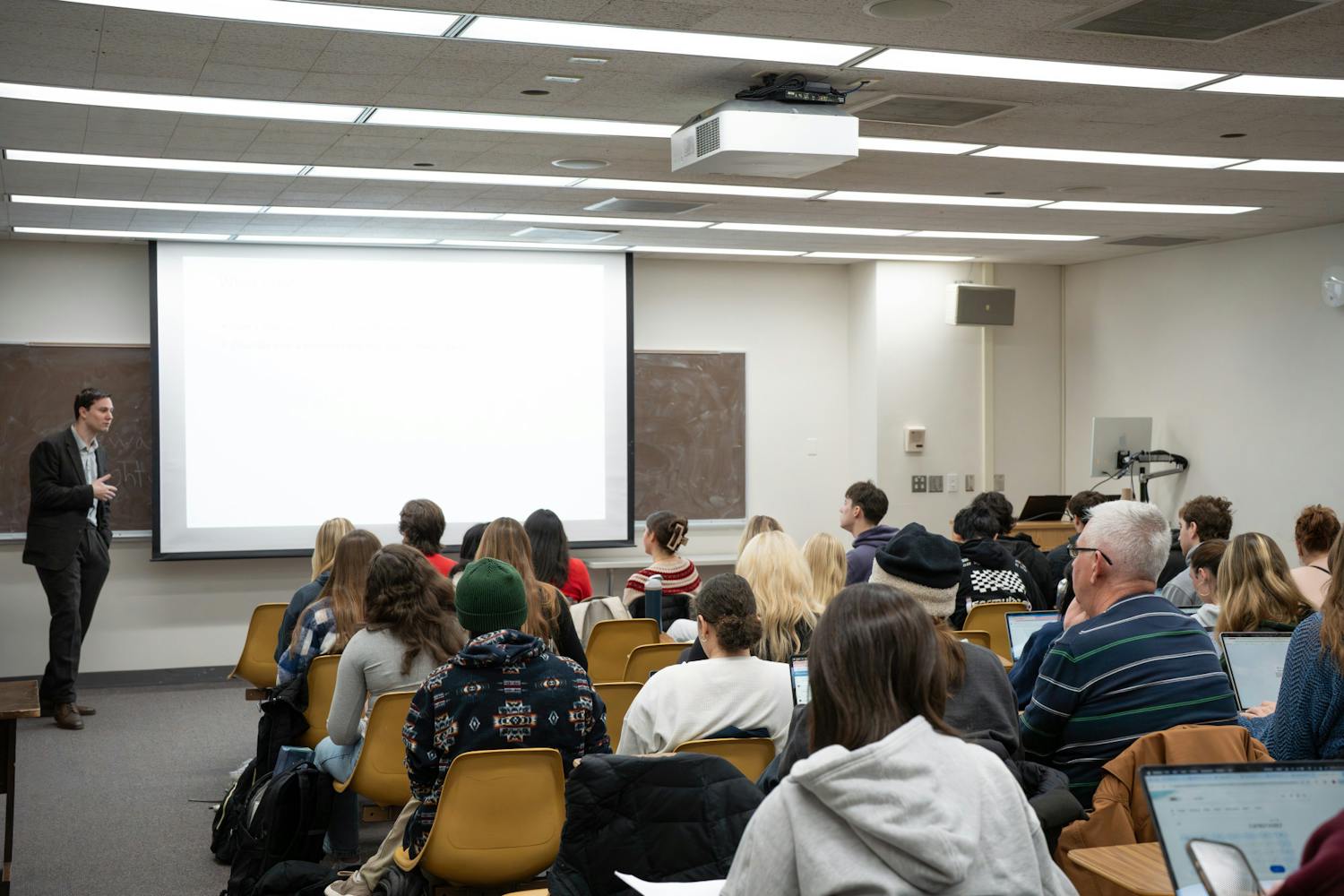
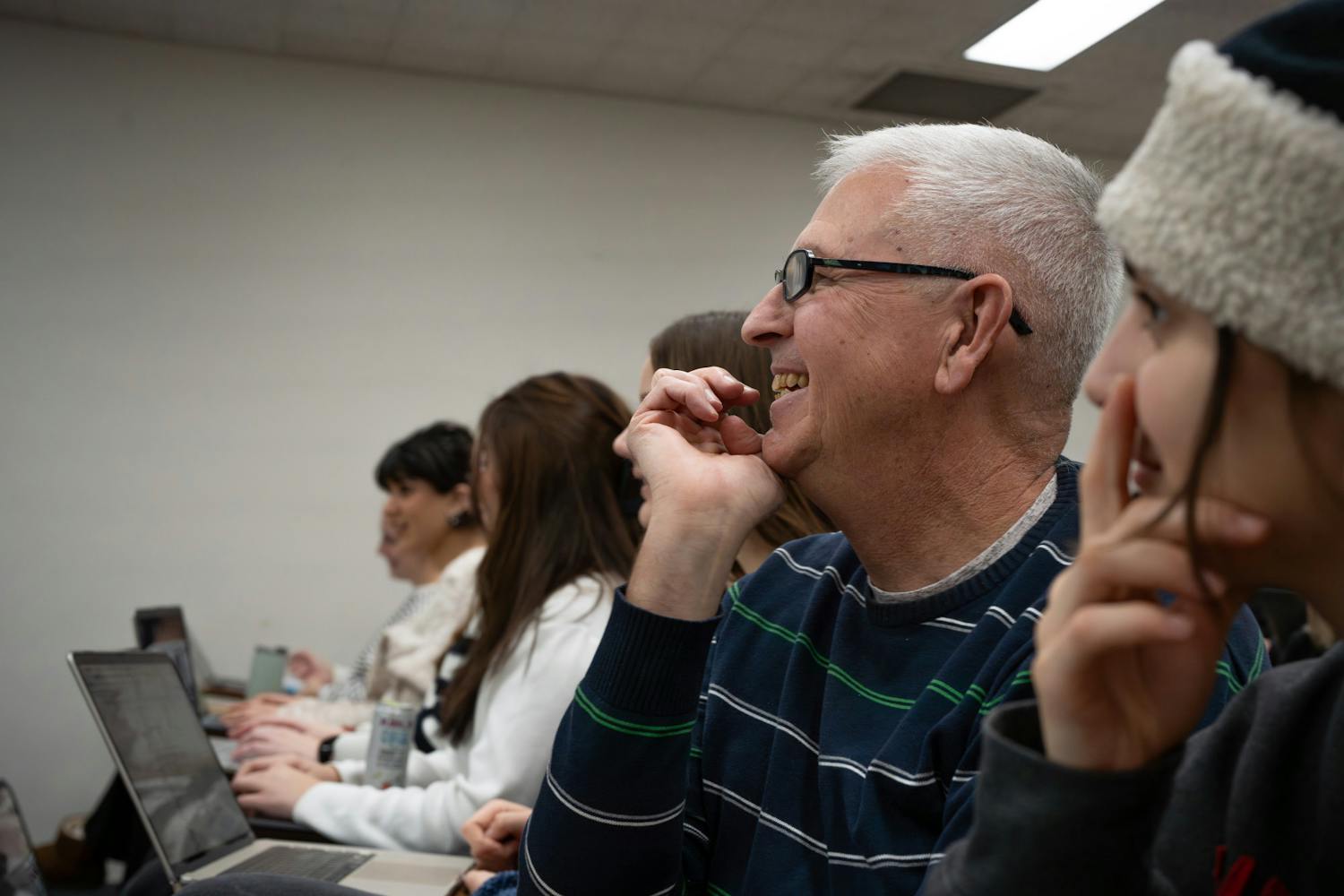

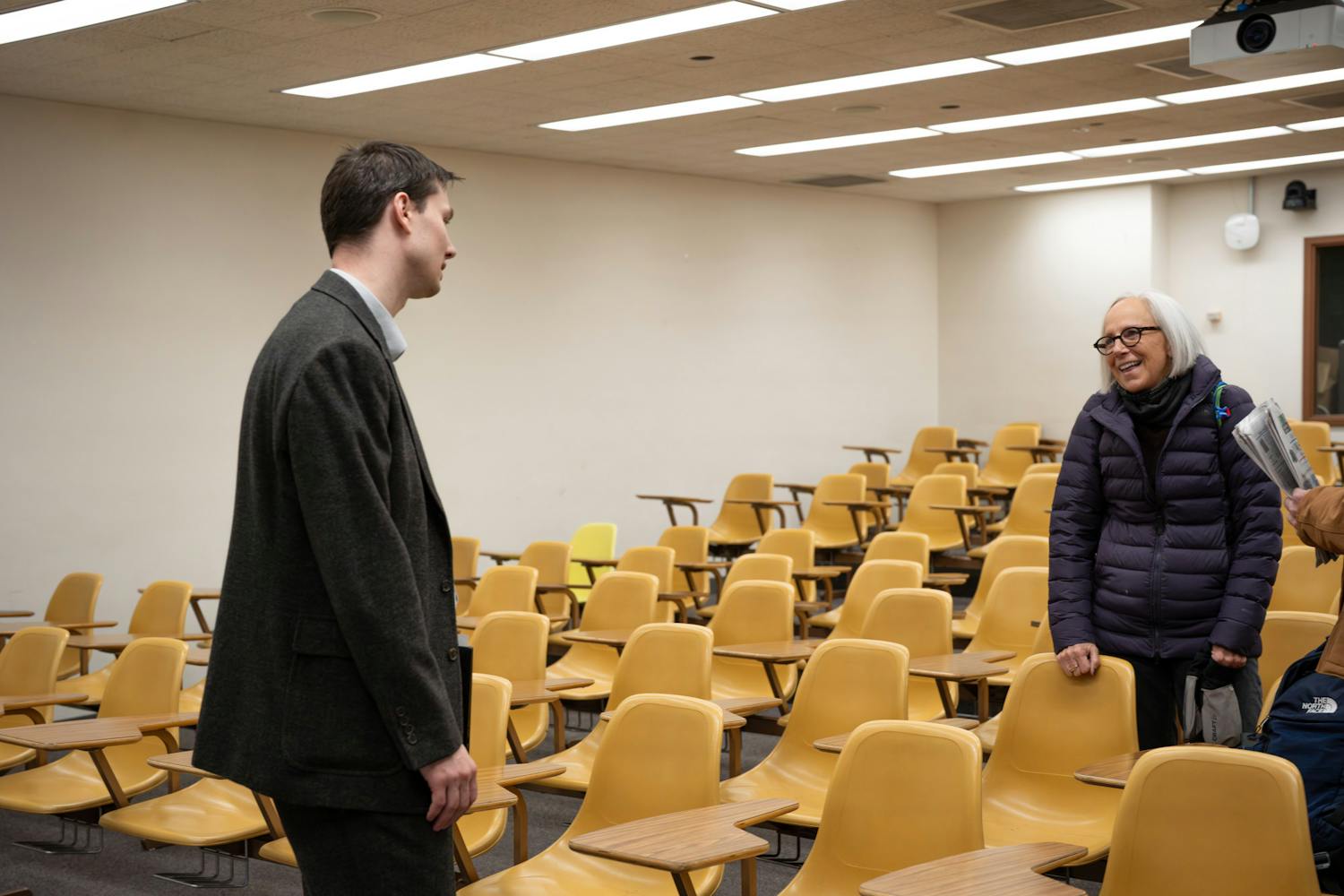
As students filed out of the last Media and Politics lecture of the fall semester, one gray-haired student moved against the flow to the front of the classroom. University of Wisconsin-Madison senior auditor Gary Achterberg always makes an effort to send a note or thank the professors for the courses he takes.
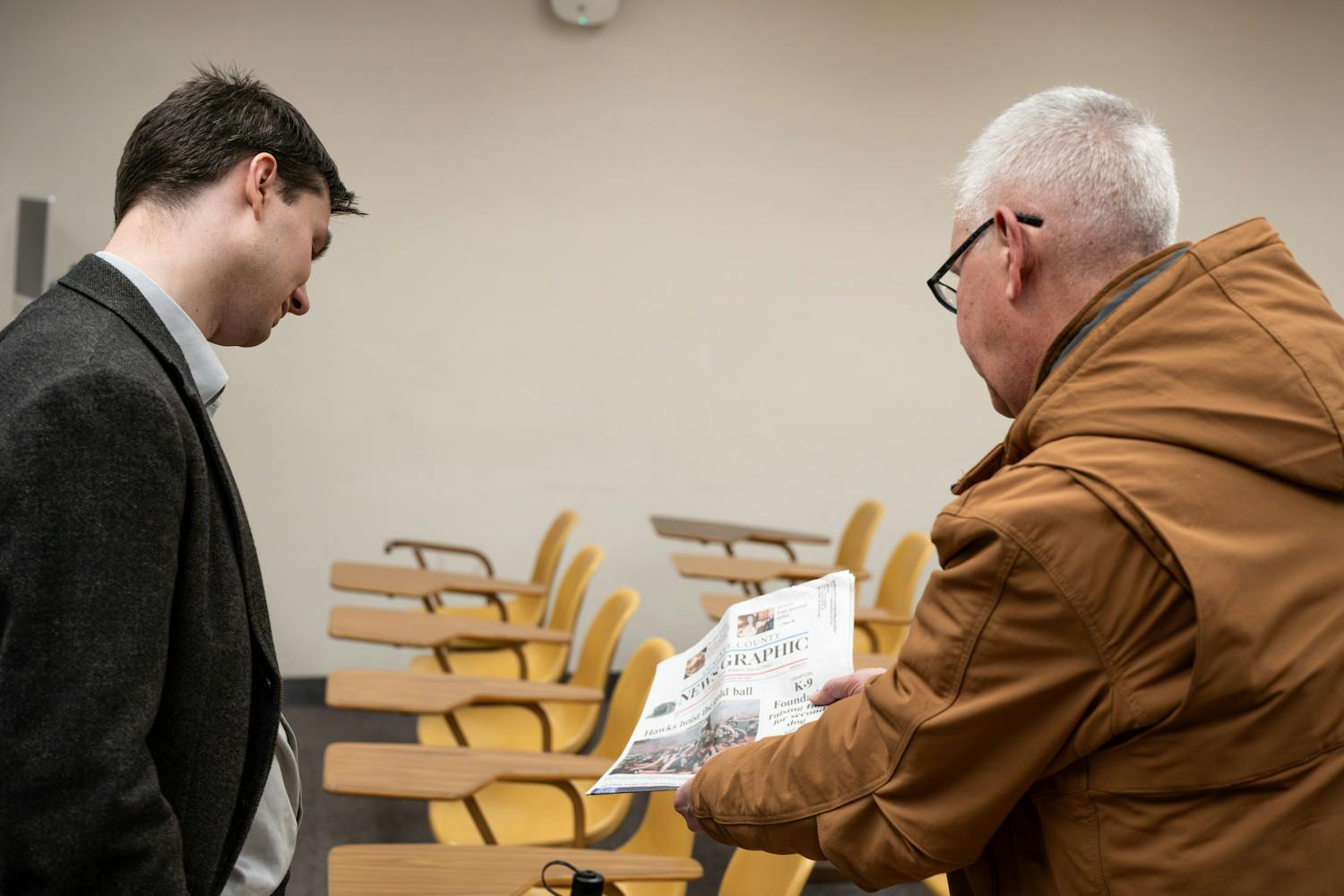
Today, he brought a special gift for professor Andrew Trexler. A relic, he jokes, from before he “left the Titanic” that is print journalism today. He handed Trexler a copy of the Ozaukee News Graphic, the last newspaper Achterberg worked for in his decades as a journalist and an increasingly rare example of local print news.
Trexler often remarks in class how quickly the media world is shifting — how the skills he teaches today might look different by the time students graduate. But the conversations about print, digital platforms and local news’ disappearance aren’t abstract for Achterberg. He’s lived through those changes, and he brings a different perspective to class as someone with years of experience as a journalist.
The former reporter and UW-Madison alum, who graduated in 1980, returned to campus after more than four decades. And he’s far from alone.
A growing presence on campus
Through the Senior Guest Auditor Program, Wisconsin residents aged 60 and older take UW-Madison courses free of charge alongside students less than half their age. This fall, the program reached a record enrollment of more than 1,000 auditors, double the number enrolled a decade ago, according to program administrator Anne Niendorf. The program places older adults alongside traditional undergraduates in lecture halls across campus, creating multigenerational classrooms.
The Senior Auditor program was first enacted in 1973, before Achterberg was even an undergraduate. Just four seniors enrolled that spring, six the following summer and 10 in the fall, Niendorf said.
In the 1990s, the program was paused after a UW System Board of Regents report said it had been abused. It resumed later that decade with a per-credit fee, which remained in place until 2000 when the Regents adopted the current tuition-free version after former state Sen. Fred Risser, the longest-serving legislator in America, worked in the legislature to codify senior audit rights for Wisconsin residents.
Madison historian, former elected official and local radio host Stu Levitan said the program offers Wisconsin seniors two invaluable benefits: “to gain knowledge through lectures by leading professors at a world-class university and to gain awareness of today's students by seeing them in action in classrooms, hallways and around campus.”
Motivations to learn
For many auditors, the program is something they look forward to for years.
Julie Foley, a former Dane County District Attorney’s Office employee, said she couldn’t wait for the day she turned 60. She heard about the auditors program through a friend and applied to the university prior to her retirement last June. Just two months later, she was back in the classroom, nose-deep in her textbooks.
“What could be more important than being up to date on everything that's happening in this world?” Foley said.
Niendorf said one strong motivation for many senior auditors is a relentless curiosity and thirst for knowledge. Auditors will oftentimes enroll in courses they were unable to take in college or in subjects they’ve long been curious about. Through a wide variety of courses, auditors have the opportunity to see parts of the world they never could, whether that be immersing themselves in Indian culture, analyzing the history and designs of Frank Lloyd Wright, or debating political theory alongside students a fraction of their age.
Auditors are allowed to request classes and, given the professor’s permission, enroll in them. Some of the most popular topics include art history, history and political science, but any Wisconsin-related courses are a big hit, Niendorf said.
Some courses consistently attract large numbers of senior auditors. One of the most popular is Making the American Landscape, first taught by professor emeritus Bill Cronon. Levitan, a senior auditor since 2018, remembers a semester when “there were about a hundred of us in Humanities,” a number he believes signaled to students how special the class was. He recalls Cronon “criss-crossing the stage, delivering perfect lectures without ever looking at notes.”
After Cronon’s retirement in 2020, professor Anna Andrzejewski took on the course. Levitan, who described Andrzejewski as his friend and neighbor, fondly recalled learning about Frank Lloyd Wright and European Art History in her courses.
Professor Alfred McCoy’s History of the Vietnam War was another standout for both Achterberg and Levitan. Achterberg called McCoy a “living legend.”
“There’s a lot of expertise in these rooms,” he said. “I’m just in awe of the guy.”
Levitan took the course last spring, recalling a notable lecture on the 50th anniversary of the end of the Vietnam War.
The super senior student experience
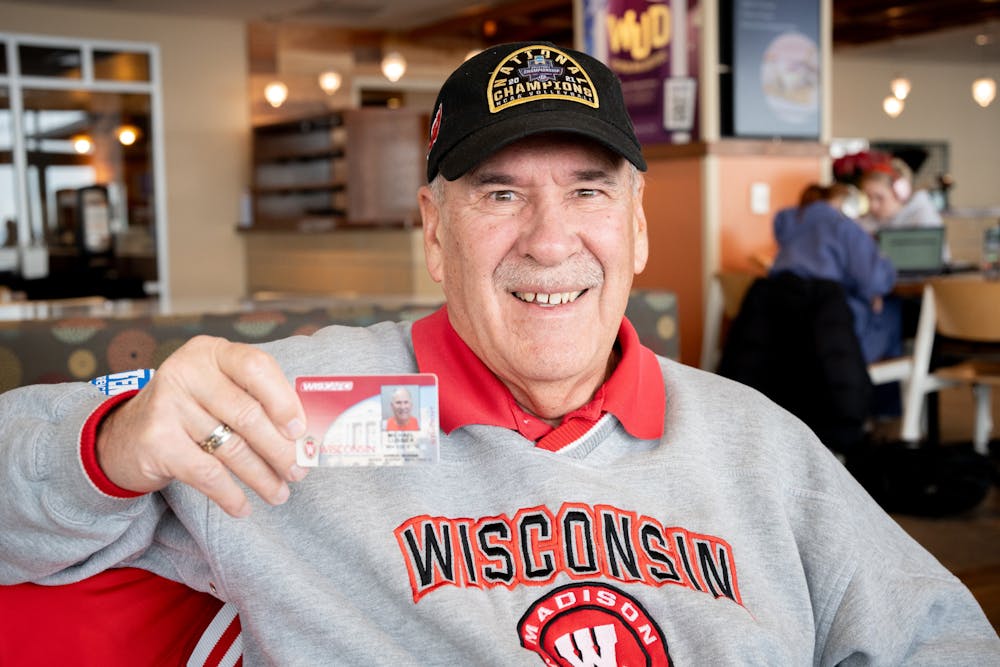
Senior auditor Mike Lussier holds up his university-issued WisCard.
The program makes it a point to make auditors feel like traditional students, creating UW Net IDs and WisCards for each auditor.
“The university really treats you like you're a real student,” Achterberg said.
They even have representation as “special students” in UW’s student government, a role Levitan held for several years giving him a unique opportunity to engage with the student body.
The cherry on top of it all? No exams, no stress.
Auditors aren’t required to complete any assignments or take any exams, a measure created to prevent distractions from paying students in the course. Without the pressure of keeping up with assignments, auditors can learn at their own pace.
“I’ve got my foot in a lot of different things, but I can just come here and learn for the sake of learning,” Foley said. “It’s fantastic.”
Even without the extrinsic motivation to be engaged in class, auditors like Achterberg come prepared for class by doing all the assigned readings. He jokes that his attendance is better now in his 60s than when he was a young adult in college at UW-Madison.
Niendorf said senior auditors with the “pure dedication of wanting to learn” have surprised her the most.
“I’ve had senior guests call and be like, ‘Oh, I’m gonna miss this one class. Do I have to let them know?,’" Niendorf said. “There are senior guest auditors who have audited for 30 years, and half the time I don't know how they can even find new classes.”
And in an unexpected way, Achterberg’s efforts to be engaged have created new connections beyond just the coursework.
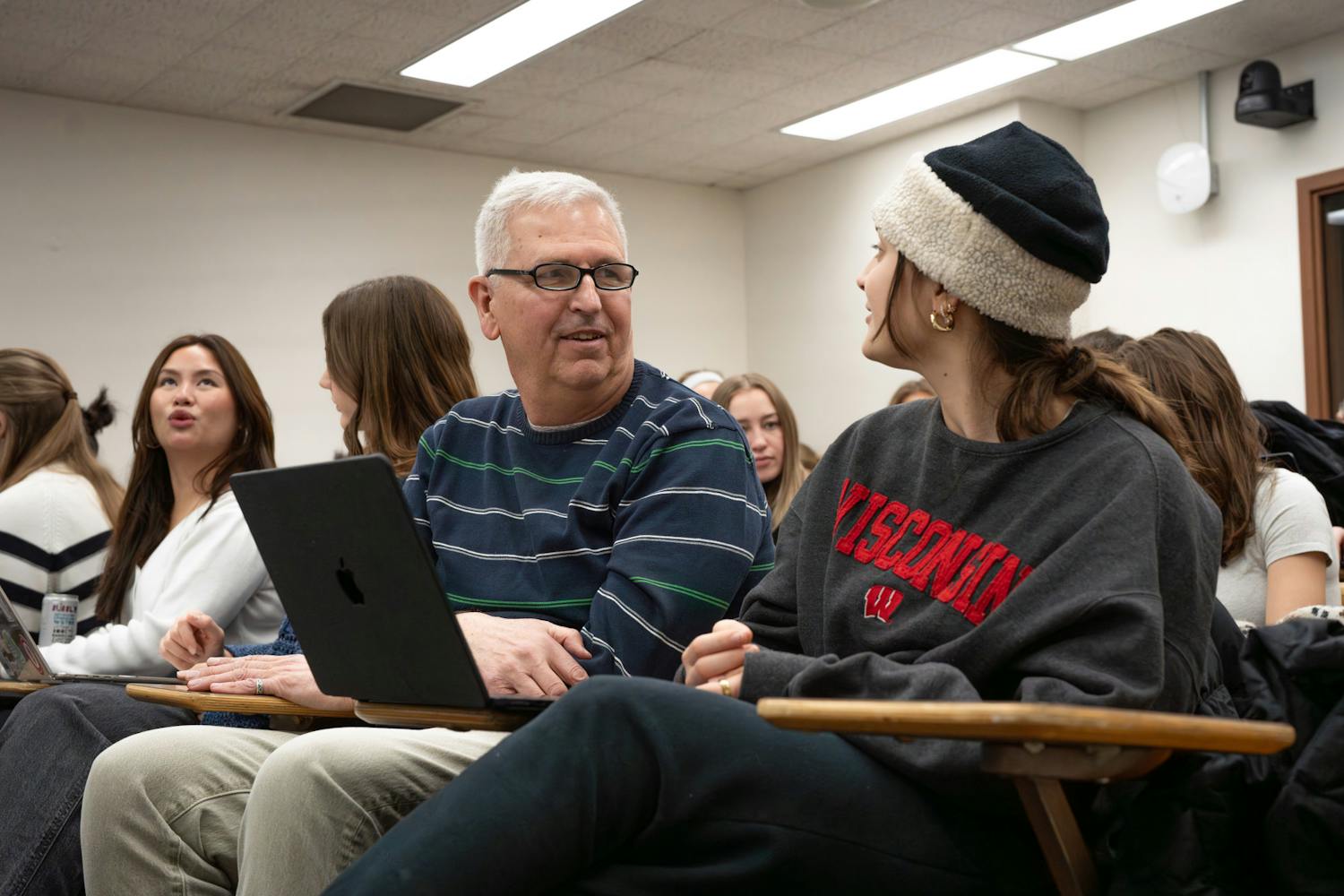
Every lecture, Achterberg sits next to UW-Madison junior Ella Stagnaro — now not just a classmate, but a friend. He gently teases her for skipping the readings, but she usually just shrugs and laughs. Even when she isn’t fully up to speed, he keeps her on track, occasionally adding his own experience to help explain a concept.
On the final day of Media and Politics, much of the class was devoted to reviewing key terms for the upcoming exam. Achterberg, knowing he wouldn’t be taking it, spent the period quizzing Stagnaro to make sure she understood the material.
He said one term stumped her: the “news beat.” As a journalist on and off for 40 years, Achterberg was probably the most qualified person in the room to answer it. He broke the idea down simply, offering his own experience covering politics and crime: “I know a lot of cops.” Minutes later, when Trexler asked the room if anyone could define “news beat,” Achterberg nudged Stagnaro, encouraging her to share her newly learned explanation. Stagnaro laughed, saying she’d remember Gary’s anecdote.
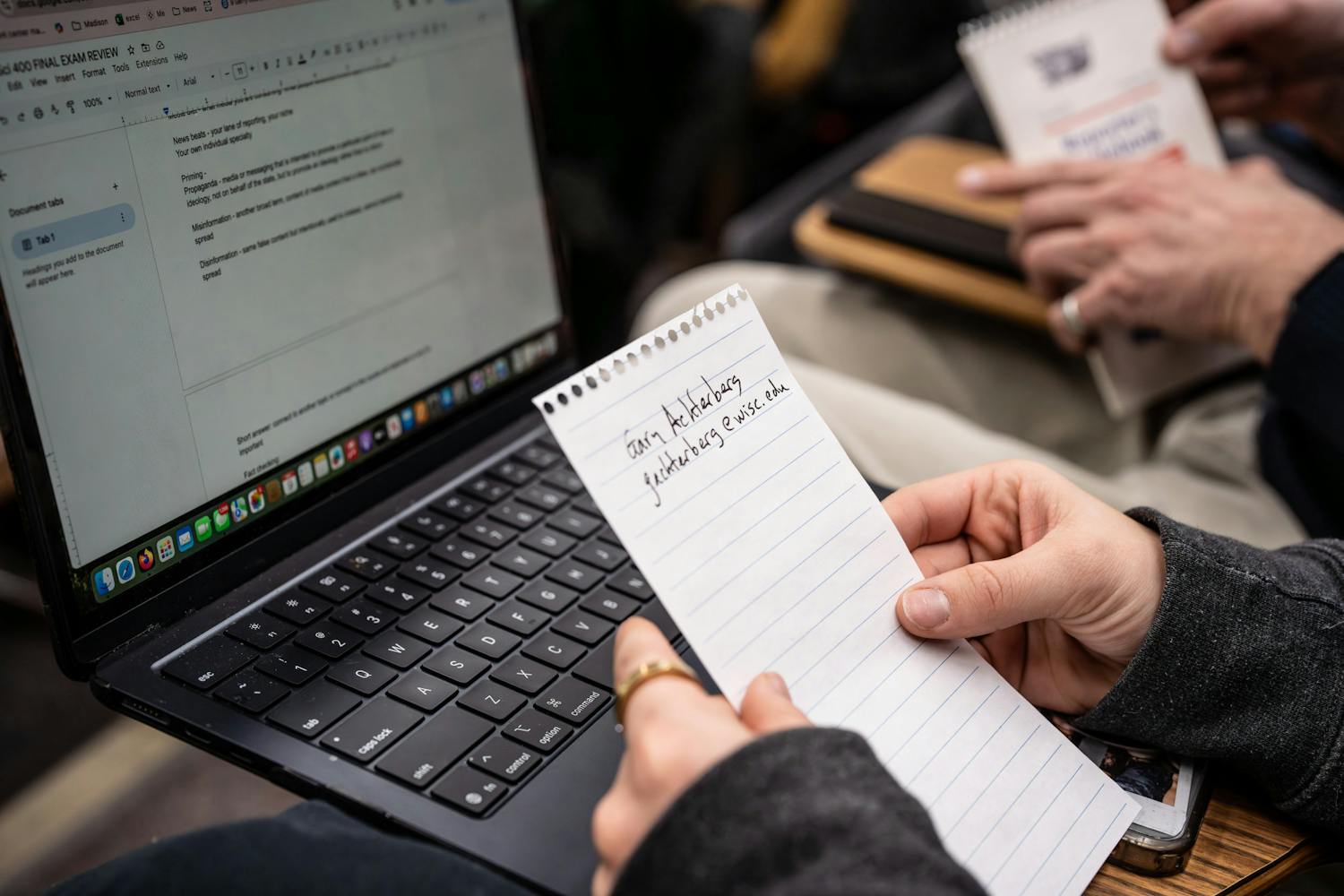
She also plans to stay in touch with Achterberg, made possible after Achterberg handed her a slip of paper with his name and email so they could keep in contact.
Even though auditors technically aren’t supposed to participate, Achterberg said Trexler regularly invites contributions from everyone — including him, drawing on decades in the newsroom.
“I love the way he teaches, even though we’re not supposed to participate,” Achterberg said. “The general rule of thumb is keep your hand down and your mouth shut because the people who are supposed to be asking questions are the ones taking the class for a grade.”
Beyond the classroom
For auditors, taking college courses is bigger than learning — it offers them a chance to engage and connect with classrooms and traditional students, leave the house and structure their days around learning.
On the first day of class, Foley was nervous whether she would fit into this environment or if traditional students would include her in group conversations.
“There’s kind of a little anxiety, thinking, do they want to be talking to this old person?” she said.
However, she said that anxiety was short-lived as her fellow classmates immediately invited her to join their small group conversation. Throughout the rest of the semester, Foley discussed and debated topics concerning media and politics while fostering connections in the classroom.
“To learn every day and to be among young people that are the future of our country and our world, that are so thoughtful and so smart... I just feel like everybody that I've met is just so engaging and so thoughtful,” Foley said.
A student who sat next to her told her about his aspirations of going to law school and becoming a lawyer. Foley used her past experiences as a 29-year employee at the Dane County DA to give guidance and advice to her classmate.
Achterberg has also immersed himself in campus life in ways he never could’ve imagined. He intentionally sits next to traditional students in class, stores belongings for a student studying abroad in his garage and advises student journalists through his role on the board of The Daily Cardinal.
Like Foley and Achterberg, senior auditor and former teacher Sandy Lussier brought insight from her career back to the classroom when she took a course on the history of public education.
Lussier and her husband Mike have been auditing courses at UW for 11 years, and they don’t see themselves slowing down anytime soon.
Each fall when freshmen move into the Southeast dorms they make a point to walk through the crowds. “There’s so much energy and excitement there. You literally feel it,” Mike said.
Mike said he used to interrupt campus tours “if I’m wearing my Wisconsin stuff, which I always do,” before Sandy stopped him.
“I tell the parents: don’t worry about the kids, they’ll be fine here. They’ll get a great education. I tell the kids: don’t be in a hurry to graduate. Keep going, stay as long as you can. This is the best environment you’ll ever have. You’ll never be in another like it,” he said.
The lifelong Badger fans moved to a condominium near the Kohl Center in retirement so they could stay close to the action. Their home is filled with memorabilia from decades of Badger games. The guest bedroom is even dubbed the “Stan Hinckley Suite,” named after former UW hockey national champion Stan Hinckley, thanks to a massive poster their children gifted them.
Throughout their more than 50 years of marriage, the couple has always had a “Badger bathroom,” and their walls are lined with photos of family members at UW events. One picture shows Bucky posing with the family at their son’s wedding — after Mike and Sandy surprised guests by bringing in the Badger Band and Bucky himself.
They hold season tickets for both volleyball and football and attend every fall game. Sandy also has photos with members of the 2014-15 men’s basketball team that reached the NCAA championship — players she met after auditing a course they were taking.
Institutional support
The program’s growth has been fueled by intentional support from UW-Madison Adult Career & Special Student Services (ACSSS), which runs the Senior Guest Auditor Program.
While UW-Milwaukee enrolls about 250 senior auditors without a dedicated office, UW-Madison operates a fully staffed program that guides auditors through applications, NetID setup, course permissions and enrollment.
Niendorf said the office works to make the program more accessible each year — simplifying forms, offering assistance for technology and Canvas and providing resources to anyone struggling to navigate university systems.
“We try to encourage people to come in and do the paperwork if they can’t do it at home,” Niendorf said. “We have senior guests who have, whether it’s visual impairments or just can’t type or struggle with anything like that. We can help them with the process, so we try to make it as accessible as possible.”
Senior auditors also can qualify for accommodations from the McBurney Disability Resource Center, Niendorf said, receiving assistance from the center to navigate campus.
This level of institutional support is unusual. Many Big Ten universities allow older adults to audit courses, but UW-Madison stands out for having a dedicated office specifically supporting senior auditors.
Aging gracefully
For some auditors, returning to college carries benefits beyond intellectual stimulation.
Henry Stephenson, a PhD candidate in geriatrics and gerontology who studies Alzheimer’s disease, said research shows education and social engagement can help protect cognitive health.
“Formal education is a protective factor in terms of your risk of developing Alzheimer's disease,” he said, adding that those with a bachelor's degree have a statistically lower risk of developing the disease than those who do not.
Social engagement matters too. “We know that social isolation is a risk factor for dementia,” he said. “If you're a senior who spends a lot of time alone, that increases your risk.”
Learning helps keep the brain active. And simply “getting out of the house and being around people — especially younger people — can help lower dementia risk,” Stephenson said.
For Achterberg, Foley, Levitan and the Lussiers, the program is about much more than taking a class. It’s about community, purpose and the joy of learning without restriction.
And for young UW-Madison students, learning alongside the auditors is another reminder of how lucky they are.
“Gary definitely provided me with a perspective I wouldn’t have gotten from the typical classmate,” Stagnaro said. “He never gave information away, rather provided a new point of view from his past experiences and showed me how much of an effect the rise of digital media has had in both politics and reporting.”
Editor’s note: Gary Achterberg joined the Daily Cardinal board in 2025.
Noe Goldhaber is the editor-in-chief for The Daily Cardinal. She previously served as college news editor and copy chief. She is a Statistics and Journalism major and lead coverage on the 2024 pro-Palestine encampment and specialized in campus labor, student housing, free speech and campus administration. She has done data analysis and visualization for the Cardinal on a number of stories, and will intern with Wisconsin Watch this summer. Follow her on Twitter at @noegoldhaber.