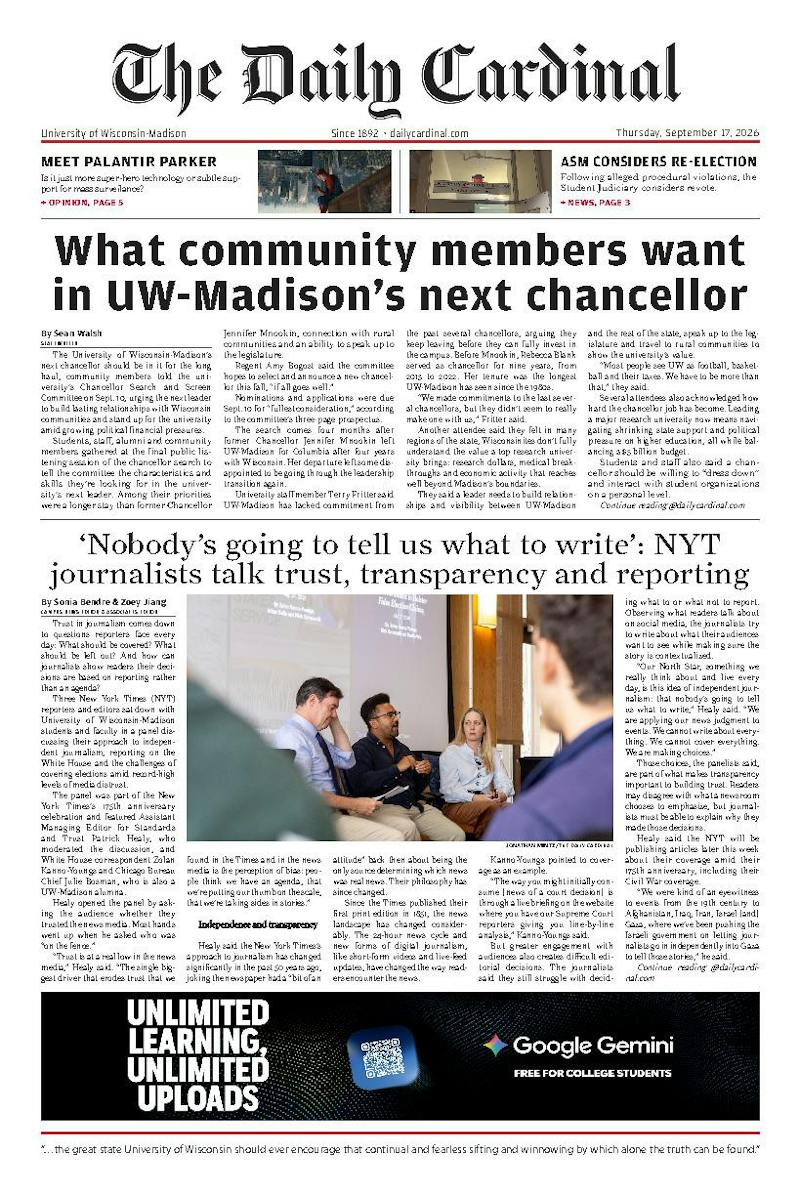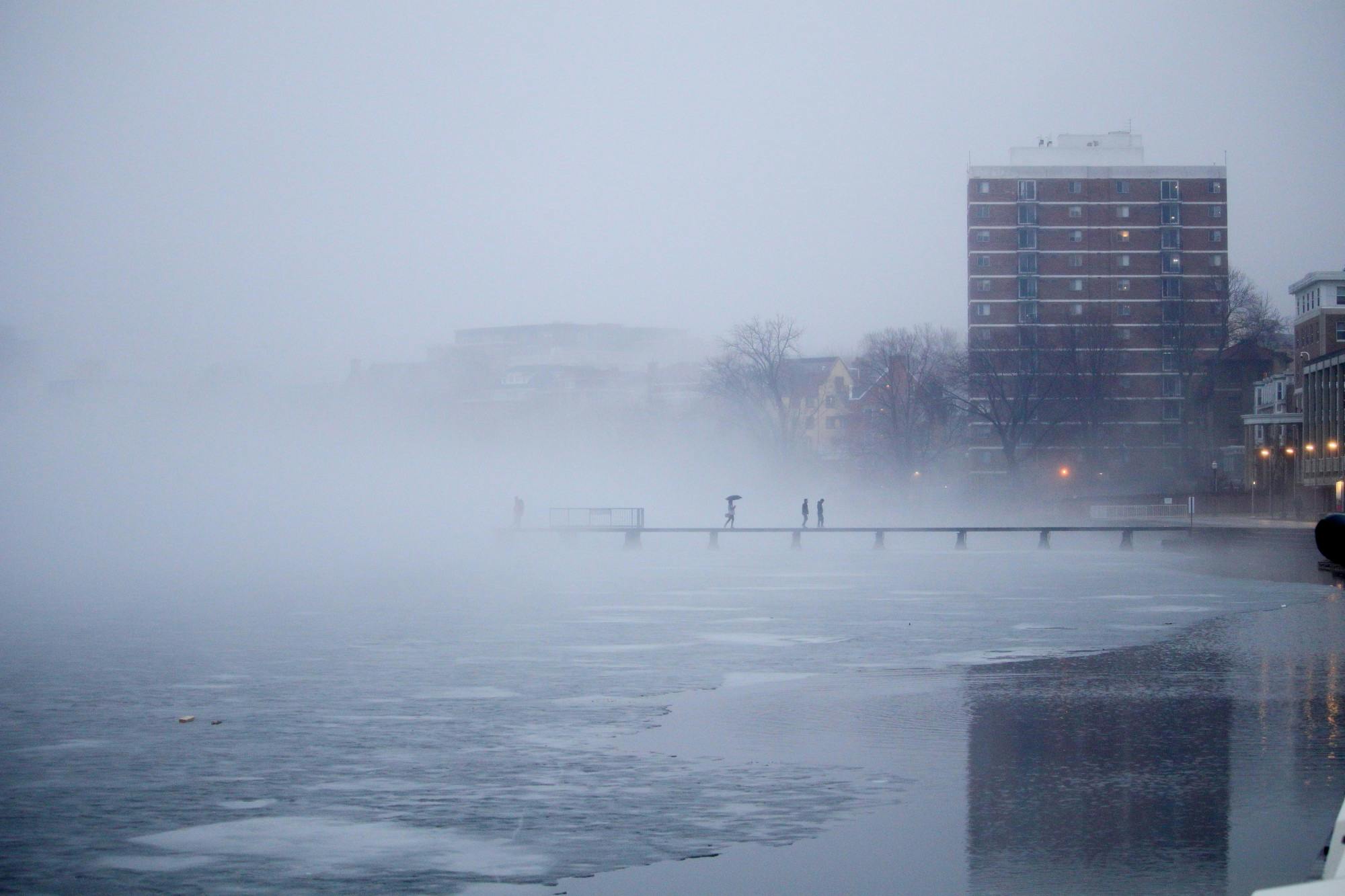
Lake Mendota officially froze over New Year’s Day, a later date than usual, which researchers attribute to fluctuating temperatures and high winds in December.
The median date of Mendota’s freeze is Dec. 20, according to a statement by the Clean Lakes Alliance.
Adam Hintertheur, Communications Manager for the University of Wisconsin-Madison Center for Limnology, said constant wind made it more difficult for Lake Mendota to freeze this year relative to smaller lakes in the Yahara watershed.
“As long as there's wave action and the water is moving and churning, it's really hard for that first layer of ice to set,” Hintertheur told The Daily Cardinal.
Lake Mendota typically freezes over a week after Lake Monona, which covers a third less surface area. But Monona was considered frozen over on Dec. 12, 20 days before Mendota froze over, in part because of strong winds preventing Mendota’s larger surface from freezing.
Since the Wisconsin State Climatology Office started keeping ice cover records in 1852, there has been less overall ice cover during a season, with freeze dates coming later and thaw dates earlier.
“Since the 1800s, we've lost about a month of ice cover on our lakes,” Hintertheur said.
Michelle Boeder, Advancement Director at the Clean Lakes Alliance, said a lake is considered frozen over “only after the lake remains frozen for 24 consecutive hours, a standard that helps ensure accuracy and consistency.”
Hintertheur said consistent freeze records were first kept for Madison’s large ice industry in 1852. “They kept records then so [ice workers] could predict, or at least anticipate, when their season was going to start,” he said.
This long data set is unique. “There are [only] a few older data sets around the world,” Hintertheur said. “It's super unusual to have this much continuous data.”
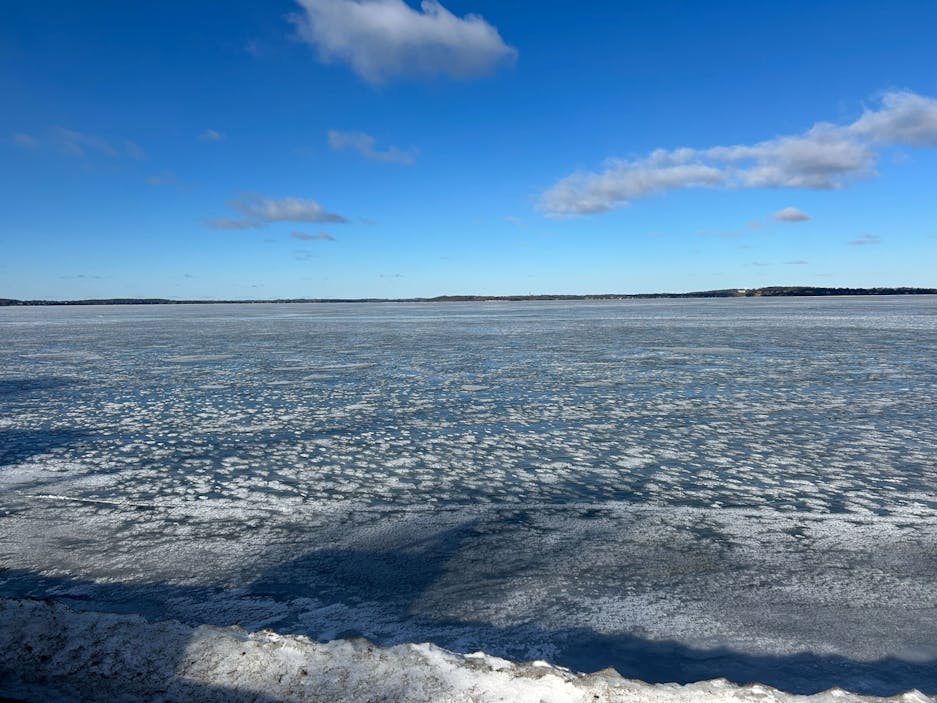
A view of Lake Mendota from the Memorial Union Terrace on Jan. 14, 2026.
Staying safe on the lakes in warming climates
Hintertheur said climate change continues to have an impact on ice cover, with some studies showing Wisconsin may move into a climate that does not support ice every year. Though the Limnology department does not anticipate an iceless winter anytime soon, it could be a reality in the decades to come.
Climate change still affects winter weather. Though Hintertheur said “no ice is ever 100% reliable,” warm days and rain falling on ice make it even less so. Hintertheur stressed the importance of taking precautions on the ice by staying close to shore, traveling in groups and letting someone know what your plans are on the ice.
An annual Mendota freeze contest, the Frozen Assets 5K on the ice, the upcoming Winter Carnival and Lily’s Classic fundraiser are just a few examples of Madison winter traditions dependent on frozen lakes.
“The lakes become Madison's biggest public park once they freeze,” Hintertheur said. “It's something that I think people should care about.”