Wisconsin Union student worker Sarannya Bhattacharya was placed on paid administrative leave Aug. 27, investigated and subsequently issued a work directive on Sept. 26, citing an action following his paid administrative leave as one of three reasons for an investigation.
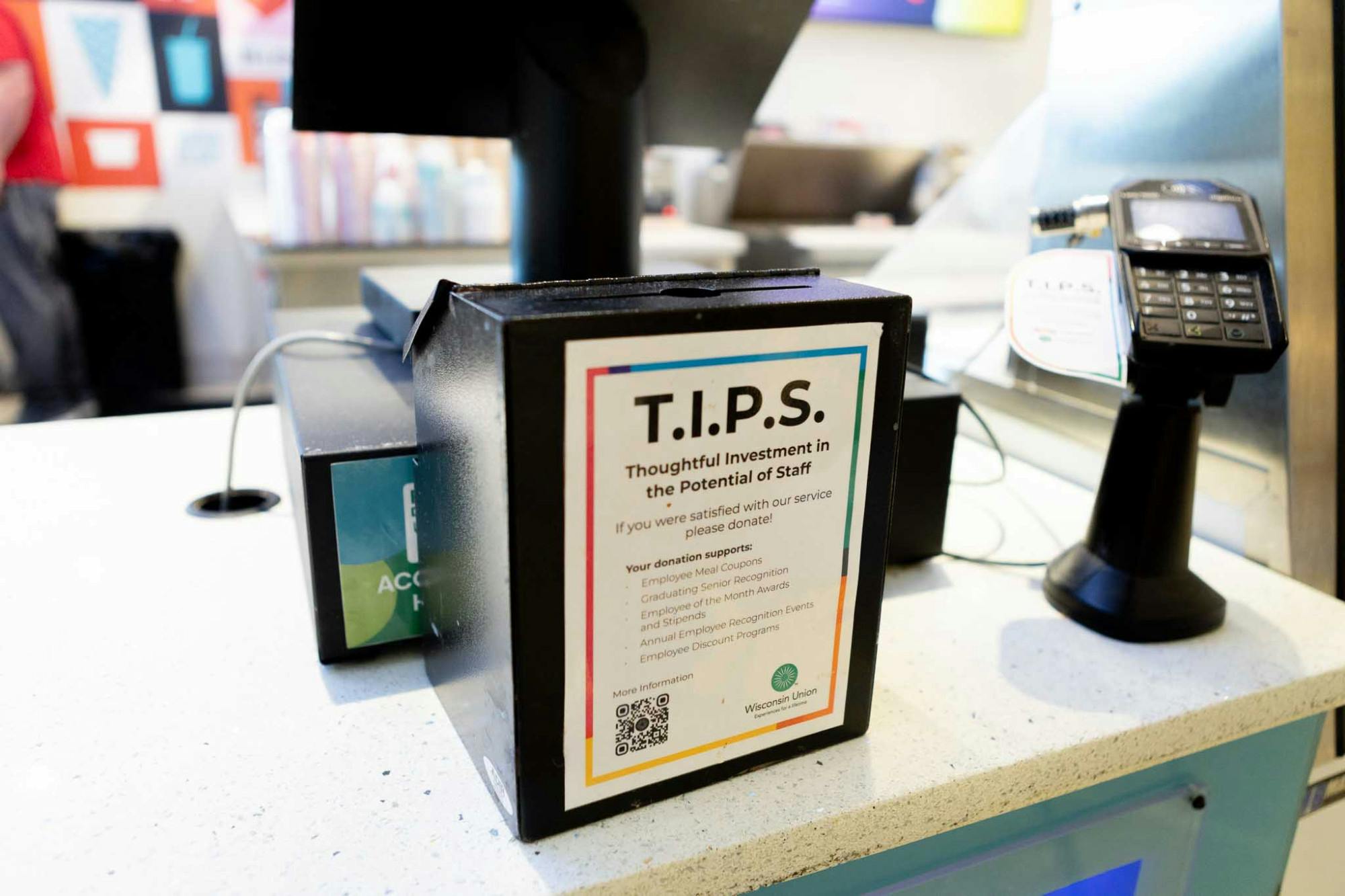
Bhattacharya, a bar manager at the Union for over three years, started a student petition and spoke with the media in favor of abolishing the Union’s Thoughtful Investment in Potential of Staff (TIPS) in early August. Bhattacharya, Grace Kachelski and Ian Terrones, all student employees, told The Daily Cardinal they believe the leave and investigation, which have both concluded, were an act of retaliation for speaking to the media about TIPS.
The Union’s investigation notice maintained the investigation was because of actions unrelated to the petition or the media.
Bhattacharya told the Cardinal that in an Aug. 27 meeting with Catering Director Lisa Wadzinske, Wadzinske told him to leave work immediately and not attend any upcoming shifts because he “removed something from a supervisor’s desk,” a claim he and Terrones disputed.
In a Sept. 2 notice written by Wisconsin Union HR Generalist and investigator Jenny Lee, which Bhattacharya provided to the Cardinal, Lee said the Union placed Bhattacharya on paid leave while investigating three accusations: first, that he removed an internal document from a permanent staff supervisor’s desk without authorization on Aug. 27; second, that he accessed an office filing cabinet without “authorization or a work-related reason to do so” on Aug. 26; and third, that he entered non-public work areas on Aug. 28 after being placed on leave.
The Union did not confirm the suspension was paid and not disciplinary until Sept. 2, Bhattacharya said, though in the days prior, he sent emails to the Union Human Resources Department, OHR Workforce Relations, the Office of Student Assistance and Support, the Vice Chancellor of Student Affairs and the Dean of Students and met several Union leaders in person to seek clarification on his specific conduct violations and a timeline on the suspension.
“I depend on my student job to pay my bills, and being completely removed from the schedule without any clarification in light of recent developments is very disturbing to me,” Bhattacharya said in an email obtained by the Cardinal to the Vice Chancellor of Student Affairs and the Dean of Students on Sept. 1.
During his leave, he said he received paychecks equivalent to the number of hours he works in a typical week.
According to a Union representative’s notes from Bhattacharya’s Sept. 16 investigatory interview, Lee told Bhattacharya he was being investigated for reasons which included “theft” and the Union was “thinking you’re retaliating against us by going through our materials.”
Bhattacharya told the Cardinal he brought three student witness testimonies to his investigatory interview.
After the investigation concluded, he received a work schedule Sept. 25 and work directive Sept. 26 from the Union allowing him to return the week of Oct. 5, but it claimed he had violated several policies.
The work directive said “concerns were raised regarding access to workplace documents, use of administrative and back-of-house spaces and adherence to management direction” and directed Bhattacharya to only access materials when directly related to assigned job duties and ask for clarification from supervisors before accessing materials if unsure.
The Union then issued Bhattacharya a letter of expectation, a non-disciplinary document, Sept. 29 similar to the work directive, but stating the letter of expectation was not “disciplinary in nature.”
Though the wording of the letter and the work directive is similar, the letter goes back on the directive’s claim Bhattacharya violated Union policies and does not explicitly state that it aims to correct behaviors found during the investigation.
Union Spokesperson Shauna Breneman told the Cardinal while the Union cannot comment on individual personnel matters, “In general, Wisconsin Union student employee work rules prohibit unauthorized or improper use of university property or equipment; unauthorized possession or removal of university or another person’s property; and unauthorized entry to university property, including unauthorized entry outside of assigned hours of work or entry to restricted areas.”
Where are the Union’s claims coming from?
Bhattacharya told the Cardinal he believes the Union’s claims about accessing off-limits desks and filing cabinets are because of an incident that occurred in Memorial Union “15-20” minutes prior to his meeting with Wadzinske on Aug. 27.
Both Bhattacharya and Terrones said Terrones removed a document from where it was attached with a magnetic clip to a head-high filing cabinet in a shared, open office space, not a permanent staff supervisor’s desk.
Terrones, two other friends present and Bhattacharya’s direct supervisor were not contacted until he provided the testimonies to the Union, Bhattacharya said.
“The pamphlet in question was just out in the open… clipped [to a filing cabinet] above Scott [the bar manager’s] desk,” Terrones said. “This is all in an open area… next to name tags and other stuff that the students are allowed to use and touch. There was no indication that it was off limits.”
Both students said the document was a two-page leaflet containing information for supervisors on responding to student staff questions related to TIPS.
Breneman confirmed in August, the Union HR “reminded supervisors about Wisconsin Union Student Employee Recognition Fund information, including the fund’s purpose in sustaining student employee recognition, how the fund is used for student employees and how student input helps guide the fund’s use, as well as shared with supervisors that the fund grew following the addition of the option for patrons to make donations with their credit cards during credit card transactions.”
Terrones said he handed the document to a friend after reading it, who took it out of the office and down the hallway to a locker area where students usually clock in and out.
“It's not super far, maybe a 20-second walk down from the office,” he told the Cardinal.
Bhattacharya said in the locker area, a friend handed him the pamphlet in a folder that also contained signatures to his petition — the first time he touched the document. He placed the folder into his backpack, brought it back to the office within five minutes and without leaving the facility, and returned the pamphlet to the filing cabinet.
Terrones said he has not received any disciplinary action for taking the pamphlet off of the clip, nor has he been accused of violating any workplace rules.
“This is like punishing somebody for returning a wallet, and it still has all the money in it,” Terrones said. “[The suspension] was not a punishment fitting the crime that [Bhattacharya] supposedly committed. It was to villainize him, to punish him for doing the whole anti-TIPS thing. It was to send a message. That's what it was for.”
Bhattacharya and Terrones said no student employee touched a supervisor’s desk or removed any documents from a supervisor’s desk. Terrones said the office is a shared space frequented by student employees and administrators alike, and he’s seen other students, especially bar managers like Bhattacharya, add and remove documents from the same filing cabinets without consequences. He added he often checks in at the office with a manager after his shift.
“I never heard anything about [the document] being off-limits to see or take or anything like that,” Terrones said. “It’s not a private space where I would keep a document that is supposed to be private or not seen by students, because if you're putting it in a place where the students are walking, they're going to see it.”
The Union’s second claim under investigation was that Bhattacharya accessed an office filing cabinet without “authorization or a work-related reason to do so” on Aug. 26.
Bhattacharya confirmed he worked a shift at Union South Aug. 26 and accessed a filing cabinet in the administrative suite, saying the cabinet was unlocked, contained “bar manager and other bar-related duties” and that he’s looked through it multiple times in the past with no consequences.
“We have accessed that cabinet multiple times in the past, and there's been no reason for it to be out of bounds or that I couldn't access it during a shift where I was bar managing … so I'm not fully sure why that's considered unauthorized use,” he said.
According to the Union’s notes of the investigatory interview, Lee said she received a report that Bhattacharya looked through the cabinet for pictures of old TIPS boxes and meal coupons, which the Union interpreted as “retaliation.”
“When I'm on shift, do I have to go through training paperwork every day? No,” Bhattacharya said. “But I've gone through [that cabinet] multiple times in the past … It's not something that students can't access.”
He denied accessing materials provided to The Cardinal through the cabinet and questioned how the Union knew he accessed the filing cabinet, saying there are no cameras in the administrative suite as far as he is aware and only himself and a student trainee were in the room when he looked through the filing cabinet.
Breneman said a UWPD camera is located outside the third-floor offices, but Bhattacharya said there the filing cabinet would not be within the field of view of an outside camera.
Thirdly, the Union investigated a claim that Bhattacharya entered two non-public work areas on Aug. 28 after being placed on leave: first at Memorial Union, and then at Union South.
Bhattacharya entered the serveries at Memorial Union during one of Kachelski’s shifts, Kachelski confirmed. At the time, he was warned by catering manager Joseph Wowczuk not to enter any back-of-house areas.
“He did say that I was not allowed to be in any event spaces or any spaces that's for employees only,” Bhattacharya said.
Bhattacharya and Kachelski said they entered the Union South administrative suite later that day to retrieve training plans he had written for other bar managers, which he had left in the suite. The administrative suite is on the third floor.
“The third-floor Wisconsin Union offices at Union South are designated for staff performing assigned job duties and are not shared public use areas,” Breneman said.
Bhattacharya described the suite as a public office for any person between 9 a.m. and 5 p.m. on weekdays.
“I believe in that office, there's a sign outside that says ‘please go to the reception if you have any questions, and if there's nobody at the reception, then feel free to ring a doorbell that's in there,’” he said.
He said he entered with Kachelski around 5 p.m on Friday, Aug. 28.
“They had taken away all of his Wiscard access, but we didn't even realize that at that time because somebody else was walking out as we were walking in, so they just held the door for us,” Kachelski said.
After Bhattacharya and Kachelski left the suite, they said Operations Manager Craig Kaufmann approached them 5-10 minutes after.
“[He said] ‘I was informed that you were not to be in any back of house areas,’” Kachelski said. “‘How did you even get in there if you don't have Wiscard access? I took it away. And then he looked at me, and he was being very hostile, and he's like, ‘Did you let him in there?’”
Bhattacharya added he and Kachelski collected signatures for the TIPS petition during work hours on Aug. 26.
The morning of Aug. 27, Wadzinske met with him to tell him that he and Kachelski were not allowed to ask for signatures during work hours, and that “when we went to different units to collect signatures during business hours [Aug. 26], it was completely inappropriate.”
He said he apologized and agreed not to collect signatures during work hours again, and the incident did not appear in the Union’s list of reasons for conducting the investigation.
Bhattacharya told the Cardinal that since he has returned to work, he has felt welcomed. Kachelski said the Union tightened their enforcement of rules.
“It used to be pretty typical that even if you weren't on the clock, you could pop in and say hello and stuff like that to your coworkers, and nobody would ever even bat an eye,” Kachelski said. “Specifically for Saro [Sarannya], if [Wadzinske] sees Saro anywhere when he's off the clock, she's like, ‘You need to leave. You're not allowed to be here unless you're on the clock.’”
Editor's note: This article was updated at 10:44 a.m. to correct a hyperlink that previously only allowed members of The Daily Cardinal Media Corporation to access a document's content, and to correct the spelling of Craig Kaufmann's name.
Sonia Bendre is the campus news editor for The Daily Cardinal. You can reach her at sonia.bendre@dailycardinal.com.