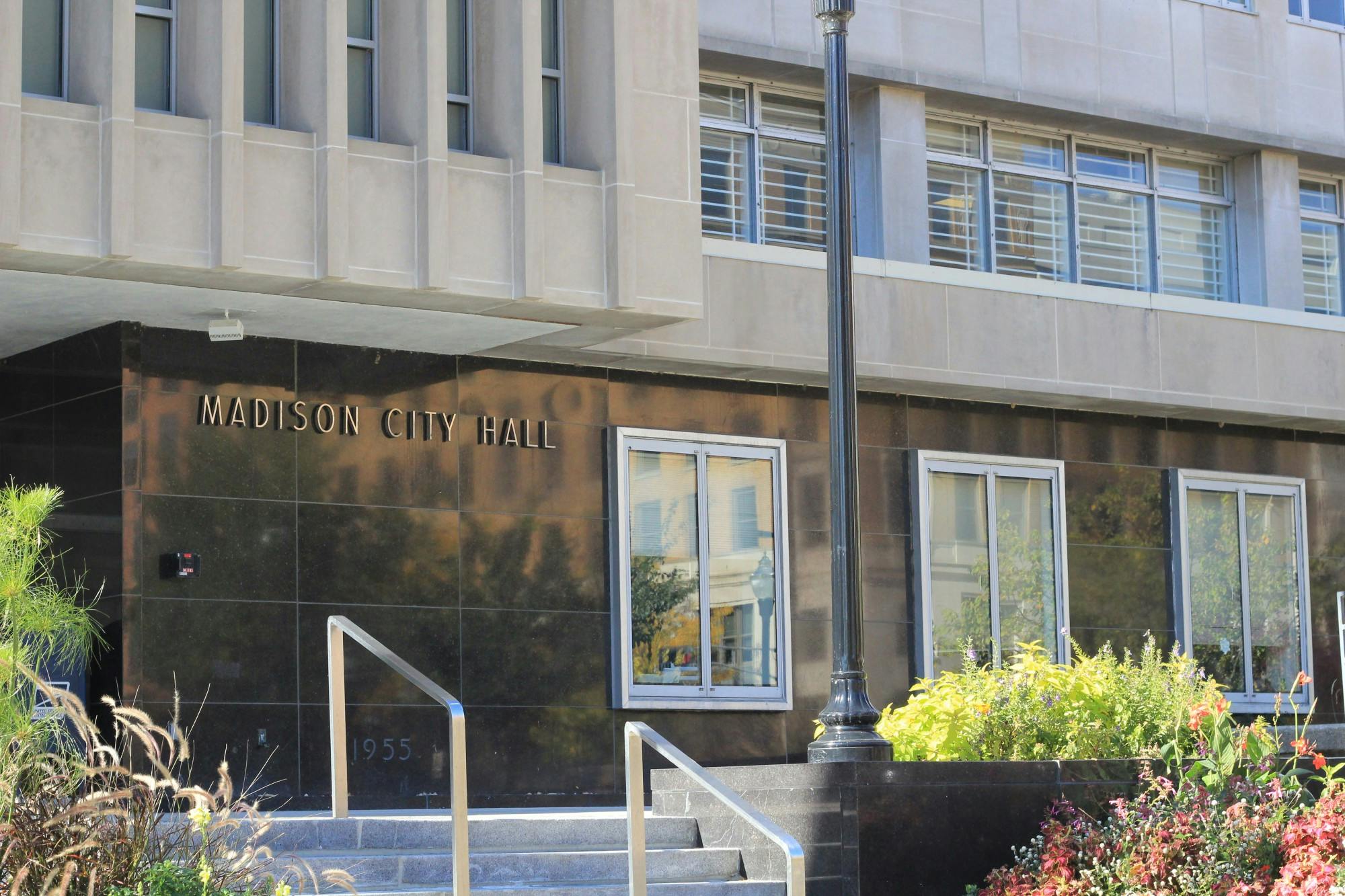
The City of Madison’s moratorium on data centers will expire in January 2027, leaving citizens to enact framework amidst company planning.
Madison enacted the moratorium to moderate the development of potentially harmful facilities in January 2026. The regulation was set to last one year and expires on Jan. 24, 2027. To prepare, the City is establishing zoning regulations that allow for data center construction and specify potential facility locations.
A Wisconsin State Journal map shows potential data center sites fall in Districts 3, 14, 15, 16 and 17. These districts are also largely on Madison’s east side and in overall lower-income, less populated areas.
For Derek Field, District 3 alder and member of the Plan Commission, land use is central to the data center debate. He told The Daily Cardinal his east Madison district contains land not yet developed that is “intended to grow in the form of neighborhoods and mixed-use areas that meet residents' needs.”
Several small data centers, Field points out, already exist in Madison, since the moratorium did not include properties under 10,000 square feet. There are currently 15 of these centers throughout the Madison area.
Field said he has not heard concerns from citizens about these smaller centers. However, he believes an increase in size or location coverage could influence public response.
“We need to make sure large-scale data centers or clusters of data centers cannot locate in Madison [or] take up too much land that we've planned for neighborhoods,” Field said.
Michael Zhang, founder and CEO of WiscAI, a Madison-based AI consulting firm, told the Cardinal he believes the outcome of local data centers is in resident hands.
“I don't think it's a simple net positive or negative,” Zhang said. “It depends on the terms: who pays for the extra power, how much water it uses and what the community gets back in jobs and taxes.”
University of Wisconsin-Madison freshman Neha Pesaramelli is dubious about these positive effects of potential data centers.
“When we consider how much environmental impact data centers have, as well as how they impact water and different resources people need, I feel really disappointed that our government and the people that are supposed to be looking out for us aren’t weighing the lives and wellbeing of Madison residents over profit,” Pesaramelli told the Cardinal.
Although the proposed data center locations are far from central Madison, Pesaramelli hesitated about their proximity to an urban setting in general.
“I think it is privileged to say that [companies] should push data centers out of cities into more rural areas,” Pesaramelli said. “But I also think there has to be other alternatives to our energy needs that aren’t putting citizens at risk like this so close to where people are living.”
Oscar Bertram, another UW-Madison student, told the Cardinal he agrees.
“It still is harming those communities and making it harder for them to get out of [their situation],” Bertram said.
Apart from data center location, Field acknowledges the city may not have as much control as many citizens believe. Entities like the Wisconsin Public Service Commission are often the sole decision-makers for rules about eco-friendliness and water consumption, according to Field.
“The City's scope of regulations will be pretty limited, which I think is going to be frustrating to many community members,” Field said.
As the discussion of data center zoning in Madison develops, a public information meeting through the Department of Planning and Community and Economic Development will take place on Oct. 27. The meeting is meant to bring public opinion into future data center regulation and framework.